Honda brake service cost depends on your vehicle and the work an inspection identifies; a pad replacement, rotor replacement, and brake-fluid service are different jobs. The total also depends on whether the estimate covers the front brakes, rear brakes, or both, plus labor, taxes, and any additional repairs. For a useful 2026 comparison, request an itemized estimate rather than comparing a generic brake-service label.
- Honda brake service cost depends on repair scope, vehicle fitment, parts, and labor—not a universal package.
- Compare brake-pad replacement, rotor work, and brake-fluid service separately before approving an estimate.
- Bristol Honda serves Tri-Cities drivers seeking Honda brake service and vehicle-shopping help from its Bristol location.
- For a used Honda, review brake condition and maintenance records alongside the purchase terms.
How much does a Honda brake service cost?
The useful comparison is the total for the same repair on the same vehicle. An inspection identifies the condition of the braking system; the written estimate should then explain what needs attention and what each recommendation includes.
Start by understanding Honda brake pads versus rotors. Pads create friction against the rotors to slow the wheels, but replacing one component does not automatically explain the condition of the other.
| Service scope | Best for | What it addresses | Limitation to understand |
|---|---|---|---|
| Brake inspection | Identifying the cause before approving repairs | Assesses wear, condition, and reported symptoms | An inspection alone does not repair a fault |
| Brake-pad replacement | Worn pads when the remaining components meet specifications | Replaces friction material that wears during braking | Does not correct an unsuitable rotor or sticking caliper |
| Pad and rotor replacement | Pads and rotors that both require replacement | Replaces worn friction material and the braking surface | Requires a condition-based explanation for the rotor work |
| Brake-fluid service | Fluid maintenance or a repair requiring fluid replacement | Addresses the hydraulic fluid in the braking system | Does not replace worn pads or repair a leak by itself |
These are repair categories, not packages every Honda needs. Ask the service advisor to identify the applicable work before you compare estimates.
Why this matters
A shorter estimate can leave out work that appears on another quote. A longer estimate can also include maintenance unrelated to the symptom you reported.
For drivers in Bristol, Johnson City, and Kingsport, the practical next step is the same: separate the immediate brake repair from other recommended maintenance. You should understand both before authorizing either.
Brake inspection: identify the problem first
Best for: a new noise, changed pedal feel, vibration, or uncertain maintenance history. Describe what happens and when it happens instead of requesting a particular replacement part.
Tell the advisor whether the symptom occurs during braking, after the vehicle sits, or throughout a drive. Mention warning lights and any recent brake work, too.
An inspection should connect the recommendation to the vehicle's condition. Ask for the recorded pad measurements, rotor findings, and any evidence of leaks or uneven wear.
The benefit is a repair decision based on findings rather than a guess. The limitation is that an initial description over the phone cannot establish everything an inspection will reveal.
For a 2026 service visit, request the findings in writing so you can keep them with your maintenance records. Do not treat a symptom description as a confirmed diagnosis.
Brake-pad replacement: confirm what remains in service
Best for: worn pads with rotors and other brake components that remain suitable for use. A pad estimate should identify the axle being serviced and the parts included.
Ask whether the recommendation covers the front or rear brakes. Also ask how the technician assessed the rotors and checked for uneven wear.
Replacing worn pads addresses the friction material, but it does not fix every braking problem. A sticking caliper, damaged braking surface, or hydraulic fault needs its own diagnosis.
The useful question is not simply whether pads are included. Ask: what condition allows the existing rotors and related components to remain in service?
Pad and rotor replacement: ask for the supporting findings
Best for: an inspection showing that both pads and rotors require replacement. Rotor condition matters because the pads press against the rotor surface during braking.
Ask whether the recommendation follows measured thickness, surface damage, or another documented condition. Rotor service limits are vehicle-specific, so a general internet measurement is not a substitute for the correct specifications.
Replacing unsuitable rotors addresses a problem that pads alone cannot solve. The trade-off is a broader repair scope, which needs a clear explanation rather than an unexplained addition to the estimate.
Ask why the rotors need replacement, not just whether replacement is offered. Keep that answer with the estimate when comparing repair options.
Brake-fluid service: separate maintenance from wear repairs
Best for: maintenance required by the applicable Honda guidance or fluid work needed during a diagnosed repair. Brake fluid transmits hydraulic pressure through the braking system.
A fluid-service recommendation is separate from a pad-wear recommendation. Replacing fluid does not restore worn friction material, and replacing pads does not automatically resolve a fluid concern.
Ask which maintenance instruction or inspection finding supports the service. If a leak is present, the underlying fault needs repair; adding or replacing fluid alone does not correct it.
This distinction also matters when you are shopping. A record of brake-fluid maintenance does not establish the remaining condition of the pads or rotors.
Why Honda brake service cost varies
Use these factors to check whether competing estimates describe equivalent work:
- Vehicle fitment. The model, model year, and brake configuration determine the applicable parts and procedures.
- Repair scope. Front brakes, rear brakes, and work on both axles are different scopes.
- Component condition. Pad wear, rotor condition, leaks, and caliper operation affect the repair recommendation.
- Parts specified. The estimate should identify the parts being installed rather than relying on a broad quality label.
- Labor included. Ask which operations the labor line covers and whether diagnosis is listed separately.
- Final charges. Check how taxes and any shop or disposal charges are presented before approving the total.
For your 2026 comparison, keep the vehicle details and repair scope consistent. An estimate for front pads alone is not directly comparable with one covering front pads and rotors.
How do you compare written brake-service estimates?
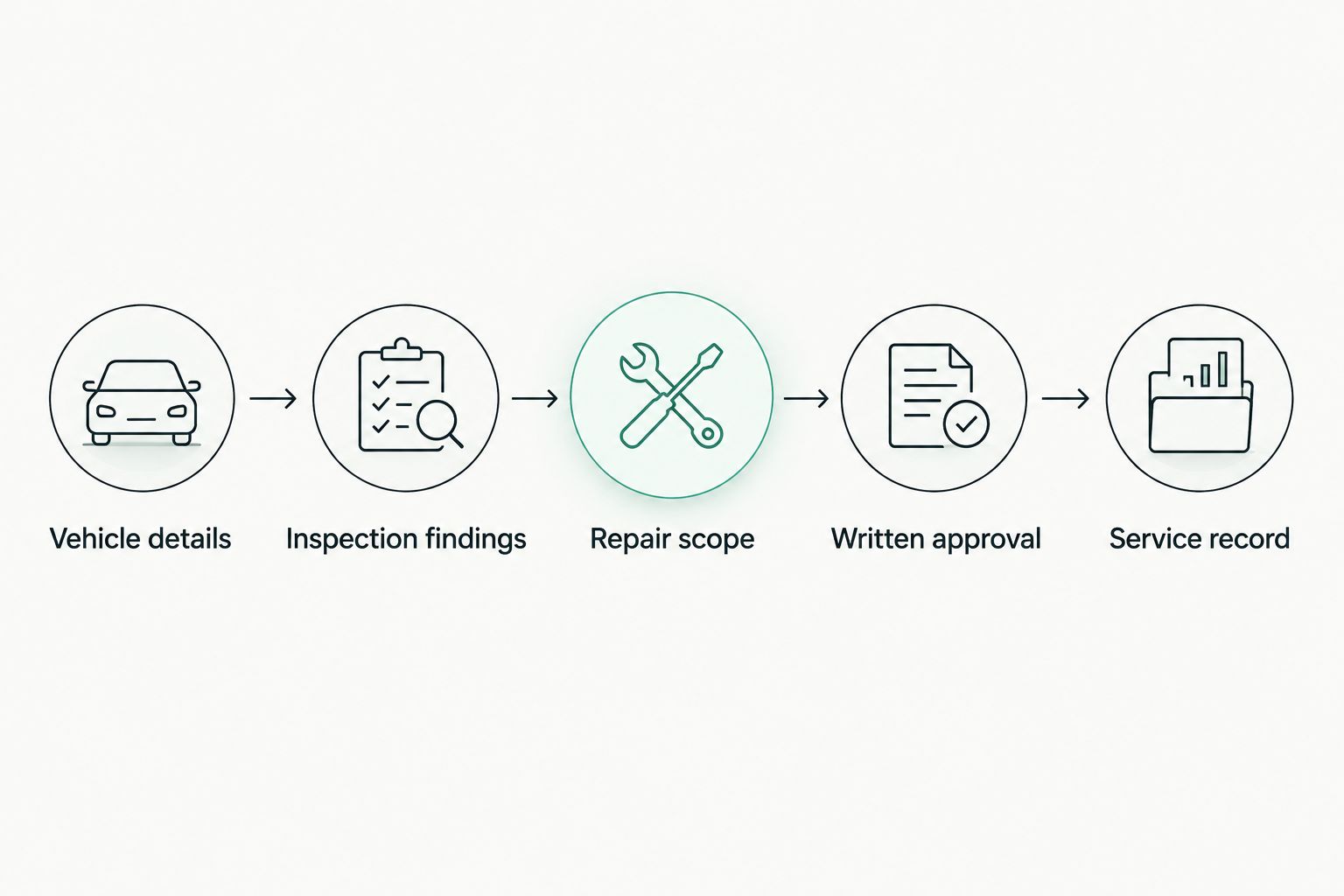
Compare the work first and the total second. Follow this sequence so a different parts list does not masquerade as a better deal.
- Vehicle details. Give each provider the same model, model year, mileage, and vehicle identification information when requested.
- Inspection findings. Ask what was measured or observed and how those findings support the repair.
- Repair scope. Confirm the axle, components, and labor operations included.
- Written approval. Ask how additional findings will be communicated before further work begins.
- Service record. Keep the final invoice and documented findings for future maintenance or a later sale.
A clear estimate lets you explain what you are authorizing in plain language. If you cannot distinguish the immediate repair from optional or separate maintenance, ask the advisor to revise the explanation before you decide.
Should brake condition affect your used-Honda purchase?
Yes—brake condition belongs in your purchase decision alongside vehicle history and the written buying terms. A vehicle's appearance does not establish its remaining brake wear or maintenance needs.
When shopping in 2026, request available service records and ask what brake inspection findings are documented. If the seller says the brakes were serviced, clarify whether that means an inspection, pad replacement, rotor work, or fluid maintenance.
New parts on an invoice are useful information, but the description still matters. A record for rear pads does not describe the front brakes.
For a used Honda you are seriously considering, arrange an appropriate pre-purchase inspection and ask about unresolved symptoms before committing. Do not substitute a smooth test drive for a condition assessment.
Keep buying terms and maintenance needs separate
A purchase agreement and a service estimate answer different questions. Review the vehicle transaction on its own terms, then identify any maintenance or repairs you expect to address after purchase.
If brake work is part of the proposed transaction, ask for the agreed work in writing. Specify the components and scope rather than relying on a promise that the brakes will be checked.
That approach helps buyers in Bristol, Johnson City, and Kingsport ask the same clear questions. It also makes later service conversations easier because you know what work was actually completed.
Is repairing your Honda better than replacing it?
A brake-service estimate alone does not establish whether replacing your vehicle makes sense. Review the Honda's overall condition, other diagnosed needs, and how well it still fits your daily driving.
Repairing the brakes addresses a specific maintenance or safety need. Replacing the vehicle changes the entire ownership decision, including the purchase terms and the replacement vehicle's condition.
If you are comparing those paths in 2026, gather the written repair scope before discussing a replacement. Avoid comparing a defined repair with an incomplete vehicle-shopping offer.
Bristol Honda is a Honda dealership in Bristol serving Johnson City and Kingsport, with new and certified pre-owned vehicle sales, financing, and service/parts. Bristol Honda is a local option for drivers who want Honda shopping and service support from the same dealership. Ask the team about service arrangements or vehicle-shopping next steps based on your decision.
Can you keep driving while comparing estimates?
Do not keep driving if braking ability has changed or the vehicle feels unsafe. A soft or sinking pedal, reduced stopping ability, visible fluid leakage, or a brake warning needs prompt attention.
Move to a safe location if you can do so safely, and arrange appropriate assistance. Do not drive between shops simply to complete a quote comparison when stopping performance is in doubt.
Noise or vibration also deserves inspection, even when the vehicle still stops. The sound alone does not identify the failed component or establish that continued driving is safe.
FAQ
What's included in a Honda brake service estimate?
A useful Honda brake service estimate identifies the vehicle, axle, recommended parts, labor, and applicable charges. It should also connect the repair recommendation to inspection findings.
Do Honda brake pads and rotors always need replacing together?
No, replacing brake pads does not automatically require replacing the rotors. Rotor measurements and condition must support whether they remain suitable for service.
Is a brake-fluid service the same as replacing brake pads?
No, brake-fluid service addresses the hydraulic fluid, while pad replacement addresses worn friction material. Neither service automatically resolves problems covered by the other.
How can I compare Honda brake service cost between shops?
Compare estimates for the same vehicle, axle, parts, and labor scope. Ask each provider to explain the inspection findings and show applicable charges before you compare totals.
What should I ask about the brakes before buying a used Honda?
Ask for available brake-service records, current inspection findings, and details of any work promised before delivery. A general statement that the brakes were serviced does not identify which components received attention.
Can Bristol Honda help drivers from Johnson City and Kingsport?
Bristol Honda is located in Bristol, Tennessee, and serves Johnson City and Kingsport. Contact the dealership to discuss Honda service, parts, or vehicle-shopping needs.
Should I wait for a routine appointment if my brake pedal feels different?
A changed brake pedal needs prompt assessment, especially if stopping ability is reduced or the pedal feels soft or sinks. Do not continue driving a vehicle that feels unsafe; arrange appropriate assistance.
One last thing
Keep the inspection findings, not just the final total. An invoice recording which axle received work and which components were replaced is more useful than a receipt labeled only brake service.
That detail helps at your next appointment and when you eventually sell or trade the vehicle. Before leaving, make sure you understand what was repaired and what maintenance remains.