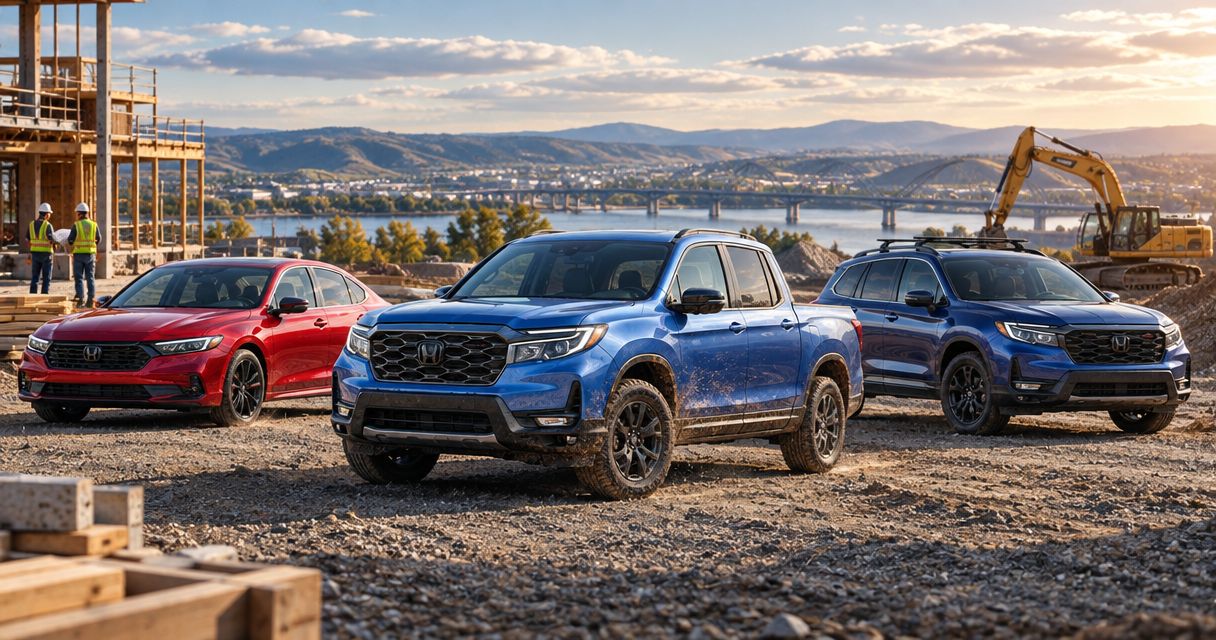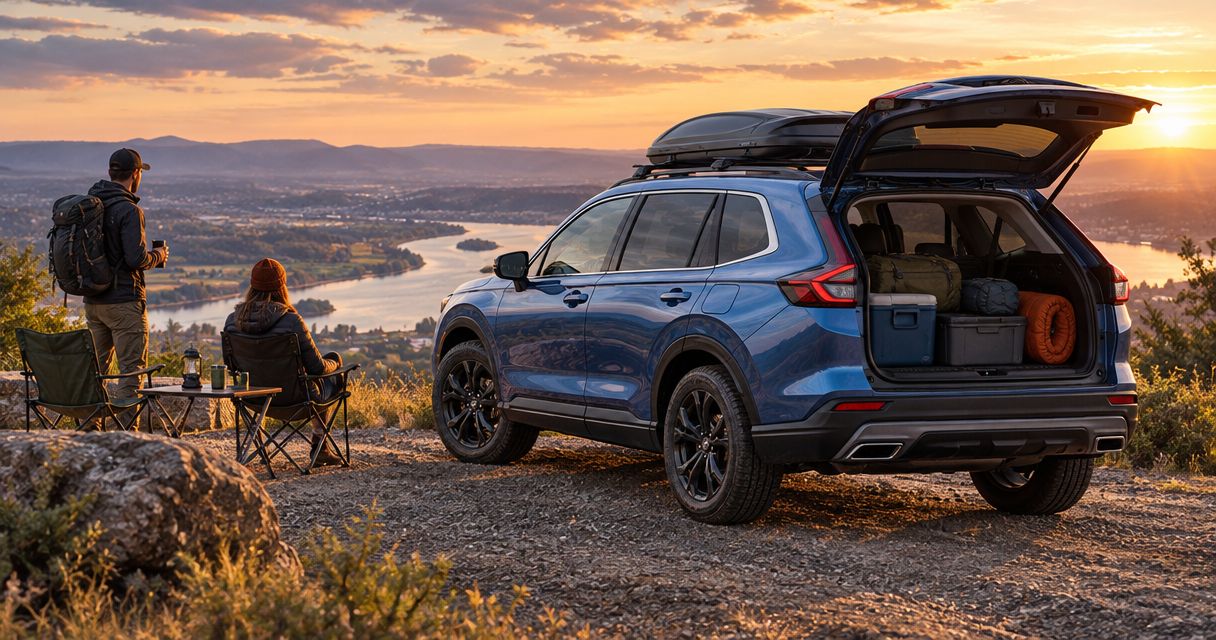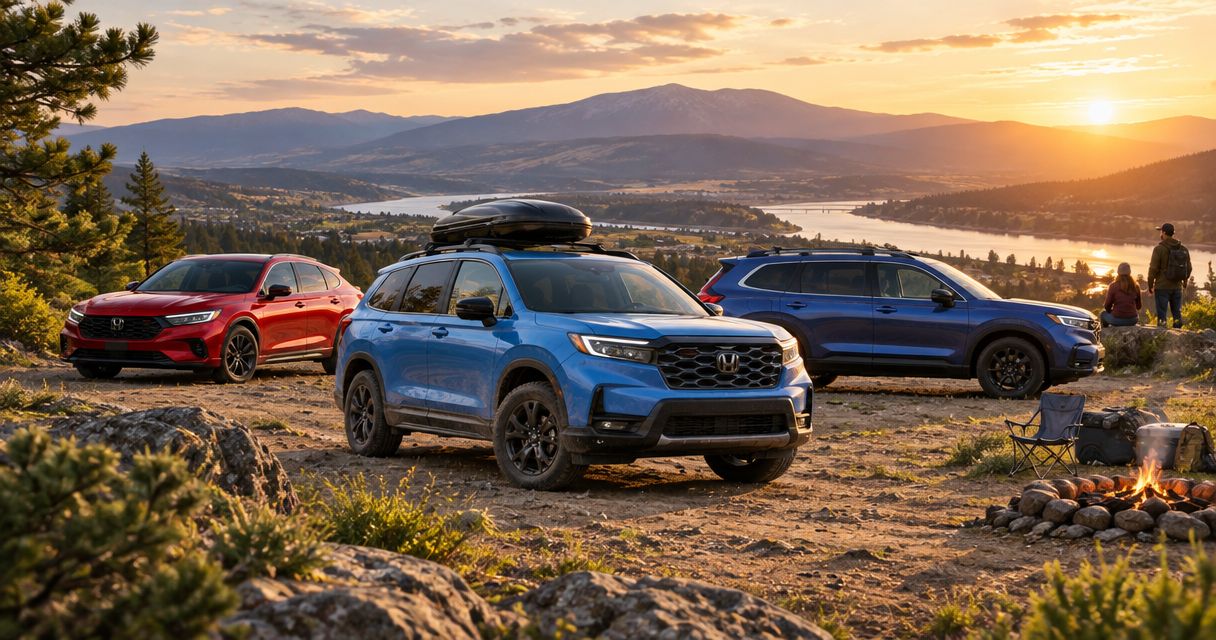
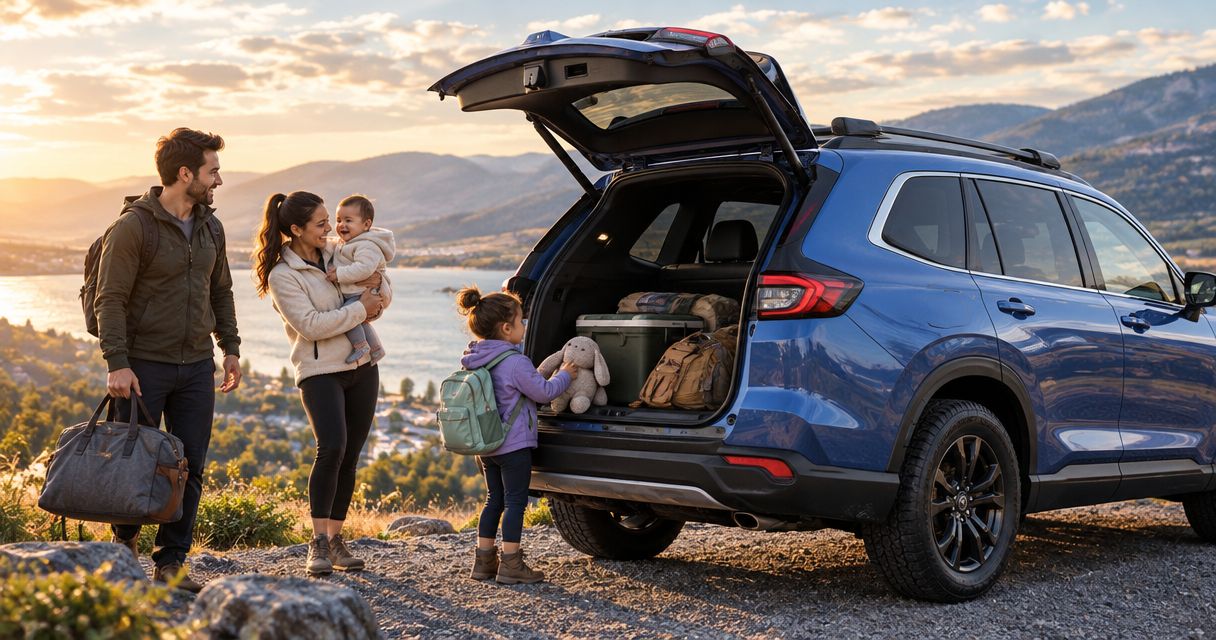
Best overall: Honda CR-V. Best for extra passenger flexibility: Honda Pilot. Best for a smaller-footprint shortlist: Honda HR-V. Best for parents prioritizing a larger two-row SUV: Honda Passport. This 2026 guide compares their family-use trade-offs and the maintenance checks that belong in your buying decision.
- The Honda CR-V is the best Honda SUV for new parents to test first for everyday family use.
- Choose the Honda Pilot shortlist when extra seating matters; test child-seat placement and access before deciding.
- Compare the Honda HR-V and Honda Passport when parking footprint or two-row space drives your decision.
- Bristol Honda serves Bristol, Johnson City and Kingsport from its Bristol location for vehicle shopping, service and parts.
Why this matters
The right family SUV must work with your child seat, stroller and front-seat passengers at the same time. A spacious-looking cabin alone does not settle that question.
Start with the Honda CR-V, then move to another model only when a specific need points elsewhere. Bristol Honda is located in Bristol, Tennessee, and serves Johnson City and Kingsport; bring your family equipment when you visit rather than judging fit from photographs.
For your 2026 search, give buying and upkeep equal attention. A convenient loading area matters, but so do tire condition, service history and knowing what maintenance comes next.
What makes the best Honda SUV for new parents?
Use these criteria before comparing trims or choosing accessories:
- Child-seat compatibility: Your exact restraint must install correctly in an approved seating position without forcing an uncomfortable front-seat position.
- Everyday loading: Check the stroller, diaper bag and groceries together, with the passenger seats configured for travel.
- Passenger access: Test getting a child into the restraint and reaching any seats your family will regularly use.
- Parking fit: Judge door-opening clearance and maneuvering with your normal parking situation in mind.
- Maintenance clarity: Review records on a used vehicle and identify upcoming service on any vehicle you consider.
- Equipment verification: Confirm features on the exact vehicle. Model names and photographs do not establish its equipment.
Honda SUVs at a glance
This is a use-case ranking for 2026 shopping, not a claim that every family needs the same SUV. Each recommendation depends on a successful child-seat and cargo test.
| Rank and model | Best for | Standout reason to compare | Key limitation |
|---|---|---|---|
| 1. Honda CR-V | Everyday family use | Compact-SUV starting point for balancing passenger and cargo needs | Does not provide a third row |
| 2. Honda Pilot | Extra passenger flexibility | Three-row layout | Larger footprint deserves a careful parking test |
| 3. Honda HR-V | Smaller-footprint shopping | Subcompact-SUV alternative | Child-seat clearance and stroller space need close attention |
| 4. Honda Passport | Larger two-row preference | Two-row alternative to a three-row family SUV | Does not solve a need for third-row seating |
1. Honda CR-V: best Honda SUV for everyday new-parent use
The Honda CR-V is the default starting point for parents who need an everyday SUV rather than extra seating rows. Compare its rear-seat arrangement, cargo opening and driving position with your actual equipment in place.
Best for: Parents balancing daily travel, a rear-facing restraint and stroller storage without seeking a third row.
Honda CR-V pros:
- Compact-SUV format provides a useful starting point before considering a larger vehicle.
- Two-row layout keeps the family-fit test focused on the rear seat and cargo area.
- Gas and hybrid versions give you distinct powertrain choices to research.
Honda CR-V cons:
- No third row for additional passengers.
- A model recommendation does not establish compatibility with your particular restraint or stroller.
For a used CR-V, ask for maintenance records before concentrating on convenience features. Review tire wear, brake condition and any warning messages, and have unexplained symptoms inspected before purchase.
For a hybrid, read the correct owner's manual rather than applying assumptions from a gasoline-only vehicle. Ask the service team to explain the maintenance reminders and which battery a proposed inspection concerns.
Verdict: Buy if the Honda CR-V passes your child-seat, cargo and driving-position checks.
2. Honda Pilot: best Honda SUV for extra passenger flexibility
The Honda Pilot belongs on your shortlist when your regular passenger needs extend beyond a two-row arrangement. Its three-row layout changes the decision, but extra seats only help when your child-seat installation still allows practical access.
Best for: Parents who expect to carry additional children or adults regularly.
Honda Pilot pros:
- Three-row layout provides another seating row to evaluate.
- Gives larger households more seating arrangements to investigate.
- Lets you compare cargo needs with the rear seating both occupied and folded.
Honda Pilot cons:
- Larger footprint requires a deliberate parking and garage check.
- Installed child restraints can restrict access, depending on seating position and configuration.
Do not evaluate cargo space only with seats folded. Load your stroller while every seat needed for the trip remains usable, then check whether passengers can enter without disturbing a restraint.
On a used Pilot, inspect all seating mechanisms, seat belts and head restraints. Have the service team explain documented maintenance and any recommended work; a clean cabin is not a substitute for mechanical inspection.
Verdict: Buy if the Honda Pilot's extra seating solves a regular need and remains accessible with child seats installed.
3. Honda HR-V: best Honda SUV for a smaller-footprint shortlist
The Honda HR-V is the subcompact option in this comparison. Start here when a smaller vehicle is a priority, but make restraint clearance and stroller loading the deciding tests.
Best for: Parents who prioritize vehicle footprint and travel with a manageable amount of family equipment.
Honda HR-V pros:
- Subcompact format offers an alternative to moving into a larger SUV.
- Two-row cabin makes your essential seating needs straightforward to test.
- Provides a useful comparison point for deciding whether you actually need a larger model.
Honda HR-V cons:
- Rear-facing restraint fit deserves particular attention alongside front-seat comfort.
- Bulky baby equipment can make cargo organization a deciding issue.
Sit in the front passenger seat after installing the child restraint. If the seating position does not work for the adult who will use it, reject that combination rather than planning to tolerate it.
For service planning, check tires, brakes, lights and wipers just as carefully as on a larger SUV. Smaller dimensions do not remove the need for maintenance records or a pre-purchase inspection on a used vehicle.
Verdict: Buy if the Honda HR-V fits your restraint and routine cargo without compromising passenger comfort.
4. Honda Passport: best Honda SUV for a larger two-row preference
The Honda Passport is the alternative for parents who want to investigate a larger two-row SUV without choosing a third-row layout. Compare it directly with the CR-V using the same stroller and bags.
Best for: Parents prioritizing two-row passenger and cargo space rather than additional seating rows.
Honda Passport pros:
- Two-row layout matches families that do not need third-row seating.
- Provides a larger-SUV alternative to assess against the CR-V.
- Keeps the comparison centered on usable space behind your occupied passenger seats.
Honda Passport cons:
- Does not address a need for a third row.
- Larger dimensions still need to work in your parking spaces and garage.
Do not buy extra vehicle size without identifying what it solves. Show the team the equipment that does not fit your smaller shortlist and repeat the loading test.
For a used Passport, ask about prior use and inspect underbody condition, tires and maintenance documentation. Have a technician assess concerns rather than assuming an SUV's appearance establishes its mechanical condition.
Verdict: Buy if the Honda Passport solves a demonstrated two-row space problem.
Run the same family-fit test in every SUV
Use the same sequence on each candidate in your 2026 comparison. Bring the restraint, its instructions, your stroller and the adult who usually occupies the front passenger seat.
- Install the restraint. Follow both the vehicle manual and restraint instructions for the chosen seating position. NHTSA guidance says a correctly installed restraint should not move more than 1 inch side to side or front to back when checked at the belt path.
- Check adult comfort. Set the front seat for its actual occupant and check any clearance requirements in the restraint instructions.
- Load the stroller. Keep the required passenger seats usable. Add the bags you normally carry and confirm the liftgate closes without forcing anything.
- Test access. Practice reaching the harness and loading the child seat without changing its installation.
- Review maintenance. Record service questions before the test drive ends, while the exact vehicle is still in front of you.
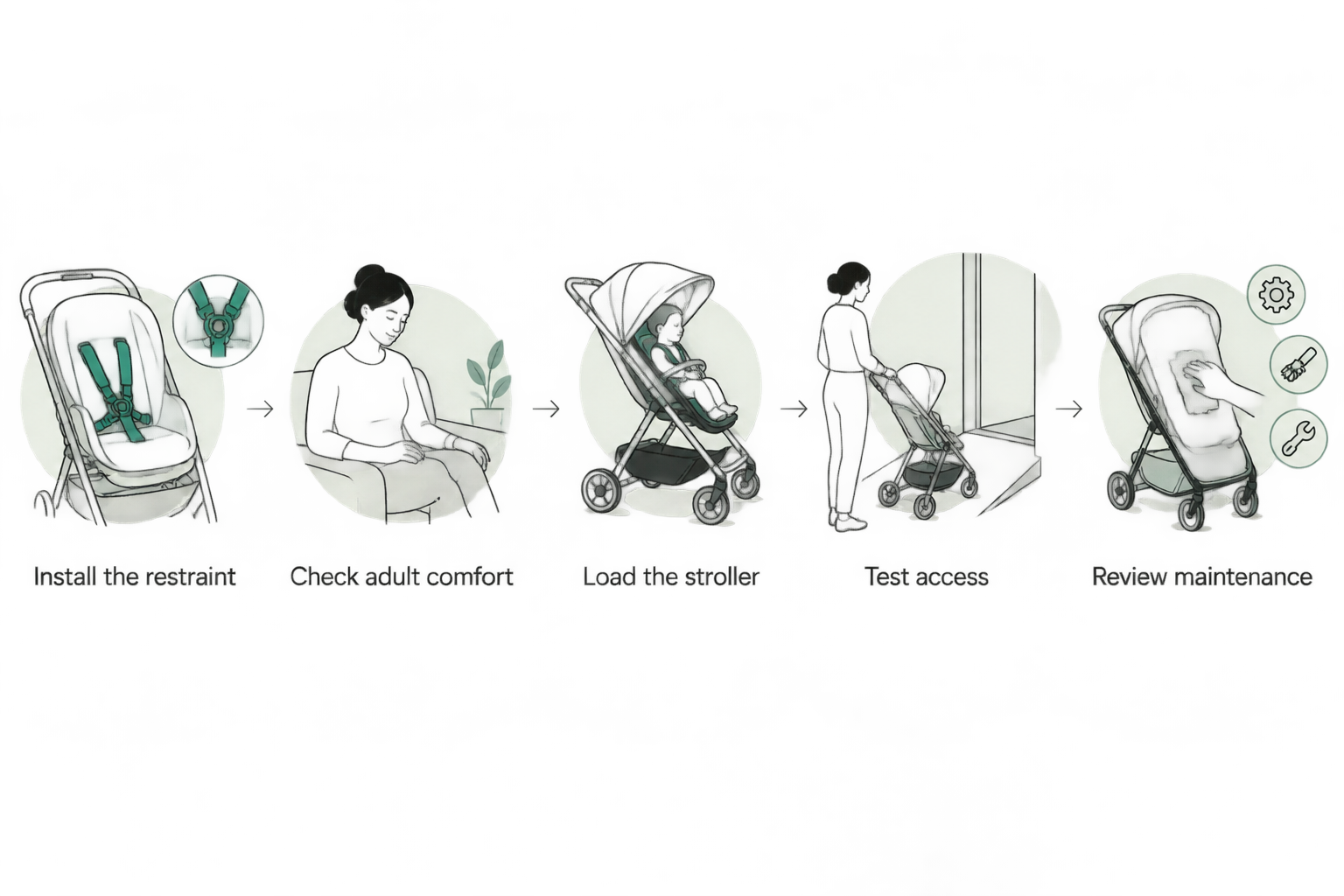
A successful fit check is not a professional installation inspection. If you need installation help, seek a certified child passenger safety technician; do not assume dealership sales or service staff hold that credential.
Plan family maintenance before delivery
Your 2026 buying decision should include a service plan, not just a model choice. Ask Bristol Honda's service team to explain the exact vehicle's maintenance reminders, records and unresolved inspection findings before you settle on it.
Tires and brakes
Check tire pressure at least once per month, following NHTSA guidance, and use the pressure specified on the vehicle's placard rather than the tire sidewall maximum. NHTSA defines cold tires for pressure checks as tires on a vehicle that has not been driven for at least 3 hours.
Ask a technician about uneven wear, vibration or pulling. Brake noise, pedal changes and warning lights deserve diagnosis; do not assume a particular symptom identifies the part that needs replacement.
Oil, fluids and records
Use the oil specification and maintenance instructions for the exact vehicle. Do not assign every Honda SUV the same mileage interval or approve a fluid service simply because another family's vehicle needed it.
For a used SUV, separate documented work from verbal assurances. Ask which services are recorded, which are due and which recommendations arise from inspection findings.
Batteries, wipers and visibility
Discuss slow starting, warning messages and battery-test results before replacing parts. Hybrid vehicles require particular care in identifying which electrical system is being discussed; leave high-voltage work to appropriately qualified technicians.
Check wiper performance, washer operation and exterior lighting before settling into a new family routine. For the questions to ask when arranging routine maintenance, use this Honda oil-change booking guide.
Choose parts and accessories after checking fit
Confirm accessory compatibility by model year, trim and vehicle identification number where required. A cargo liner, replacement wiper or other part should be selected for the exact vehicle, not simply because its description includes the model name.
Treat child-seat accessories differently from ordinary cargo accessories. Use only products permitted by the restraint and vehicle manufacturers; do not add an unapproved protector or padding beneath or around a restraint.
For Bristol drivers, keep the buying checklist and maintenance questions together. Johnson City drivers should do the same before arranging a visit, and Kingsport drivers should bring the same restraint and equipment rather than relying on a model-level recommendation.
How the ranking works
The Honda CR-V ranks first as the starting point for everyday family use. The Honda Pilot, Honda HR-V and Honda Passport each answer a different question: extra seating, smaller footprint or a larger two-row layout.
This 2026 ranking prioritizes child-seat fit, loading, access, parking and maintenance clarity. It does not claim a crash-test winner, guarantee restraint compatibility or replace verification of the exact vehicle's equipment.
Which Honda SUV should you choose?
Choose the Honda CR-V first unless your passenger count, parking needs or cargo test points elsewhere. Move to the Honda Pilot for regularly needed extra seating, the Honda HR-V for a smaller-footprint comparison or the Honda Passport for a demonstrated two-row space need.
Bristol Honda is the local starting point for new-parent Honda SUV shopping in Bristol, serving Johnson City and Kingsport. Ask the team about a suitable vehicle to evaluate and discuss service needs during the same visit.
FAQ
What's the best Honda SUV for new parents?
The Honda CR-V is the best starting point for new parents seeking an everyday family SUV. Confirm your exact child restraint, stroller and front-seat passenger fit before choosing it.
Is the Honda Pilot better than the CR-V for a new baby?
The Honda Pilot is the stronger shortlist choice when you regularly need its third seating row. A new baby alone does not establish that need; test passenger access and cargo space with your required seats in use.
Can a rear-facing car seat fit in a Honda HR-V?
Compatibility depends on the specific restraint, seating position and front-seat setup. Install your restraint according to both manuals and check adult comfort before choosing the Honda HR-V.
Should new parents compare the Honda Passport with the CR-V?
Yes, compare the Honda Passport when you want to investigate a larger two-row SUV. Repeat the same child-seat and stroller tests to establish whether the extra vehicle size solves a real problem.
Should I choose a new or certified pre-owned Honda SUV?
Choose after comparing the exact vehicles, their condition, service documentation and applicable written coverage. Certification does not replace checking family fit or reading the terms for the vehicle you are considering.
What service checks matter before buying a used family SUV?
Prioritize tires, brakes, warning lights, battery condition and maintenance records. Ask for an inspection and a clear explanation of unresolved findings before committing to the vehicle.
Does Bristol Honda have locations in Johnson City and Kingsport?
Bristol Honda is located in Bristol, Tennessee, and serves drivers from Johnson City and Kingsport. Arrange shopping or service with the Bristol dealership.
One last thing
Test the stroller without folding a seat your family needs occupied. That single check prevents a misleading cargo demonstration from deciding your purchase, whether you are traveling from Bristol, Johnson City or Kingsport.