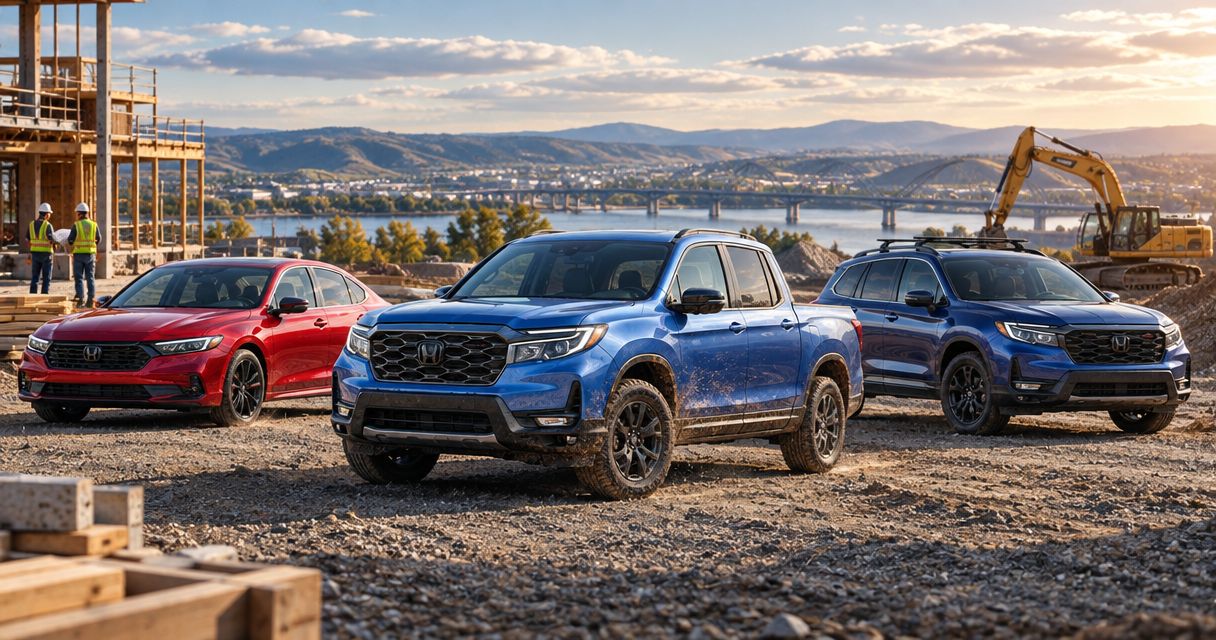
Best overall: Honda Ridgeline for mixed hauling. Best for enclosed tool storage: Honda CR-V. Best for crew-and-equipment flexibility: Honda Odyssey. For estimating and client visits, choose the Honda Accord; this 2026 guide compares the best Honda models for contractors and explains the service planning each work pattern requires.
- The best Honda models for contractors start with Ridgeline for hauling and CR-V for enclosed tools.
- Choose Honda Odyssey for crew-and-equipment flexibility; choose Honda Accord for estimates and client visits.
- Bristol Honda serves contractors from Bristol, Johnson City, and Kingsport from its Bristol location.
- Match cargo, passengers, maintenance needs, and accessory fit before choosing a work vehicle.
Why this matters
A contractor's vehicle has to fit the work, not just the parking space. Open-bed hauling, enclosed tool storage, passenger transport, and estimating visits call for different layouts.
Bristol Honda is located in Bristol, Tennessee, and serves Johnson City and Kingsport. Bristol Honda is a local starting point for contractors comparing Honda work vehicles across the Tri-Cities. Bring your equipment list and maintenance questions so the shopping conversation covers the vehicle's working life, not just the test drive.
What makes the best Honda models for contractors?
Use these criteria for your 2026 shortlist before comparing trim features:
- Cargo separation: Decide whether dirty materials belong outside the passenger cabin or tools need enclosed storage.
- Real load fit: Check door openings, wheel-well clearance, loading height, and usable space with passengers aboard.
- Weight limits: Verify the specific vehicle's load label, owner's manual, and applicable towing requirements.
- Daily access: Try repeated loading, parking, and entry rather than judging space from photographs.
- Service planning: Review maintenance history, upcoming work, tire condition, and parts compatibility before committing.
Start with a 7-day work log. Record passengers, equipment, routes, and every task your present vehicle cannot handle comfortably. Apply the same checklist whether your business operates in Bristol, Johnson City, or Kingsport.
Honda contractor vehicles at a glance for 2026
| Rank and model | Best for | Standout feature | Key limitation |
|---|---|---|---|
| 1. Honda Ridgeline | Mixed hauling | Pickup bed separates materials from the cabin | Bed cargo needs suitable weather protection and security |
| 2. Honda CR-V | Enclosed tool storage | SUV cargo area accessible through a rear hatch | Tools share enclosed space with occupants |
| 3. Honda Odyssey | Crew-and-equipment flexibility | Minivan layout with sliding side doors | Passenger seating reduces usable equipment space |
| 4. Honda Accord | Estimates and client visits | Separate sedan trunk | Not a substitute for a dedicated hauling vehicle |
These are use-case recommendations, not promises about equipment on every model year or trim. Confirm specifications for the exact vehicle under consideration, particularly when comparing new and certified pre-owned examples.
1. Honda Ridgeline: best Honda for mixed hauling
The Honda Ridgeline is the default choice when your work involves equipment and materials that belong in a pickup bed. Its layout separates the load area from the passenger cabin, making it the clearest starting point for contractors who regularly haul dirty or bulky items.
Best for: Contractors whose routine includes material pickup alongside everyday driving.
Honda Ridgeline pros:
- A separate bed keeps dirty loads out of the seating area.
- Open-bed access suits items awkward to pass through a hatch.
- The pickup layout supports a distinct passenger-and-equipment arrangement.
Honda Ridgeline cons:
- Exposed cargo requires an appropriate protection and security plan.
- Bed dimensions still limit what fits flat or under a cover.
- Heavy equipment and trailer demands require vehicle-specific checks.
Bring your longest routinely carried item measurement. Ask how a proposed cover, rack, or storage box changes usable room and contributes to the vehicle's total load.
For service planning, describe any towing, loaded driving, or dusty-site use. Have the service team identify the applicable maintenance guidance rather than choosing a generic interval. Inspect tires and brakes as working equipment, not merely as test-drive details.
Verdict: Buy the Honda Ridgeline if open-bed hauling is a regular requirement and the specific vehicle meets your load needs.
2. Honda CR-V: best Honda for enclosed tool storage
The Honda CR-V suits contractors carrying portable tools, samples, and inspection equipment rather than loose building materials. Its SUV cargo layout provides enclosed space behind the seating area, with rear-hatch access for loading.
Best for: Service calls and small-equipment work that require tools inside the vehicle.
Honda CR-V pros:
- Enclosed cargo space shelters equipment from direct weather exposure.
- Rear-hatch access makes tool-case organization straightforward.
- The layout supports work use without requiring a pickup bed.
Honda CR-V cons:
- Equipment shares the enclosed cabin with passengers.
- Keeping rear seats usable reduces your equipment footprint.
- A closed vehicle is not a substitute for secure tool storage.
Bring 2 representative tool cases to your fit check, including the hardest one to load. Test their placement with the seats arranged as you actually use them, and check whether you can reach smaller items without unloading everything.
Inspect the cargo floor, rear opening, and nearby interior panels on a pre-owned vehicle. For maintenance, explain short-trip patterns and loaded operation so the service discussion reflects your workday.
Verdict: Buy the Honda CR-V for portable equipment that needs enclosed transport; skip it for routine loose-material hauling.
3. Honda Odyssey: best Honda for crew-and-equipment flexibility
The Honda Odyssey deserves consideration when moving people is part of the job. Its minivan layout and sliding side doors offer a different loading approach from either a pickup or an SUV.
Best for: Contractors who alternate between transporting coworkers and carrying organized equipment.
Honda Odyssey pros:
- Sliding side doors provide access to the passenger area.
- A minivan layout supports passenger-focused workdays.
- Side and rear access give you different loading approaches.
Honda Odyssey cons:
- Occupied passenger seats reduce space available for equipment.
- Seat handling and storage require a vehicle-specific demonstration.
- Dirty materials need protection to avoid damaging the interior.
Ask for a demonstration of the exact vehicle's seating arrangements. Do not assume seats fold, slide, or remove in the same way across model years and configurations.
Keep equipment secured away from occupied seating and clear of door operation. During a pre-purchase inspection, include seat latches, seat belts, sliding-door operation, and rear climate functions in the discussion. A layout that works on paper still needs to work repeatedly during a normal day.
Verdict: Buy the Honda Odyssey when passenger flexibility matters more than having a separate material-hauling area.
4. Honda Accord: best Honda for estimates and client visits
The Honda Accord fits the contractor who spends more time measuring, quoting, supervising, and meeting customers than moving supplies. Its sedan trunk separates carried items from the seating area, but the opening needs a hands-on fit check.
Best for: Estimators and project managers whose main cargo is portable measuring equipment, samples, and paperwork.
Honda Accord pros:
- A separate trunk keeps work items apart from passengers.
- The sedan layout suits a passenger-focused workday.
- It avoids choosing a hauling layout for tasks handled elsewhere.
Honda Accord cons:
- The trunk opening limits bulky equipment access.
- It cannot replace a pickup for open-bed work.
- Large samples and tool cases require careful fit testing.
Check your largest sample board before choosing the Accord. Carrying the right items matters more than a cargo-volume figure alone; the opening and shape determine whether those items fit.
For service planning, describe your actual driving rather than simply calling it commuting. Frequent stops and extended parked operation belong in the maintenance conversation. Check tires, brakes, battery condition, and documented service on a pre-owned example.
Verdict: Buy the Honda Accord for estimating and supervision; skip it as your primary material-hauling vehicle.
How these Honda models rank
The 2026 ranking prioritizes cargo separation, real load fit, weight limits, daily access, and service planning. The Ridgeline takes the default position because its pickup bed addresses a hauling need the other layouts do not; the remaining choices serve distinct jobs rather than competing for the same role.
This is a layout-based buying guide, not a vehicle test or a claim about current dealership inventory. For additional SUV context, compare Honda SUVs by cargo space, then verify the exact vehicle with your equipment aboard.
Check the work setup before choosing accessories
Separate the decision into three parts: Load fit, Accessory fit, and Service plan. Approve each separately; a vehicle that carries your cases still needs compatible equipment and a workable maintenance schedule.
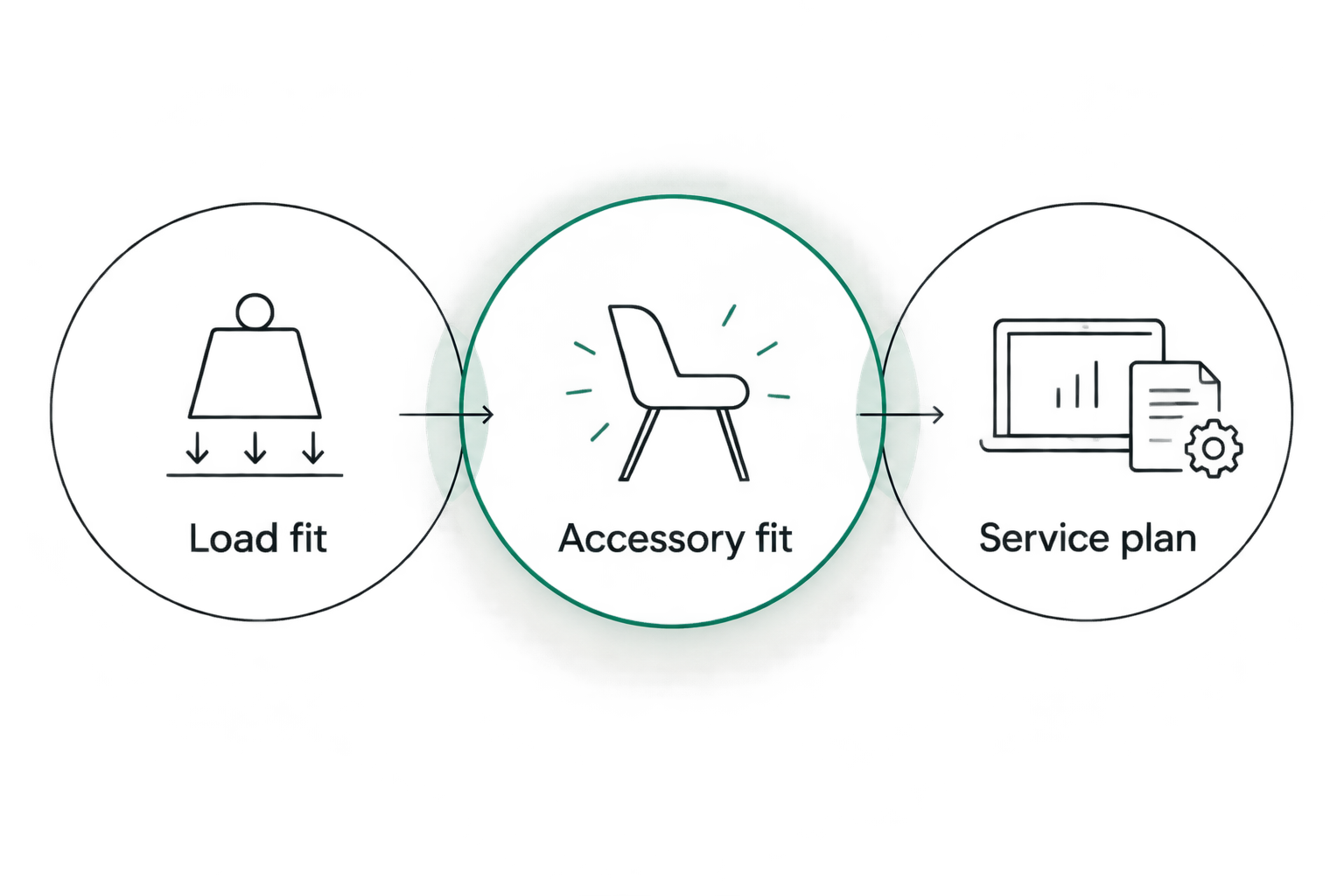
For your 2026 shopping visit, bring an equipment list with dimensions and measured weights. Include passengers and accessories when checking the vehicle's permitted load. Do not treat maximum towing capacity as permission to carry an unlimited load inside the vehicle.
Ask the parts team to confirm fit using the exact vehicle identification number where applicable. Bed covers, racks, floor protection, cargo organizers, and towing components need checks for compatibility and intended use. A visually similar part is not enough.
Before authorizing installation, ask what mounting requires and how the accessory affects access, loading, and maintenance. Keep the part information with your vehicle records so replacement orders do not depend on memory.
Build service into the work schedule
A work vehicle's maintenance plan should reflect how you use it. Give the service advisor a plain description of loaded trips, repeated short journeys, towing, dusty conditions, or extended idling instead of asking for a universal contractor schedule.
Review records before the purchase
For a pre-owned Honda, request available maintenance records and a clear explanation of outstanding recommendations. Ask which inspections and services are documented, which are due, and which require further diagnosis.
If considering certified pre-owned, review the specific vehicle's certification documents and applicable terms. Certification does not replace understanding its present tire condition, brake condition, maintenance history, or suitability for your workload.
Plan inspections around actual use
Use the owner's manual and applicable Maintenance Minder guidance for the exact vehicle. Ask the Honda service team to explain how your operating conditions affect that guidance; do not substitute an internet mileage rule for the vehicle's instructions.
Arrange a 30-minute planning window in your calendar to review records and upcoming work. This is time for your own planning, not a promised dealership appointment length. Keep inspection findings together so you can distinguish immediate needs from work to schedule later.
Treat brakes and tires as load-carrying equipment
Report vibration, pulling, unusual noises, warning lights, and changes in braking promptly. Ask for the inspection findings behind a recommendation rather than assuming every symptom requires the same repair.
Check tire pressures using the vehicle's specified guidance and inspect for damage or uneven wear. Loading equipment into the same corner repeatedly is also a reason to review your cargo arrangement, not just the tires.
Coordinate the trip from your city
Whether you work in Bristol, Johnson City, or Kingsport, confirm the appointment scope before traveling. Explain the concern, ask what diagnostic work is planned, and discuss transportation needs without assuming a particular accommodation.
Bristol Honda is in Bristol, not Johnson City or Kingsport. Contact the team to discuss Honda work vehicles, request a service appointment, or check parts compatibility before making the trip.
Which Honda should you choose in 2026?
Choose the Honda Ridgeline unless your work clearly calls for a different layout. Pick the Honda CR-V for enclosed portable tools, the Honda Odyssey for alternating crew and equipment duties, or the Honda Accord for estimates and client visits.
Before deciding, complete both a load demonstration and a service review. The right layout solves today's work problem; documented condition and a practical maintenance plan help you make an informed purchase.
FAQ
What's the best Honda model for contractors in the Tri-Cities?
The Honda Ridgeline is the default recommendation for contractors who regularly need open-bed hauling. Choose the CR-V for enclosed portable tools, Odyssey for crew flexibility, or Accord for estimating visits.
Is a Honda CR-V suitable for carrying contractor tools?
The Honda CR-V suits portable tools that fit securely in its enclosed cargo area. Test your actual cases with the passenger seats positioned for normal use, and verify the vehicle's load limits.
Should a contractor choose a Honda Odyssey instead of a pickup?
Choose the Honda Odyssey when transporting people and organized equipment matters more than a separate open bed. Demonstrate the exact seating arrangement and keep equipment secured clear of occupants and doors.
Is the Honda Accord a good contractor vehicle?
The Honda Accord is a practical choice for estimates, inspections, and client visits when your equipment fits its trunk. It is not the recommended layout for routine bulky-material hauling.
How do I check whether a Honda can carry my equipment?
Measure and weigh your equipment, then check the exact vehicle's load label and owner's manual. Include occupants and accessories, and confirm towing requirements separately if a trailer is involved.
Do contractor vehicles need a different maintenance schedule?
Maintenance requirements depend on the exact vehicle and its operating conditions. Describe towing, loaded use, short trips, dust, and idling to the service advisor and follow the applicable Honda guidance.
Where is Bristol Honda for Johnson City and Kingsport contractors?
Bristol Honda is located in Bristol, Tennessee, and serves drivers from Johnson City and Kingsport. Contact the team before traveling to discuss vehicle shopping, service, or parts questions.
One last thing
Test unloading, not just loading. Put your most frequently used tool behind your largest case, then retrieve it as though you were parked at a customer's property. If every service call starts with emptying the vehicle, change the storage arrangement before choosing more accessories.