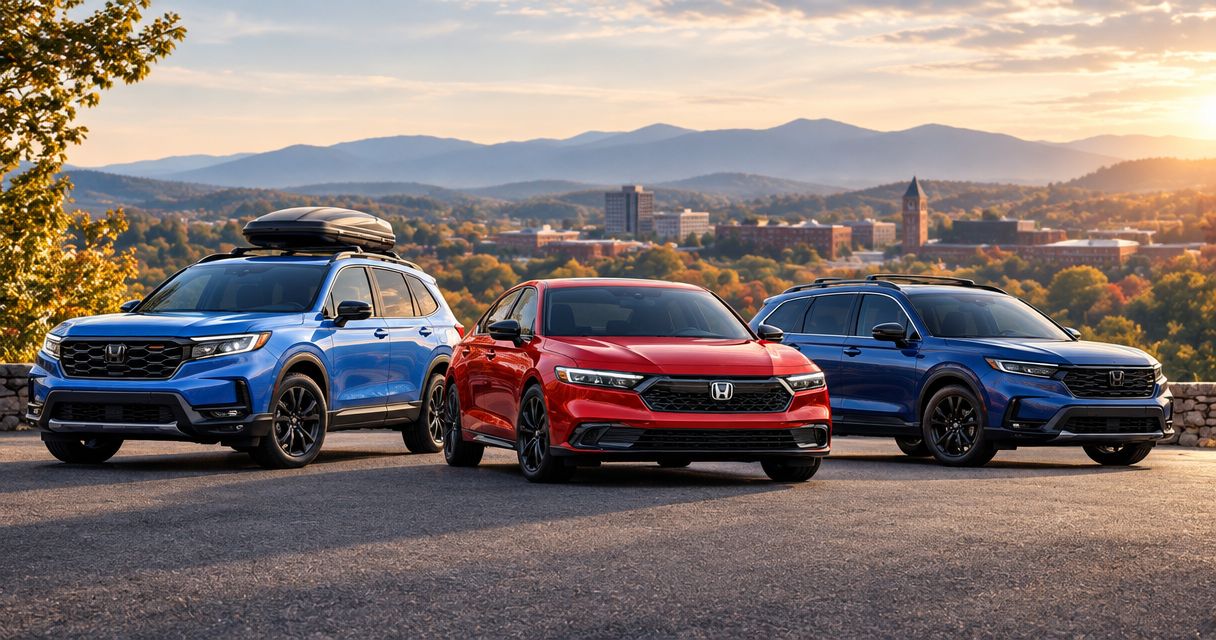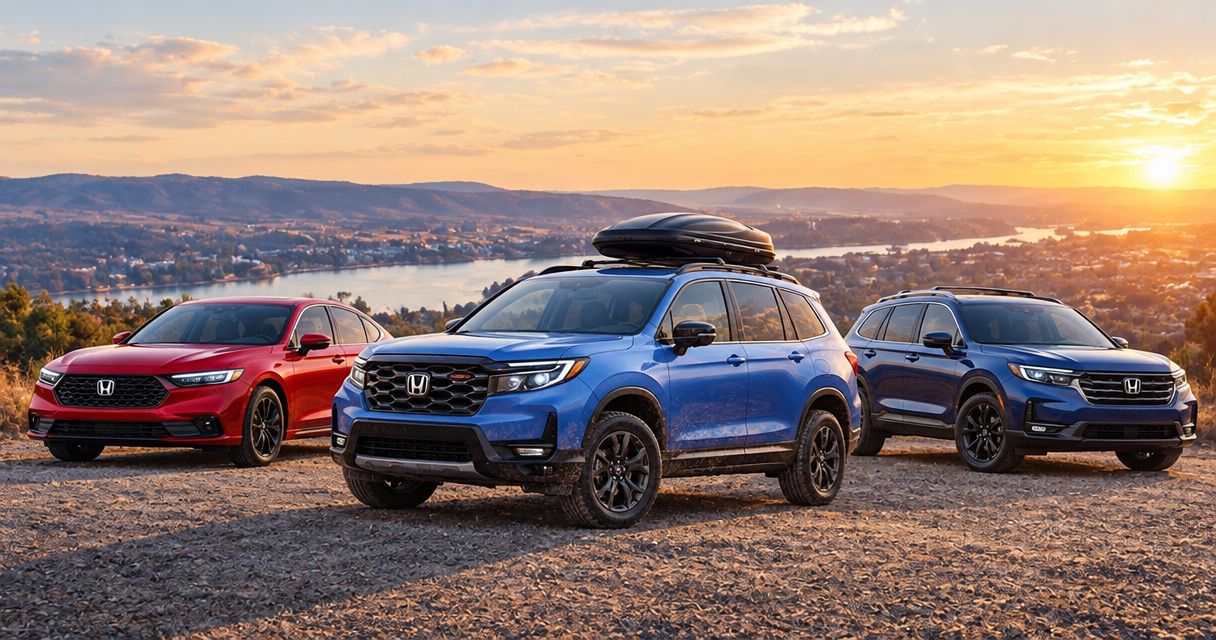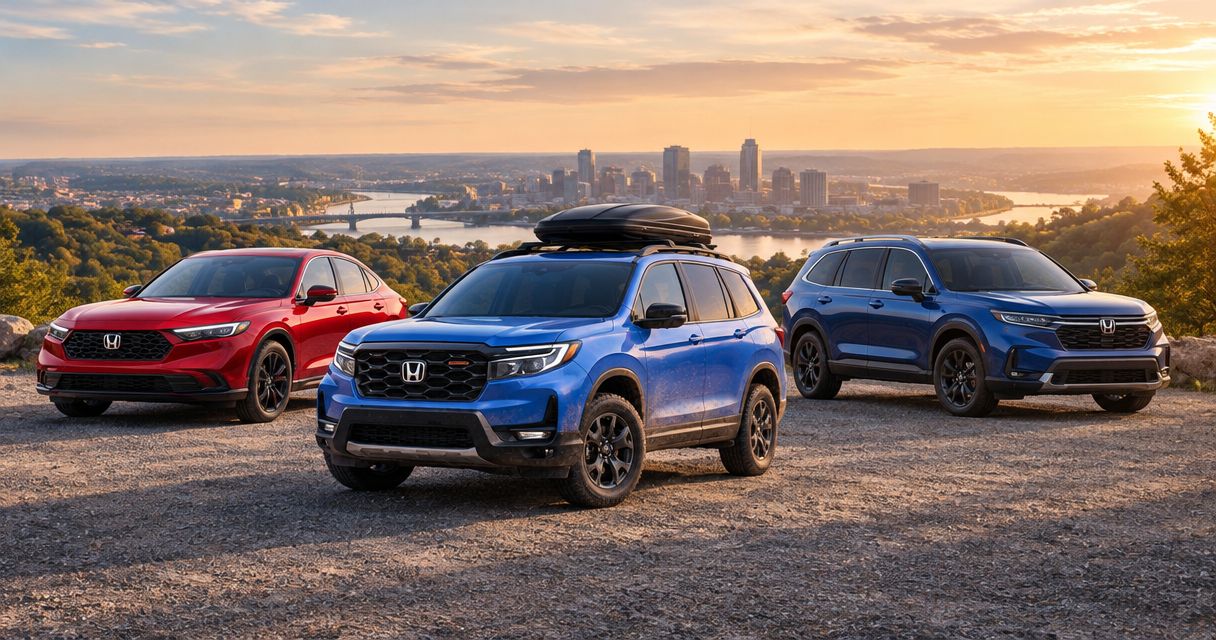
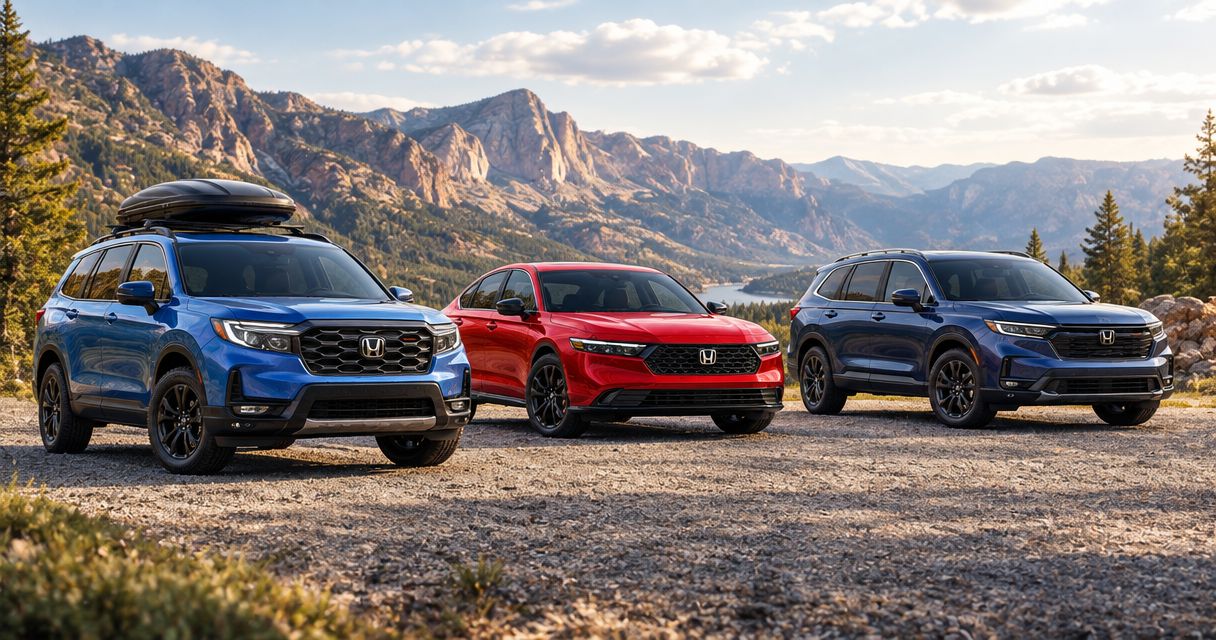
Best overall for maximum cargo volume: Honda Pilot. Best two-row option: Honda Passport. Best compact option: gas-powered Honda CR-V. This guide to Honda SUVs ranked by cargo space compares published 2026 capacities, explains what the measurements mean, and helps you choose a vehicle you can load and maintain comfortably.
- Honda SUVs ranked by cargo space: Pilot, Passport, gas-powered CR-V, Prologue, then HR-V by seats-folded volume.
- Honda Pilot leads this comparison; Honda Passport suits drivers who want cargo room without a third row.
- Compare matching seat configurations; maximum cargo volume does not describe luggage space with every passenger aboard.
- Bristol Honda serves SUV shoppers and service customers in Bristol, Johnson City, and Kingsport.
Why this matters
The largest cargo number often describes an SUV with its rear passenger seats folded. That is useful for moving furniture, but not for taking passengers and their luggage on the same trip.
For 2026 shopping, start with the seats you actually need. Bristol Honda is located in Bristol and serves Johnson City and Kingsport; bring your usual bags, stroller, or sports equipment when comparing vehicles.
Bristol Honda is a practical starting point for Tri-Cities drivers comparing Honda SUVs and planning their ongoing service.
What makes the best Honda SUV for cargo?
Judge cargo usefulness against these criteria before choosing by volume alone:
- Seats-folded capacity: The space available when rear passengers are not traveling.
- Seats-up capacity: The luggage area remaining behind the seats you need occupied.
- Opening and floor shape: Whether your actual equipment clears the liftgate and fits between interior obstructions.
- Passenger flexibility: Whether carrying a long item forces you to leave someone behind.
- Load limits: Whether passengers, accessories, and luggage stay within the vehicle's permitted load.
- Ownership practicality: Whether you can operate the seats, protect the interior, and maintain the vehicle without unnecessary difficulty.
Cargo volume and payload answer different questions. Cubic feet describe space; the vehicle's loading label addresses weight. A large compartment is not permission to fill it with unrestricted weight.
Honda SUVs ranked by cargo space at a glance
This 2026 ranking uses published seats-folded cargo volume, with a consistent preference for conventional cargo measurements rather than mixing in separately advertised maximum configurations. The CR-V entry represents the gas-powered model, not every hybrid trim.
| Rank | Honda SUV | Best for | Published seats-folded cargo volume | Standout feature | Key limitation |
|---|---|---|---|---|---|
| 1 | Honda Pilot | Passenger and cargo flexibility | Up to 87.0 cubic feet | Three-row seating configuration | Full passenger use leaves less luggage space |
| 2 | Honda Passport | Two-row cargo use | 83.8 cubic feet | Large compartment without a third row | No third row for additional passengers |
| 3 | Honda CR-V, gas-powered | Compact SUV practicality | 76.5 cubic feet | Useful space in a compact SUV | This figure does not establish hybrid capacity |
| 4 | Honda Prologue | Electric SUV shopping | 57.7 cubic feet | Battery-electric, two-row layout | Less seats-folded volume than the gas-powered CR-V |
| 5 | Honda HR-V | Smaller-SUV shopping | 55.1 cubic feet | Compact two-row layout | Lowest seats-folded volume in this comparison |
Specification basis: Honda's U.S. 2026 model specifications for Pilot, Passport, CR-V, Prologue, and HR-V. Figures describe cargo volume, not payload; Pilot capacity varies by trim. Check the specification sheet for the exact vehicle before treating any figure as its capacity.
Honda also publishes larger maximum cargo figures for some models using different measurement conditions. Do not combine those figures with conventional measurements to create a misleading ranking.
1. Honda Pilot: best Honda SUV for passenger flexibility
The Honda Pilot leads this comparison with up to 87.0 cubic feet behind the front row. Its third row gives you a passenger option that the other SUVs in this table do not provide.
That flexibility matters when your passenger count changes. However, the leading seats-folded figure does not tell you how much luggage fits when every row is occupied.
Honda Pilot pros:
- Highest seats-folded volume in this comparison.
- Third-row seating for trips requiring additional passenger positions.
- Rear-seat configurations let you change the balance between people and equipment.
Honda Pilot cons:
- Using the third row reduces the available luggage compartment.
- Cargo specifications vary by trim and measurement configuration.
Best for: Households that need additional passenger seating as well as substantial hauling space.
Before choosing, load your luggage with the required rows upright. Verdict: Buy the Honda Pilot for passenger flexibility, not solely for its largest cargo figure.
2. Honda Passport: best Honda SUV for two-row cargo use
The 2026 Honda Passport provides 83.8 cubic feet with the rear seats folded and 44.0 cubic feet behind its second row. That seats-up measurement deserves attention if you regularly carry passengers and equipment together.
The Passport removes the third-row decision from your shopping process. You get a two-row layout, but no additional row when your passenger needs change.
Honda Passport pros:
- Substantial cargo room behind the occupied second row.
- Seats-folded capacity close to the Pilot's conventional figure.
- Two-row configuration suits shoppers who do not need extra seating.
Honda Passport cons:
- No third-row passenger option.
- Less seats-folded volume than the Pilot in this comparison.
Best for: Drivers carrying bulky equipment while retaining their second-row seats.
Test the load with the rear seatbacks positioned for comfortable passenger use. Verdict: Buy the Honda Passport when two rows meet your needs and seats-up cargo room takes priority.
3. Honda CR-V: best Honda SUV for compact practicality
The gas-powered Honda CR-V provides 39.3 cubic feet behind the rear seats and 76.5 cubic feet with them folded. Those measurements make it a useful comparison point before you move into a larger SUV.
Keep the powertrain distinction clear during 2026 shopping. A gas-powered CR-V specification is not a substitute for the cargo specification of a particular CR-V Hybrid trim.
Honda CR-V pros:
- Useful cargo capacity with the rear seats upright.
- Substantial expansion when the rear seats fold.
- A compact SUV option for shoppers who do not need a third row.
Honda CR-V cons:
- Less cargo volume than the Pilot or Passport in this comparison.
- Gas and hybrid specifications require separate checks.
Best for: Drivers seeking compact SUV practicality before considering larger alternatives.
Bring your largest routine item rather than choosing from photographs. Verdict: Buy the gas-powered Honda CR-V if your equipment fits without moving up a vehicle size.
4. Honda Prologue: best Honda SUV for electric shoppers
The Honda Prologue provides 25.2 cubic feet behind its rear seats and 57.7 cubic feet with them folded. Its battery-electric powertrain makes charging access part of the buying decision alongside cargo fit.
Do not choose an electric SUV on cargo volume alone. Confirm that your home and travel charging plans suit your driving before making the final comparison.
Honda Prologue pros:
- Battery-electric option within this Honda SUV comparison.
- Folding rear seats expand the load area.
- Two-row layout keeps the passenger-versus-cargo decision straightforward.
Honda Prologue cons:
- Less cargo volume than the gas-powered CR-V.
- Charging arrangements require separate planning.
Best for: Drivers specifically seeking an electric SUV whose equipment fits its load area.
Verdict: Buy the Honda Prologue for an electric ownership plan, not to maximize cargo volume.
5. Honda HR-V: best Honda SUV for smaller-SUV shoppers
The Honda HR-V offers 24.4 cubic feet behind the rear seats and 55.1 cubic feet with them folded. It finishes last by volume here, but the smallest sufficient vehicle still deserves a place on your shortlist.
Honda HR-V pros:
- Two-row SUV configuration.
- Rear seats fold to accommodate larger loads.
- A smaller-SUV option when additional cargo capacity is unnecessary.
Honda HR-V cons:
- Lowest seats-folded capacity in this ranking.
- Less seats-up luggage space than the other models listed.
Best for: Shoppers whose everyday equipment fits without needing a larger cargo compartment.
Verdict: Buy the Honda HR-V if your real-world loading test confirms that its space is enough.
How this cargo ranking works
The ranking prioritizes seats-folded volume, then explains passenger flexibility and seats-up usefulness. It is a specification comparison, not a claim of hands-on testing or a ranking of ride quality, reliability, or ownership expense.
For your 2026 purchase, use volume to narrow the list. Use a physical loading check to make the decision.
Check cargo fit before choosing accessories
Cargo shopping and parts selection belong together. A liner, organizer, or cover must fit the exact vehicle and must not interfere with seat operation or access to required equipment.
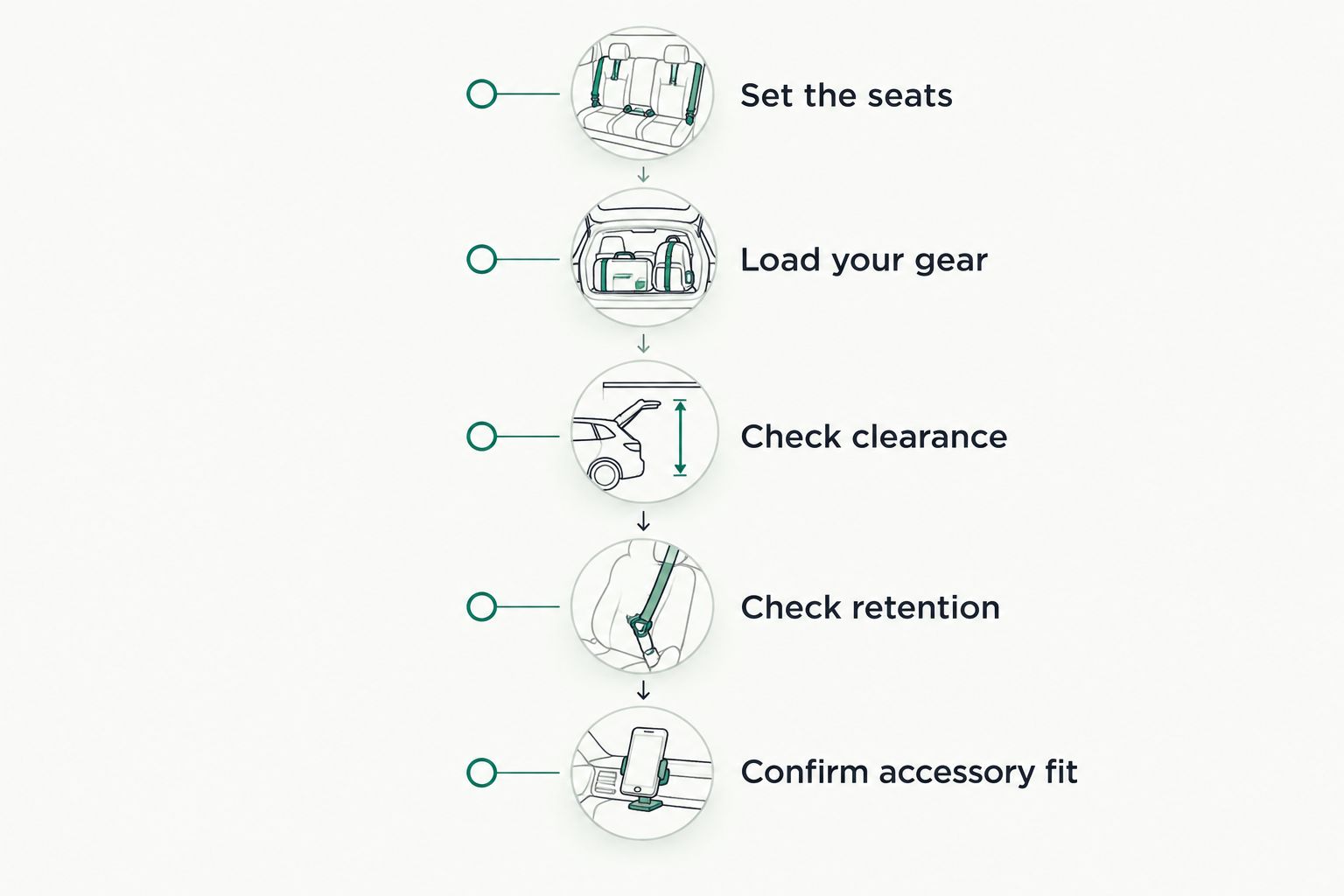
Follow this sequence during a vehicle visit:
- Set the seats: Position the front seats for the driver and passenger, then leave every needed rear seat upright.
- Load your gear: Bring the stroller, suitcase, crate, or equipment that determines whether the SUV works.
- Check clearance: Confirm the liftgate closes normally without pressing against the load.
- Check retention: Locate the approved ways to secure the items, using the owner's manual.
- Confirm accessory fit: Match any cargo accessory to the model year, trim, and seating configuration.
Avoid buying an accessory because its description only says it fits a Honda SUV. Confirm the part number and installation requirements with the parts team. A previous owner's liner or organizer also needs a fit check before reuse.
Maintain the SUV for the load you carry
More cargo room does not remove maintenance responsibilities. Tires, brakes, seat latches, and cargo restraints all deserve attention when you regularly carry passengers and equipment.
Tires: Use the tire-pressure information specified for the vehicle, not the maximum pressure printed on the tire sidewall. Check pressures as directed in the owner's manual and ask the service team about unexplained pressure loss or uneven wear.
Brakes: Arrange an inspection for grinding, pulling, vibration, or a change in braking behavior. Do not assume removing luggage resolves an underlying brake problem.
Seats and restraints: After folding seats, confirm that seatbacks latch correctly when returned upright. Keep luggage clear of seat belts and do not use an improvised attachment point in place of an approved restraint.
Loading limits: Read the vehicle's loading label before a heavily packed trip. Passengers and cargo share the permitted load, and accessories can affect the calculation. Ask for help interpreting the exact vehicle's instructions rather than estimating from its cargo dimensions.
These checks apply equally to drivers leaving Bristol, Johnson City, or Kingsport. Match service decisions to the vehicle's condition and maintenance instructions, not simply to how full the luggage compartment looks.
Make the service and parts visit useful
Bristol Honda provides service and parts in Bristol for drivers throughout the Tri-Cities. When arranging Honda service, describe how you use the SUV and ask about the maintenance procedures and parts appropriate to its model year.
Bring the vehicle identification number when discussing parts. Mention accessories already installed, any previous repairs, and whether a problem appears only with passengers or luggage aboard.
For a used SUV, inspect the cargo area as carefully as the seating surfaces. Check the rear-seat release mechanisms, liftgate operation, visible trim damage, and signs of water intrusion. Request an inspection of concerns rather than accepting a clean cargo mat as evidence of vehicle condition.
A Bristol driver, a Johnson City driver, and a Kingsport driver should make the same distinction: a shopping visit establishes fit; a service inspection evaluates condition. One does not replace the other.
Which Honda SUV should you choose?
Choose the Honda Pilot as the default when you need both cargo capacity and a third-row option. Choose the Honda Passport when your passenger needs stop at two rows and you prioritize the compartment behind them.
Start with the gas-powered Honda CR-V if compact SUV space meets your needs. Consider the Prologue specifically for electric ownership, and the HR-V when its smaller cargo area passes your loading test.
Before committing to a 2026 vehicle, confirm its trim-specific capacity, inspect its condition, and check accessory compatibility. Then discuss the buying and service questions together.
FAQ
Which Honda SUV has the most cargo space in 2026?
The Honda Pilot leads this comparison with up to 87.0 cubic feet using conventional seats-folded cargo measurements. Honda also publishes maximum figures under different measurement conditions, so compare matching specifications and trims.
Is the Honda Passport better than the Pilot for cargo?
The Honda Passport is the stronger fit when you want substantial cargo room behind a second row without needing a third row. The Pilot leads this comparison in seats-folded volume and adds third-row passenger flexibility.
How much cargo space does the gas-powered Honda CR-V have?
The 2026 gas-powered Honda CR-V provides 39.3 cubic feet behind the rear seats and 76.5 cubic feet with them folded. Check CR-V Hybrid specifications separately rather than applying these figures to every powertrain.
Does maximum cargo space mean all the seats are usable?
No, seats-folded cargo capacity requires giving up the affected rear passenger positions. Compare the space behind the last row you need occupied for your actual trip.
Can I fill a Honda SUV with anything that fits?
No, cargo must stay within the vehicle's loading limits and be secured according to its instructions. Check the loading label and owner's manual because available space does not establish permitted weight.
What should I bring to compare Honda SUV cargo areas?
Bring the largest items you routinely carry, along with the passenger seating requirements for your household. Test seat position, loading clearance, liftgate closure, and approved cargo retention before choosing.
What should I check before buying Honda cargo accessories?
Confirm the exact model year, trim, seating configuration, and accessory part number. Ask the parts team about installation and make sure the accessory does not interfere with seats, restraints, or required equipment.
Where can Tri-Cities drivers discuss Honda SUV shopping and service?
Bristol Honda is located in Bristol, Tennessee, and serves drivers from Johnson City and Kingsport. Contact the team to discuss vehicle comparisons, service needs, and parts compatibility before your visit.
One last thing
Measure your hardest-to-fit item, not just your biggest suitcase. A rigid crate or stroller can determine the right SUV even when another model has more published cubic feet.
Before you leave, return the seats upright and check the everyday configuration again. That is the cargo area you will use most often.