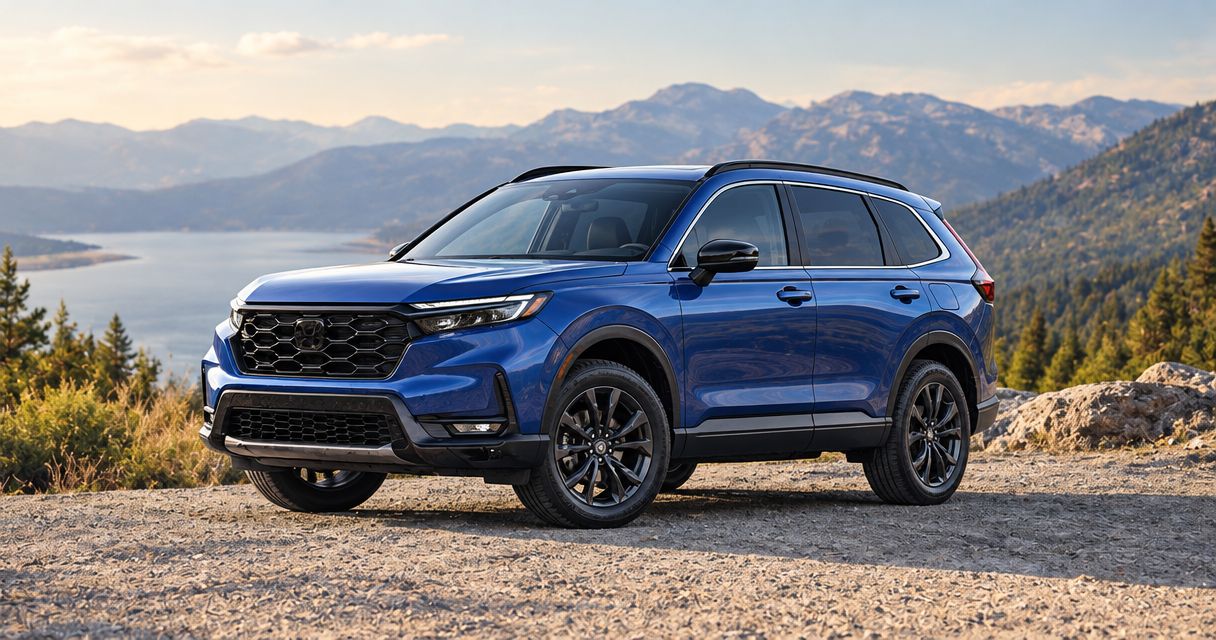
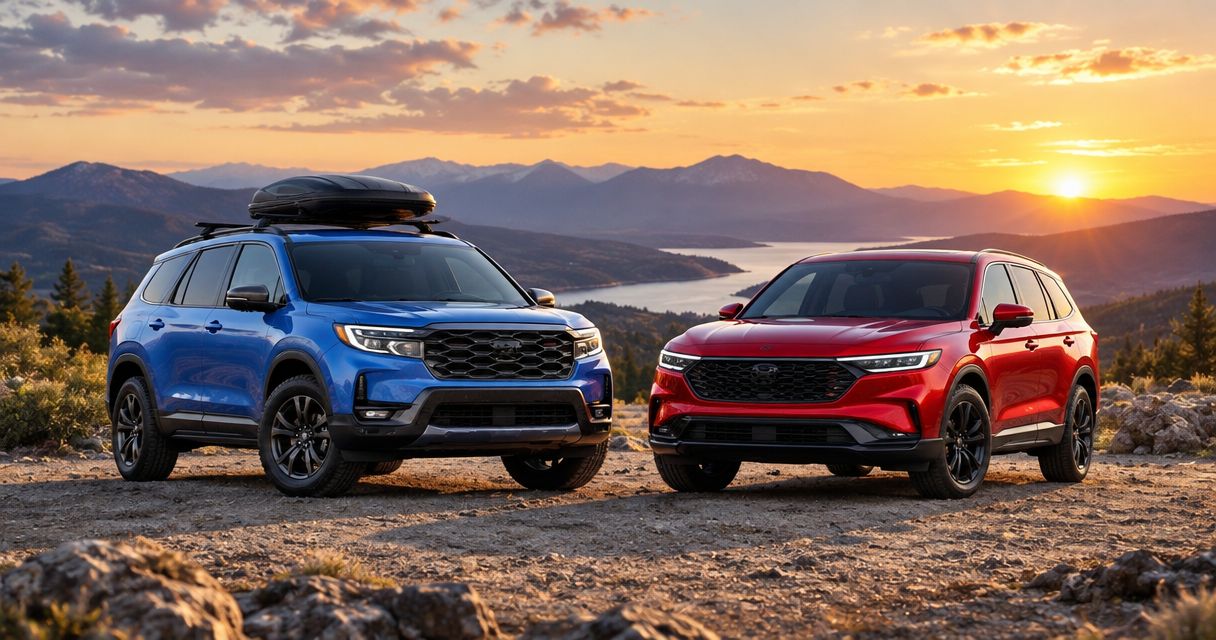
Choose the Honda Pilot if your family needs a third row or regularly carries more than five people; choose the Honda Passport if five seats cover your needs and you prefer a two-row cargo layout. This Honda Pilot vs Passport comparison focuses on passenger access, family gear and the service questions to settle before you buy.
- Honda Pilot vs Passport: choose Pilot for third-row seating; choose Passport when five seats cover your family.
- The Honda Pilot seats up to eight; the Honda Passport seats five, according to Honda’s 2026 model specifications.
- Compare cargo space with your passengers seated, not only with the rear seats folded.
- For either Honda SUV, review maintenance records and inspect tires, brakes and child-seat fit before buying used.
Why this matters
An SUV that carries your family on paper still needs to work during school pickup, grocery runs and weekend trips. A third row changes where people sit, how they enter and how much room remains for their belongings.
The Honda Pilot is the better family SUV when you need more than five seats. The Passport makes more sense when you want to keep passengers in two rows and load gear behind them without managing a third-row seat.
Bristol Honda is located in Bristol, Tennessee, and serves Johnson City and Kingsport. Start with Bristol Honda to discuss vehicle shopping or service, then use the checks below to narrow your choice.
At a glance
The seating figures below follow American Honda’s published 2026 Pilot and Passport model specifications. Check the particular trim and vehicle before making a seating-dependent purchase.
| Dimension | Honda Pilot | Honda Passport |
|---|---|---|
| Best for | Families needing another passenger row | Families whose passengers fit in two rows |
| Seating | Three rows; up to eight seats | Two rows; five seats |
| Cargo routine | Passenger flexibility, with cargo space affected by third-row use | Cargo behind the second row without a third-row folding decision |
| Rear-seat access | Third-row passengers must enter through the second-row area | No third-row entry required |
| Everyday driving fit | Judge visibility, parking and comfort on your route | Judge visibility, parking and comfort on your route |
| Service and upkeep | Follow the vehicle’s maintenance guidance and inspection findings | Follow the vehicle’s maintenance guidance and inspection findings |
| Purchase model | Compare outright purchase and financing terms for the specific vehicle | Compare outright purchase and financing terms for the specific vehicle |
| Standout feature | Additional passenger-row flexibility | A straightforward two-row layout |
Choose Pilot for extra passengers, Passport for a two-row household
Start with the people you carry, not the largest cargo figure in a brochure. Count your household, then add anyone who travels with you regularly: grandparents, friends or another child from school.
The Pilot wins when that passenger count exceeds the Passport’s five-seat layout. Its extra row also gives you another seating arrangement to examine when children need separate spaces, although child-restraint placement must follow the vehicle and restraint manuals.
The Passport wins when your passengers fit comfortably in two rows and you have no recurring need for another row. Its limitation is straightforward: you cannot create an extra passenger seat by rearranging cargo.
Neither choice removes the need to check seating fit. Bring the adults and children who will actually ride in the vehicle, especially anyone expected to use a rear seat frequently.
Pilot offers more passenger seats
The 2026 Honda Pilot has three rows and seats up to eight, while the 2026 Honda Passport has two rows and seats five. Those are seating limits, not promises that every passenger arrangement will suit your family equally well.
Choose the Honda Pilot when extra seating is a requirement rather than an occasional wish. Confirm the exact seat configuration on the vehicle you are considering, then test access with the front seats adjusted for your usual drivers.
For child seats, inspect the designated installation positions and follow both manuals. Do not assume that three child restraints fit across a row simply because that row has three seat belts.
The Passport’s advantage is a simpler seating decision: everyone rides in the first or second row. Its drawback is the fixed passenger ceiling, which matters if you regularly transport extended family or share school-run duties.
Passport keeps the cargo routine simpler
The Passport is the clearer choice when you want luggage, a stroller or sports equipment behind the second row without deciding whether to fold a third row. That is a layout advantage, not a claim that it wins every cargo measurement.
The Pilot asks a different question: how much room remains with the passenger seats you need occupied? A cargo demonstration with every rear seat folded does not answer that question for a family carrying people in all three rows.
Bring your awkward items rather than relying on a tape measure alone. A stroller’s folded shape, a cooler’s height and a sports bag’s rigid frame affect how you load them together.
- Keep the seats you need upright.
- Load the largest item first.
- Check that the liftgate closes without pressing against cargo.
- Follow the owner’s manual for securing items and observing load limits.
Choose the Honda Passport for a two-row cargo routine; choose the Honda Pilot when carrying extra people matters more than keeping that area open.
Passport avoids the third-row entry step
The Passport wins on one specific access question: nobody needs to pass through the second-row area to reach another passenger row. That matters when your usual passengers can all sit in two rows.
With the Pilot, test the actual third-row entry process. A child seat installed in the second row can affect how you use a seat’s movement, so check the vehicle instructions rather than improvising around an installed restraint.
Ask each regular passenger to get in, buckle up and get out. Watch for awkward reaches, difficult buckle access or a seating position that only works when someone else moves uncomfortably far forward.
The trade-off is clear:
- Third-row seating: gives the Pilot another passenger row.
- Passenger flexibility: matters when your passenger list changes.
- Two-row seating: keeps the Passport’s passengers in fewer rows.
- Cargo access: should be checked with your real seating arrangement.
A quick walkaround will not reveal these differences. Complete the entry-and-exit routine before judging either cabin.
Neither SUV wins your commute without a route test
A seating specification cannot tell you which SUV feels easier to place in your driveway or more comfortable on your commute. For your 2026 shopping decision, drive both over comparable roads and use the same checks.
Set the seat and mirrors yourself. Assess forward visibility, the view at junctions, parking-space alignment and how easily you can reach the controls you use often.
For drivers in Bristol, Johnson City and Kingsport, include the conditions that belong to your normal week: neighborhood streets, highway merging or a busy parking lot. Do not substitute someone else’s preferred route for the roads you actually use.
The Pilot’s extra seating does not automatically make it the better daily driver. The Passport’s two-row layout does not automatically make every maneuver easier. Treat everyday driving fit as a tie until you have driven both.
Both need condition-based service decisions
Neither SUV earns a maintenance advantage simply because it has more or fewer seats. Service needs depend on the particular vehicle, its use, its maintenance guidance and its condition.
For a new vehicle, read the maintenance information before buying. For a used vehicle, review dated service records alongside the odometer reading and inspection findings; a clean-looking cabin is not evidence that scheduled work was completed.
Ask about these ownership items on either model:
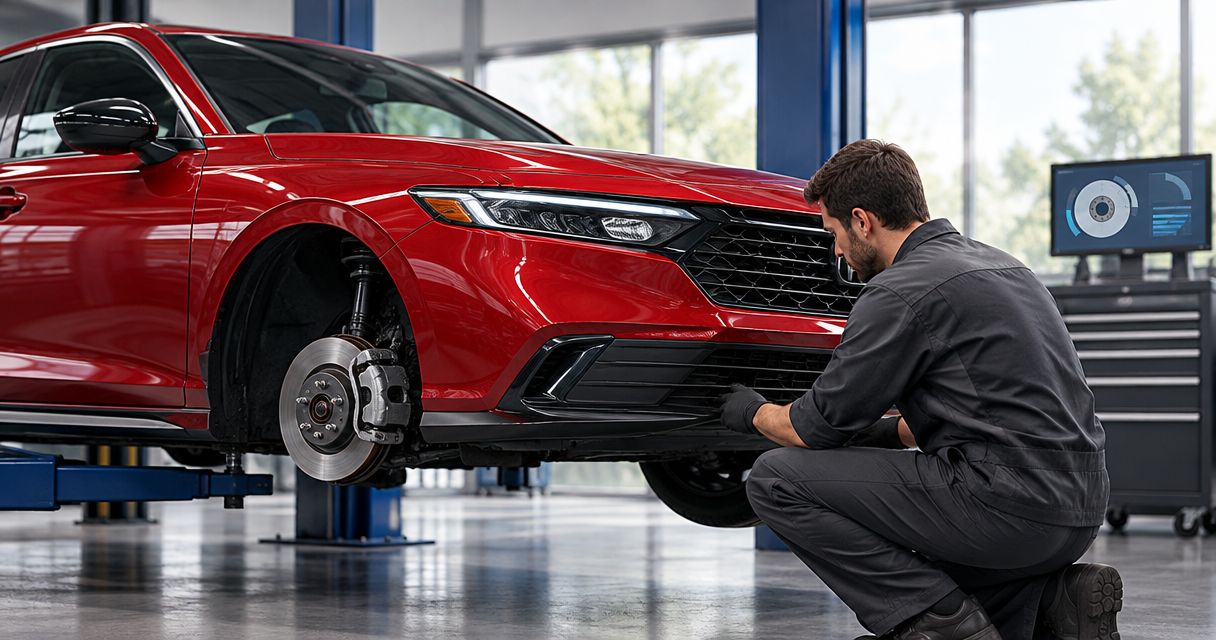
- Tires: inspect condition, wear pattern and the specifications required for replacement.
- Brakes: request an assessment rather than judging solely by how the pedal feels.
- Fluids: confirm which services apply to the specific vehicle and its history.
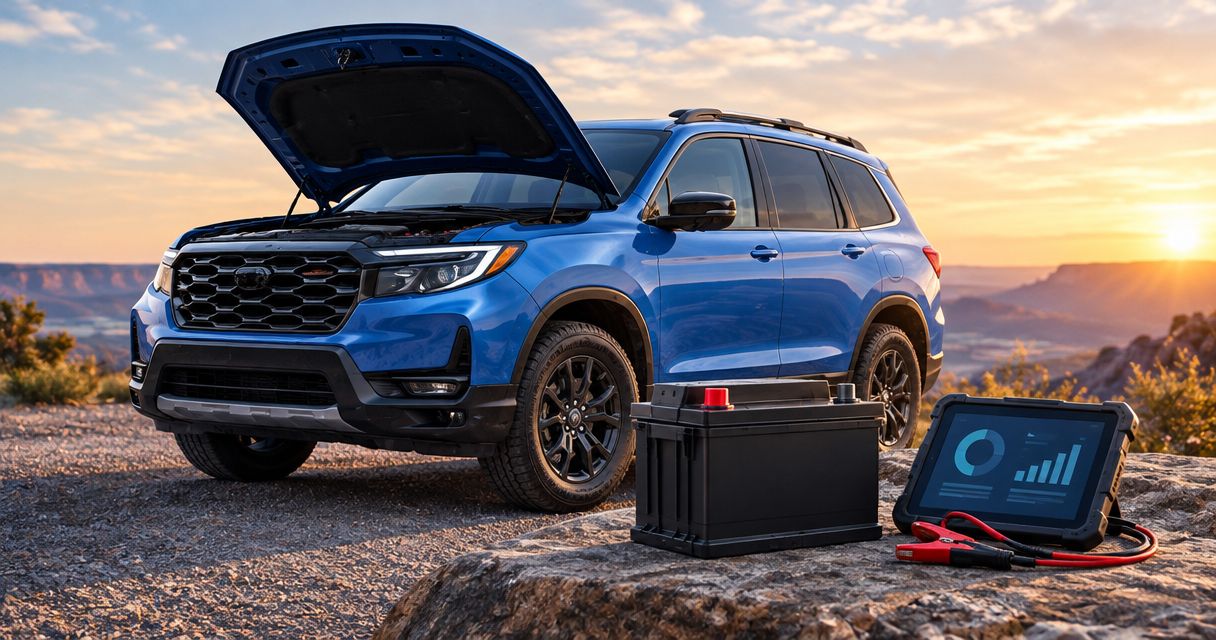
- Battery: check condition when evaluating a used vehicle.
- Parts: match replacements to the exact vehicle, not just the model name.
Bristol Honda provides service and parts as well as vehicle sales. Ask the team to explain recommended work, the reason for it and the appropriate Honda part or service procedure.
Keep routine maintenance separate from repairs identified during inspection. That distinction helps you understand what belongs in regular ownership planning and what needs attention on the particular SUV you are considering.
Compare purchase terms, not just the model names
Neither the Pilot nor the Passport wins the purchase decision on a model badge alone. Compare the actual vehicles, equipment, condition and written transaction terms.
An outright purchase and a financed purchase create different payment obligations. Financing spreads repayment over a contract term and requires you to evaluate the amount financed, interest terms and total payments—not just whether a monthly payment fits.
Bristol Honda offers financing, but evaluate the written terms for your own transaction rather than assuming an approval or condition applies. Keep optional products separate so you can decide whether each serves a specific need.
Use the same comparison method for both SUVs. A newer vehicle and an older vehicle with different equipment do not isolate the difference between Pilot and Passport.
For a used example, add the inspection findings to your decision. An overdue maintenance item or worn component belongs in the ownership discussion even when the vehicle otherwise suits your family.
Pilot’s standout is flexibility; Passport’s is simplicity
The Pilot’s defining advantage is its extra passenger row. That flexibility is useful only if you need it and can still carry the belongings that travel with those passengers.
The Passport’s defining advantage is a two-row layout without an unused third row to manage. That simplicity ends at five occupants, so be honest about how often another passenger joins you.
Do not buy the Pilot solely for an imagined future trip, or the Passport solely because you rarely fill your current vehicle. Write down the trips you actually make and the passengers you actually carry.
For 2026, keep trim-specific equipment separate from this basic layout decision. Confirm any feature that matters to you on the exact vehicle; do not assume that a feature demonstrated on one trim appears on another.
Compare both with the same family checklist
A useful side-by-side visit tests buying fit and future upkeep together. Repeat the same sequence for each vehicle so an appealing feature does not distract you from a practical problem.
- Load your gear. Bring the stroller, bags or equipment you carry regularly and keep the required passenger seats upright.
- Fit child seats. Follow the manuals, check buckle access and confirm that other passengers can reach their places.
- Drive your route. Compare visibility, seat comfort and parking with the driving position set for you.
- Review service history. For used vehicles, discuss records and inspection findings; for either model, understand the maintenance guidance.
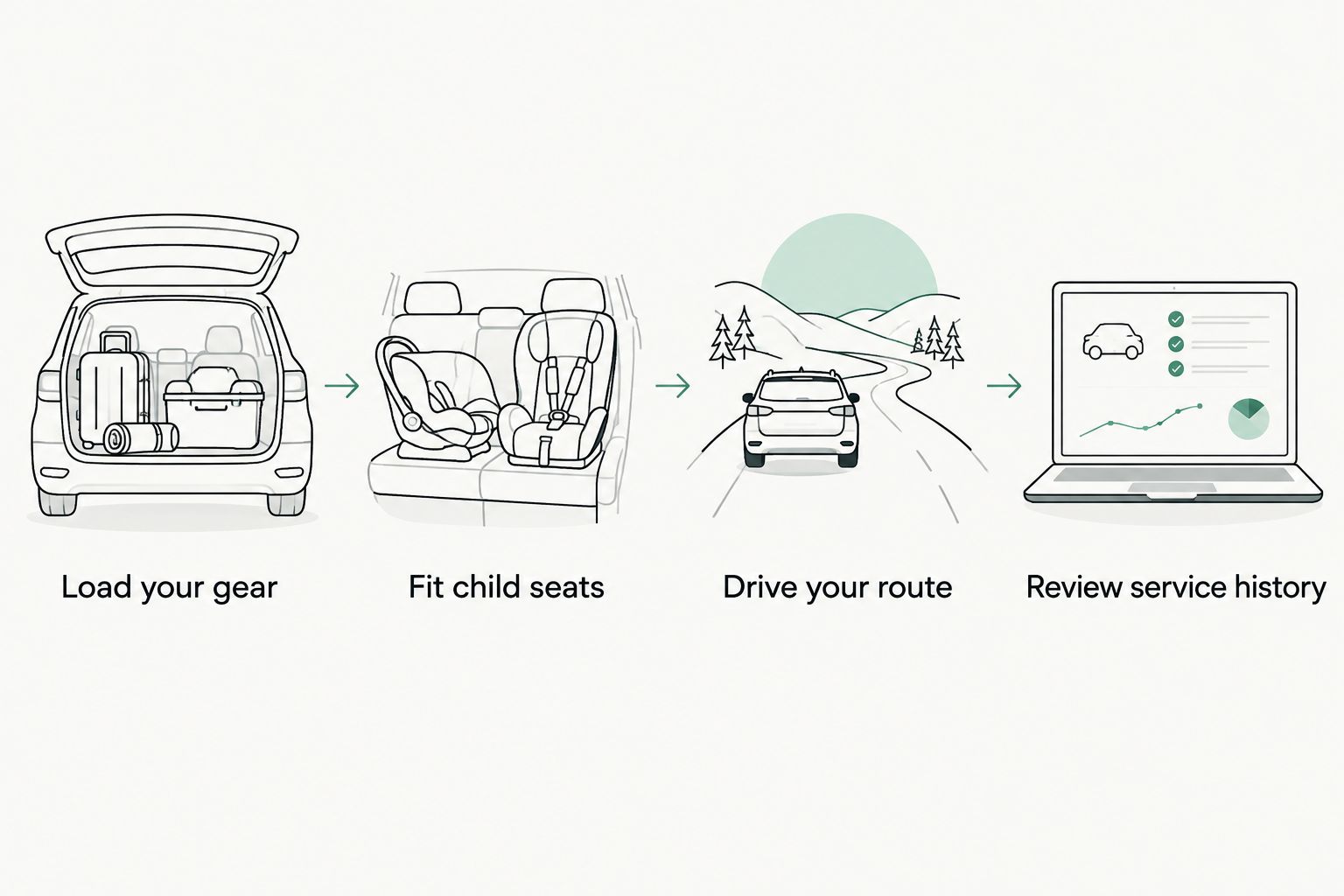
Take notes immediately after each drive. Record the specific issue—such as difficult buckle access or an item that does not fit—rather than only whether you liked the vehicle.
Final verdict: match the SUV to your passenger list
Choose Honda Pilot if you regularly need another row
Winner for larger passenger groups: Honda Pilot. Choose it when you need more than five seats, regularly carry extended family or want another passenger-row arrangement. Accept that cargo loading and third-row access require a realistic demonstration with your family aboard.
Choose Honda Passport if five seats cover your needs
Winner for a two-row family routine: Honda Passport. Choose it when your passengers fit in two rows and your priority is loading gear behind them without managing another row. Accept that it cannot accommodate an additional passenger beyond its seating limit.
| Dimension | Winner |
|---|---|
| Best for | Pilot for extra passengers; Passport for two-row households |
| Seating capacity | Pilot |
| Two-row cargo routine | Passport |
| Avoiding third-row entry | Passport |
| Everyday driving fit | Tie until tested on your route |
| Service and upkeep | Tie; assess the specific vehicle |
| Purchase terms | Compare the actual written offers |
| Standout feature | Pilot for flexibility; Passport for simplicity |
FAQ
Is the Honda Pilot or Passport better for a family?
The Honda Pilot is better when your family needs more than five seats; the Honda Passport fits families whose passengers fit in two rows. Test both with your child seats and regular cargo before choosing.
How many seats do the 2026 Honda Pilot and Passport have?
The 2026 Honda Pilot seats up to eight across three rows, while the 2026 Honda Passport seats five across two rows. Honda’s published model specifications establish those capacities; confirm the exact Pilot seating configuration on the vehicle you consider.
Does the Honda Passport have a third row?
The 2026 Honda Passport does not have a third row. Choose the Honda Pilot if another passenger row is a requirement.
Which is better for a stroller, the Pilot or Passport?
The better choice is the SUV that fits your stroller with every required passenger seat upright. The Passport avoids a third-row folding decision, while the Pilot gives you additional passenger seating to account for.
Is the Passport easier to maintain than the Pilot?
A two-row layout does not establish that the Passport is easier to maintain than the Pilot. Compare the specific vehicles’ maintenance guidance, service records and inspection findings.
What should I check before buying a used Pilot or Passport?
Check service records, tires, brakes, fluid-service history and the results of a vehicle inspection. Also test child-seat placement, passenger access and cargo loading on the exact vehicle.
Where can drivers near Johnson City and Kingsport discuss these Honda SUVs?
Bristol Honda is located in Bristol, Tennessee, and serves drivers from Johnson City and Kingsport. Contact the team to discuss vehicle shopping, financing, service or parts.
One last thing
Make the cargo test harder, not easier: leave every seat you need in its passenger position. That single change prevents an impressive empty-cabin demonstration from answering the wrong question.
Before your 2026 purchase, also ask what maintenance the specific vehicle needs next. The right family SUV must fit both your passengers today and your ownership routine afterward.