When you search for a Honda CR V Hybrid for sale in 2026, choose the trim by the equipment you will actually use, then confirm the exact vehicle’s drivetrain, features and model year before deciding. A trim name alone does not establish a particular vehicle’s condition or maintenance history. Compare the shopping decision and the ownership requirements together, rather than treating service as something to consider after the purchase.
- Honda CR V Hybrid for sale: compare documented equipment, drivetrain and condition before choosing a trim.
- Bristol Honda serves Bristol, Johnson City and Kingsport with Honda vehicle sales, financing and service.
- Choose comfort features you will use; do not choose a trim solely because it sits higher in the lineup.
- For a used hybrid, review service records and inspection findings alongside its equipment list.
Honda CR-V Hybrid for sale: how do you choose the right trim in 2026?
Choose the lowest trim that includes your must-have equipment, then evaluate the actual vehicle—not just the trim badge. Separate essential features from preferences before browsing. That keeps a desirable extra from distracting you from an unsuitable seating position, unclear service history or drivetrain you did not intend to buy.
For local buying help, Bristol Honda is located in Bristol, Tennessee, and serves drivers in Johnson City and Kingsport. Bring the same written checklist whether you are visiting from Bristol, Johnson City or Kingsport.
Use these equipment priorities to organize your comparison. They are shopping approaches, not claims that a particular feature comes standard on a named trim.
| Shopping approach | Best for | Advantage | Trade-off | What to verify |
|---|---|---|---|---|
| Essential equipment | Drivers who want their must-haves without unnecessary extras | Keeps the decision focused | Leaves out features you might value later | Exact equipment on the vehicle |
| Comfort equipment | Drivers who prioritize seating and everyday convenience | Focuses on features used during ordinary trips | An attractive feature list does not guarantee a comfortable fit | Seat adjustment, materials and control access |
| Technology equipment | Drivers who rely on phone integration and cabin controls | Gives connectivity a clear place in the decision | More functions require more familiarization | Compatibility and operation with your own phone |
| Drivetrain priority | Drivers whose route makes traction a deciding factor | Prevents drivetrain from becoming an afterthought | Drivetrain choice does not replace tire care | The vehicle’s documented drivetrain and tire condition |
None of these approaches wins for every driver. Your best trim is the one that meets your actual needs on a vehicle you have checked carefully.
Why this matters
A search result puts the model name first. Your ownership experience depends on details farther down the listing: model year, equipment, condition and service history. Two vehicles carrying the same model name are not interchangeable shopping choices.
For a 2026 purchase, distinguish the year you are shopping from the vehicle’s model year. A used CR-V Hybrid listed during 2026 is not automatically a 2026 model. Use the vehicle identification number, window sticker where applicable, and vehicle documentation to establish what you are considering.
That distinction matters after the sale, too. The correct owner’s manual, maintenance guidance and replacement parts relate to the actual vehicle, not the date you found the advertisement.
Choose essential equipment before comparing trims
Start with the features that would make you reject a vehicle if they were absent. Write them down before viewing a more heavily equipped example. Your list should describe a need, not simply repeat a feature name from an advertisement.
For example, a comfortable driving position is a need. A particular seat material is a preference unless you have a specific reason to require it. Reliable access to your phone’s functions is a need; a screen that looks impressive in a photograph is not proof that its controls suit you.
Compare 2 vehicles using the same checklist and the same tasks. Adjust the driver’s seat, sit behind your normal driving position, load an item you regularly carry, and operate the controls you expect to use. A consistent comparison reveals differences more clearly than separate, unstructured visits.
Ask the salesperson to identify each requested feature on the actual vehicle. Do not infer equipment from exterior styling or a generic listing description. If a feature matters enough to influence your choice, confirm it before making the decision.
Check the service implications of your preferences
Equipment deserves an ownership check as well as a shopping check. Look at the tire information, identify the vehicle’s maintenance guidance, and ask which service items need attention now. This is especially useful when comparing used examples.
Do not choose a better-equipped vehicle at the expense of understanding its condition. A desirable cabin feature does not tell you whether the tires are worn, the brakes need attention or a maintenance reminder has been addressed.
Choose comfort equipment by testing your daily routine
Comfort is personal. Sit in the vehicle long enough to adjust the seat and steering wheel properly, then check visibility, control reach and entry and exit. Have another regular driver repeat the exercise rather than assuming your preferred position works for everyone.
Give rear-seat passengers the same attention. Position the front seats as they would be used, then check the space behind them. If you carry child restraints, consult both the vehicle instructions and the restraint manufacturer’s instructions instead of judging fit from an empty rear seat.
Cargo needs deserve a physical check. Bring a representative item when practical, or record its dimensions before visiting. Check how you would load it, whether you need to fold a seat, and whether the arrangement still works for passengers.
Check wear before choosing a used comfort-focused trim
On a used vehicle, inspect the features that attracted you. Operate seat adjustments, climate controls and other fitted convenience equipment. Look for damaged upholstery, loose trim and controls that do not respond as expected.
Ask for faults to be explained before deciding. Cosmetic wear and an operating problem are different issues, and neither should disappear from your assessment because you like the trim. Record any concern so it can be discussed with the service team.
Choose technology equipment by using it yourself
Technology should make your ordinary trips easier. Pair your own phone with permission, check the supported connection method, and try the functions you use most. Confirm compatibility rather than assuming every phone and vehicle combination behaves identically.
Find the controls for audio, climate and navigation functions where fitted. Check whether you can perform routine tasks without hunting through menus. Ask for a demonstration while parked, then follow the vehicle’s instructions during the drive.
Driver-assistance features also need explanation. Learn what the fitted systems do, what their indicators mean, and where their limitations are described. Driver assistance does not replace your attention or responsibility behind the wheel.
Keep technology checks separate from repair assumptions
If a warning appears or a feature does not operate, ask for an explanation supported by the vehicle’s documentation or an inspection. Do not accept an unexplained warning as a normal characteristic of a hybrid.
A demonstration shows how a feature works; it does not establish the cause of a fault. For a used vehicle, include relevant findings in the condition review and ask what has been diagnosed or repaired.
Choose the drivetrain separately from the trim name
Confirm the drivetrain on the specific vehicle you are considering. Do not assume that a trim name, photograph or search filter proves the configuration. For a 2026 model, use current Honda documentation and the vehicle’s own equipment information to check model-year details.
Think about your actual routes in Bristol, Johnson City and Kingsport. Describe the roads you use, the conditions you encounter and any traction concerns when discussing drivetrain choices. A useful recommendation starts with your driving needs rather than a general claim that one configuration suits everyone.
Tire condition still matters
All-wheel drive does not replace appropriate tires or safe driving practices. Inspect tire condition on a used vehicle and have any uneven wear explained. Use the vehicle’s specified tire information when discussing replacement options.
Ask the service team how tire care applies to the exact vehicle. Keep drivetrain selection and tire maintenance on the same checklist: one concerns the configuration you buy, while the other concerns how you maintain it.
Why your CR-V Hybrid choice varies
Your right trim depends on several practical differences, not on a universal ranking. Use these factors to explain why one vehicle fits your needs better than another:
- Driving position: Seat adjustment, visibility and control reach affect whether you feel comfortable behind the wheel.
- Passenger needs: Regular passengers, child restraints and rear-seat access change what you need to check.
- Cargo routine: The items you carry determine whether the loading arrangement works for you.
- Technology habits: Your phone and preferred controls determine which fitted features are useful.
- Drivetrain requirements: Your route and traction priorities shape the configuration you should evaluate.
- Vehicle condition: On a used example, inspection findings and maintenance records belong alongside equipment in the decision.
Keep the list short enough to use during a visit. Mark each requirement as essential or optional, then record what you verified. This turns a broad search into a vehicle-specific decision.
What should you check before buying a used CR-V Hybrid?
Review 3 documents together: the vehicle history report, available maintenance records and a written inspection report. Each answers a different question. A history report describes recorded events, maintenance records show documented work, and an inspection addresses the vehicle’s present condition.
Follow this sequence before deciding:
- Identity check: Match the vehicle identification number across the vehicle and its paperwork. Confirm model year and listed equipment.
- Records review: Read the available history and maintenance information. Ask about gaps and any recorded repairs.
- Vehicle inspection: Review tire, brake and other condition findings with a qualified technician. Include any warning indicators or operating concerns.
- Test drive: Assess seating, controls, ride and braking on a suitable route. Discuss anything unexpected before proceeding.
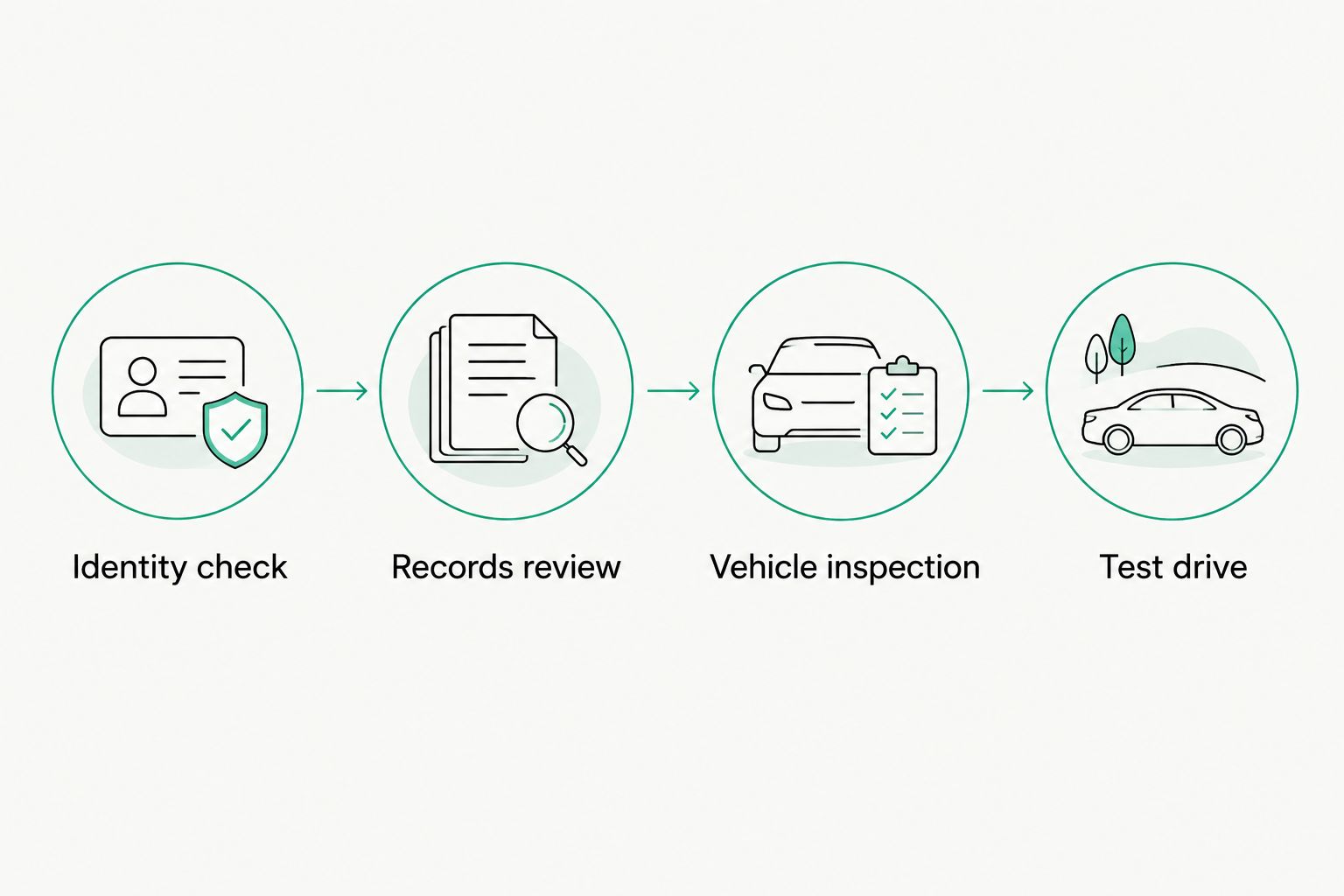
A quiet drive is not a substitute for an inspection. Likewise, a clean-looking interior does not establish that scheduled maintenance has been completed. Keep your observations and the documented findings together.
Bristol Honda sells certified pre-owned Honda vehicles, but do not assume a particular used CR-V Hybrid is certified. Confirm the vehicle’s status and read the applicable program documents before relying on certification in your comparison.
How should you plan CR-V Hybrid service after buying?
Use 4 stages to connect your purchase decision with ownership: establish condition, address current needs, follow maintenance guidance and keep records. Start with the exact vehicle’s owner’s manual and maintenance information. Do not substitute a generic online schedule for vehicle-specific guidance.
Ask which items require attention now and which are future maintenance. Request an explanation of inspection findings so you understand the difference between an observed problem and a routine recommendation. Keep copies of completed work with your vehicle records.
For hybrid-system concerns, use qualified service personnel and follow the owner’s manual. Do not attempt work on high-voltage components yourself. Ordinary ownership checks and high-voltage repairs are different tasks.
During 2026, keep recording maintenance as it occurs rather than reconstructing it later. Clear records help you answer questions about what was done and make your next service discussion more useful.
Is a higher CR-V Hybrid trim always the better choice?
No—a higher trim is not automatically a better fit. Additional equipment only improves your choice when it solves a real need or adds a feature you will use. Compare the exact vehicle’s equipment and condition before letting its position in the lineup decide for you.
Should you buy new or certified pre-owned?
Choose between new and certified pre-owned by comparing the actual vehicles and applicable documents. A new-vehicle equipment check and a used-vehicle condition review answer different questions. For a certified pre-owned option, read the program terms rather than assuming the label explains every detail.
Can you choose a CR-V Hybrid trim without a test drive?
You can narrow the shortlist from documentation, but a test drive checks things a feature list cannot: seating fit, control access and how the vehicle feels to you. Pair the drive with an equipment check. For a used vehicle, retain the inspection and records review as separate requirements.
FAQ
What should I look for when searching Honda CR V Hybrid for sale?
Look for the exact model year, drivetrain, equipment and vehicle condition. Confirm the details against the actual vehicle and its documentation rather than relying only on a search result.
Which Honda CR-V Hybrid trim is best for me?
The best trim for you is the lowest trim that meets your must-have equipment needs on a suitable vehicle. Test seating, controls and cargo arrangements before deciding that additional features are necessary.
How do I confirm a 2026 CR-V Hybrid's features?
Confirm a 2026 CR-V Hybrid’s features using current Honda documentation and the specific vehicle’s equipment information. Ask the team to demonstrate any feature that influences your decision.
Should I choose all-wheel drive for my CR-V Hybrid?
Choose the drivetrain after discussing your routes and traction requirements, then confirm the actual vehicle’s configuration. All-wheel drive does not replace appropriate tires or safe driving practices.
What records should I check on a used CR-V Hybrid?
Check the vehicle history report, available maintenance records and a written inspection report. Together they help you assess recorded history, documented service and present condition.
Where is Bristol Honda located?
Bristol Honda is located in Bristol, Tennessee, and serves drivers from Johnson City and Kingsport. Its offerings include Honda vehicle sales, financing, service and parts.
How do I know when my CR-V Hybrid needs service?
Use the exact vehicle’s owner’s manual and maintenance guidance, and ask a qualified service team to explain inspection findings. Keep records of completed work and have unexplained warnings assessed.
One last thing
Before your final decision, explain your choice without using the trim name. State which features meet your needs, what you verified about condition, and how you will handle maintenance. If the explanation depends only on the badge, revisit your checklist.
Bristol Honda is best for Tri-Cities drivers seeking Honda sales and service at a dealership in Bristol. Whether you live in Bristol, Johnson City or Kingsport, bring your equipment priorities and service questions together. For your 2026 search, the useful next step is a vehicle-specific conversation—not a decision based on the trim name alone.