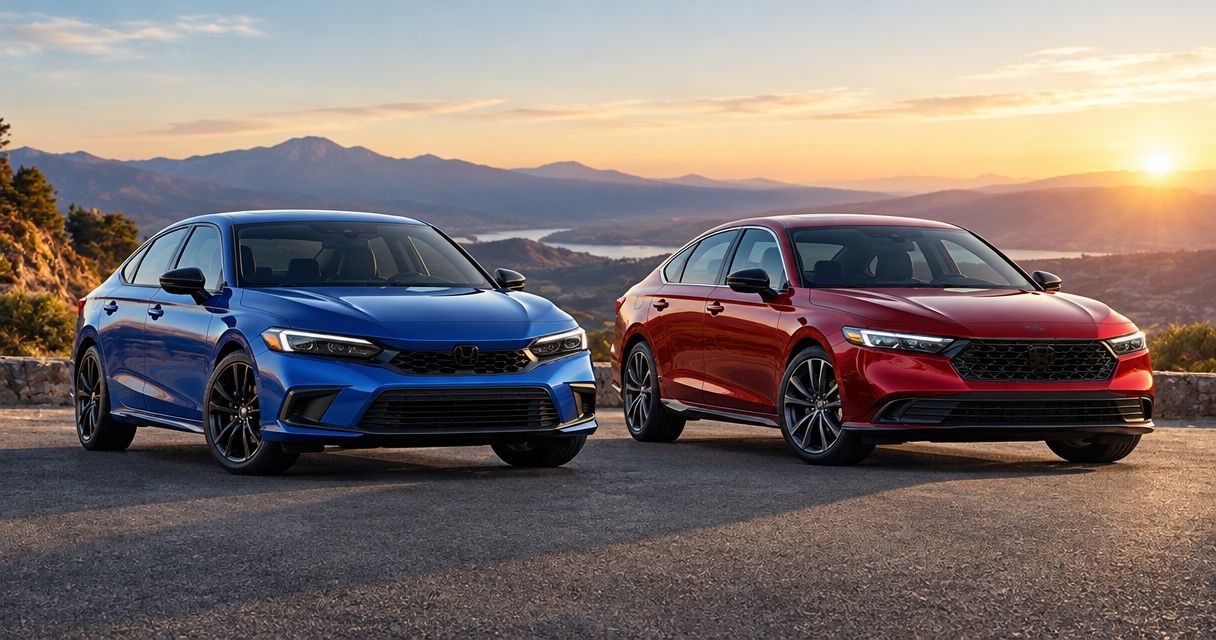
Choose the Honda Civic if you want a compact car that is easier to fit into tight parking spaces; choose the Honda Accord if rear-seat room matters more to your daily drive. This Honda Civic vs Accord comparison covers shopping decisions and maintenance checks for drivers in Bristol, Johnson City and Kingsport.
- Honda Civic vs Accord: choose the Civic for compact-car convenience and the Accord for more passenger space.
- Honda Civic is best for drivers who prioritize parking ease over rear-seat room.
- Honda Accord is best for drivers who regularly carry adults in the back seat.
- Compare the exact vehicle’s equipment, service history and tire condition before choosing either Honda.
Why this matters
The Honda Civic favors a smaller footprint; the Honda Accord favors passenger room. That distinction is more useful than choosing by a trim badge or assuming the larger car is automatically the better purchase.
For a 2026 purchase, your decision also needs to account for the vehicle you will actually own: its model year, equipment, condition and maintenance needs. A comfortable test drive does not replace a review of service records.
Bristol Honda is located in Bristol, Tennessee, and serves drivers in Johnson City and Kingsport with Honda vehicle sales, financing, service and parts. Bring your shopping questions and maintenance questions together so you leave with a clearer ownership plan.
At a glance: Honda Civic vs Accord
These comparisons describe the Civic’s compact-car role and the Accord’s midsize-sedan role. Check the exact model year and trim before relying on any equipment, powertrain or capacity claim.
| Dimension | Honda Civic | Honda Accord |
|---|---|---|
| Best for | Drivers prioritizing a compact daily car | Drivers prioritizing passenger room |
| Parking and maneuvering | Smaller footprint favors tight spaces | Larger footprint needs more room |
| Rear-seat comfort | Worth checking against your regular passengers | Stronger starting point for adult passengers |
| Cargo access | Sedan and hatchback body styles give you different loading layouts to consider | Sedan trunk layout suits conventional luggage loading |
| Controls and equipment | Exact model year and trim determine the experience | Exact model year and trim determine the experience |
| Maintenance planning | Service history and the vehicle’s maintenance guidance matter | Service history and the vehicle’s maintenance guidance matter |
| Purchase and financing | Compare purchase terms and ownership expenses together | Compare purchase terms and ownership expenses together |
| Standout trait | Compact-car convenience | Midsize passenger space |
The Civic wins when parking space is your daily constraint
Best for: drivers who value a smaller car in parking lots, garages and tight spaces. The Honda Civic’s compact footprint makes it the stronger starting point when maneuvering matters more than stretching out in the cabin.
Think about where you park in Bristol, Johnson City or Kingsport. A roomy test-drive route tells you little about whether a car feels manageable in your usual parking space. Try reversing into a marked space, check your view over both shoulders and notice how easily you judge the front corners.
The tradeoff is cabin space. A car that is easy to place in a parking lot still needs to work with your passengers, bags and seating position.
Check these details rather than relying on the compact-car label:
- Door clearance: Can you open the door comfortably in your usual space?
- Sightlines: Can you see clearly after adjusting the seat and mirrors?
- Passenger fit: Does your preferred driving position leave enough room behind you?
For your 2026 shortlist, favor the Civic if parking is a frequent irritation and its interior passes your real-life fit test. Do not choose it solely because it is the smaller option.
The Accord wins when adults regularly ride in the back
Best for: drivers who frequently carry adult passengers. The Honda Accord’s midsize layout makes passenger space its clearest advantage over the Civic.
Set the driver’s seat first, then sit behind it. Check knee clearance, foot space, headroom and how easily you get in and out. A rear seat that looks spacious with the front seat pushed forward is not a useful comparison.
The Accord’s extra room comes with a larger exterior footprint. That is a fair trade when you routinely carry passengers, but less compelling if you drive alone and struggle with parking.
Families should test their own child seats where practical. Follow the child-seat instructions and the vehicle owner’s manual, and check whether installation affects front-seat comfort. Do not assume either car is the right fit based on body size alone.
For Bristol errands, Johnson City appointments or Kingsport family visits, the useful question is the same: who rides with you, and how often? Let your usual passengers help decide.
The Civic offers more cargo-layout choice
Best for: shoppers who want to compare sedan and hatchback loading access. The Honda Civic name appears on both sedan and hatchback body styles, while the Honda Accord comparison centers on a sedan trunk.
That makes the Civic worth investigating when the shape of your cargo matters. A hatchback opening and a sedan trunk opening are different solutions; neither guarantees that a particular stroller, suitcase or piece of equipment will fit.
Bring a representative item to your appointment, or take its measurements. Check the opening, the loading edge and the usable space with the seats arranged as you expect to use them.
Also consider what happens when passengers and cargo travel together. A load that fits only with a rear seat folded does not solve your problem if someone regularly occupies that seat.
The Accord remains a sensible candidate for conventional luggage carried in a separate trunk. Choose the loading layout you can demonstrate, not the one that sounds more versatile.
Both need an exact-trim check before you choose technology
Tie: neither model wins on equipment without identifying the vehicle. Model names alone do not establish which driver-assistance features, audio equipment, phone connections or seat adjustments a particular car has.
For a 2026 shopping visit, ask for the equipment information tied to the exact vehicle. For a new vehicle, review its window sticker; for a used vehicle, verify the fitted equipment and check the relevant owner’s manual.
Try the controls while parked. Connect your phone with permission, find the climate controls and adjust the seat before deciding whether the cabin feels intuitive.
Your appointment should cover:
- How to operate the features you will use daily.
- Which alerts and settings apply to that vehicle.
- Whether both keys and the relevant manuals accompany a used car.
- Whether any fitted accessory changes normal operation.
A longer feature list is not a win if the controls distract you or the seat does not fit. Driver-assistance equipment also does not replace attentive driving.
Both need maintenance decisions based on the actual vehicle
Tie: condition and maintenance guidance matter more than the nameplate. Neither the Civic nor the Accord earns a maintenance advantage simply because one is smaller or the other is roomier.
Start with the exact model year, powertrain, mileage and service records. Then follow the applicable owner’s manual and maintenance guidance rather than a generic schedule copied from another Honda.
On a used vehicle, ask which services have been completed and which recommendations remain open. A service entry should identify the work performed, not just say the car was checked.
For either model, ask the service team to explain:
- The maintenance items currently due.
- Any fluid leaks, warning lights or unusual noises requiring diagnosis.
- Tire condition and whether wear suggests an alignment concern.
- Brake condition and the basis for any repair recommendation.
- Recall status using the vehicle identification number.
Bristol Honda offers service and parts as well as vehicle sales. Ask about the Honda service process and the technician qualifications relevant to your vehicle rather than treating every inspection or repair as interchangeable.
Tire and brake condition can change your used-car choice
A used Honda Civic with worn tires and incomplete records is not automatically the more practical purchase than a well-maintained Honda Accord. The reverse is also true. Compare the condition of the cars in front of you.
During the walkaround, look for uneven tire wear, visible damage and mismatched tire information. Ask the service team to confirm the correct specification for the vehicle and explain any recommended replacement.
On the test drive, note vibration, pulling, brake noise or changes in pedal feel. Report what you notice without trying to diagnose the cause yourself. A symptom deserves an inspection, not a reassurance based on the model’s reputation.
For your 2026 ownership plan, separate routine maintenance from unresolved repairs. Ask for a written explanation of each recommendation so you understand what needs attention before purchase and what belongs in future maintenance planning.
This approach gives Bristol, Johnson City and Kingsport shoppers the same useful standard: a clear description of the vehicle’s condition, regardless of where the daily commute starts.
Use the same test-drive and service checklist for both
A fair comparison needs a repeatable process. Set up each car the same way and bring the same passengers or cargo checks where practical.
Seat fit
Adjust the driving position before judging comfort. Check steering-wheel reach, pedal access and whether the seat supports you without forcing an awkward posture.
Parking check
Practice a normal parking maneuver in a suitable location. Check visibility, door clearance and how confidently you place the car within the space.
Cargo check
Test the items you actually carry. Verify that the loading arrangement still works when the necessary passenger seats remain in use.
Service review
Review maintenance records, inspection findings and any open recommendations. Ask which details need further confirmation before you make a decision.
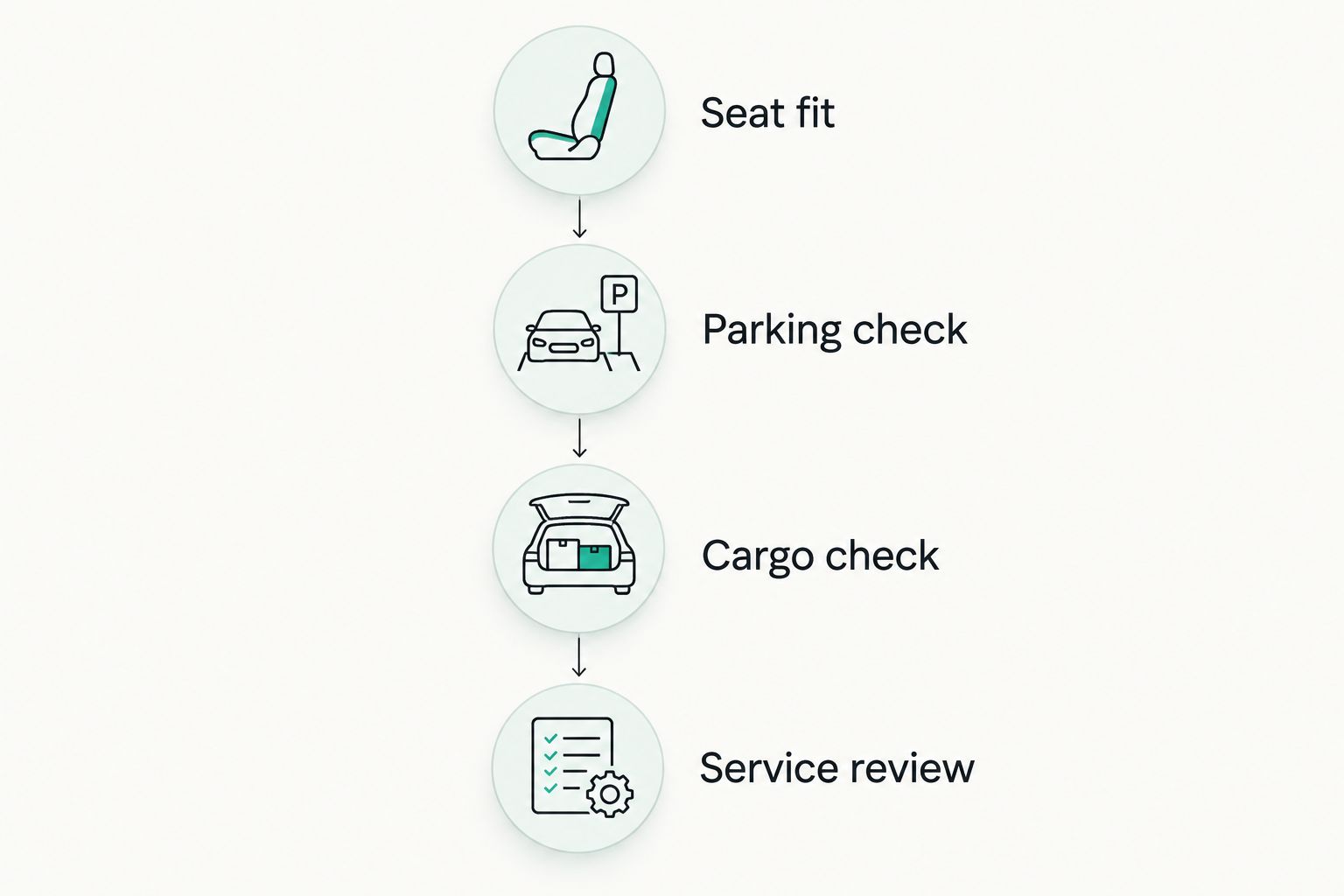
Record your observations immediately after each drive. Comfort and control impressions are easier to compare when you write down the specific issue rather than simply calling one car nicer.
Purchase and financing: compare the full ownership plan
Neither model wins on payment structure alone. Paying for a vehicle outright and financing a purchase organize your budget differently, but the Civic or Accord badge does not determine which approach fits you.
Compare the written purchase terms and, if financing, the amount financed, annual percentage rate, loan length and total repayment. Read the conditions before agreeing, and separate optional products from the vehicle purchase itself.
Then review ownership expenses that sit outside the purchase agreement. Obtain an insurance quote for the exact vehicle and understand its tire, maintenance and repair needs. A payment comparison that ignores an unresolved service issue is incomplete.
Bristol Honda provides financing as part of its dealership services. Ask the team to explain the applicable terms without assuming an approval outcome or treating a monthly payment as the entire decision.
For a 2026 purchase, choose the car and agreement you understand together. Do not sacrifice necessary passenger space for a payment figure, or take on a larger vehicle when the Civic already meets your needs.
Final verdict: choose by your daily constraint
Choose the Honda Civic if compact-car convenience comes first
Winner for the parking-focused commuter: Honda Civic. Start here if you usually drive alone or with a front passenger, want a smaller footprint and can confirm that the cabin and cargo layout fit your routine.
Keep the purchase conditional on the exact vehicle’s equipment and condition. Compact size does not excuse uncomfortable seating or unfinished maintenance.
Choose the Honda Accord if passenger room comes first
Winner for the regular passenger carrier: Honda Accord. Start here if adults often ride in back and you value their comfort enough to accept a larger exterior footprint.
Confirm that you are comfortable parking it and that its trunk handles your usual load. More cabin room is useful only when the rest of the car fits your routine.
| Dimension | Winner |
|---|---|
| Compact daily-driving profile | Civic |
| Parking and maneuvering | Civic |
| Rear-seat passenger profile | Accord |
| Cargo-layout choice | Civic |
| Controls and equipment | Tie; verify the exact trim |
| Maintenance planning | Tie; inspect the actual vehicle |
| Purchase and financing | Tie; compare written terms |
| Midsize passenger space | Accord |
FAQ
Is the Honda Civic or Accord better for my daily commute?
The Honda Civic is the better starting point when compact size and parking ease matter most; the Honda Accord is the better starting point when you regularly carry adult passengers. Test the exact vehicle’s seat comfort, visibility and condition before choosing.
Which has more room for passengers, the Civic or Accord?
The Honda Accord’s midsize layout favors passenger room over the compact Honda Civic. Set the front seat to your normal driving position before checking rear-seat fit.
Should I choose a Civic hatchback or an Accord sedan?
Choose by the loading layout that fits your actual cargo and passengers. Compare the opening and usable space with the seats arranged as you normally use them.
Is a Honda Civic always cheaper to maintain than an Accord?
The model name alone does not establish maintenance expense. Compare the exact vehicle’s powertrain, tire specifications, service history and inspection findings.
What should I check before buying a used Civic or Accord?
Check service records, tire and brake condition, warning lights and recall status using the vehicle identification number. Have unexplained symptoms inspected before making your decision.
How do I compare financing for a Civic and Accord?
Compare the written purchase terms, amount financed, annual percentage rate, loan length and total repayment. Review optional products separately and include insurance and maintenance in your budget.
Does Bristol Honda have dealerships in Johnson City and Kingsport?
Bristol Honda is located in Bristol, Tennessee, and serves drivers in Johnson City and Kingsport. Its stated services include Honda vehicle sales, financing, service and parts.
One last thing
The most revealing test can happen before you drive: adjust the front seat, sit behind it and load your usual bag. Then review the service findings. That combination tests both daily usefulness and the condition of the car you are considering.
Ask Bristol Honda to help you compare the exact vehicles and explain any maintenance recommendations. A clear fit and a clear service plan matter more than winning an argument about Civic versus Accord.