Your Honda needs brake pads when the friction material reaches its service limit; it needs rotors when inspection finds insufficient thickness, damage, or another condition outside the vehicle’s specifications. New pads do not automatically require new rotors, but replacing pads without checking the rotors can leave the cause of noise, vibration, or uneven wear unresolved.
- Honda brake pads replacement depends on measured wear, not mileage alone.
- Replace rotors when their thickness or condition falls outside the applicable service specifications.
- Bristol Honda serves Honda owners in Bristol, Johnson City, and Kingsport from its Bristol location.
- When shopping for a used Honda, request brake measurements rather than relying on a quiet test drive.
Why this matters
A brake recommendation should explain what failed inspection and why. Pads and rotors work together, but they are separate parts with separate replacement criteria. A noise description alone does not establish which part needs attention.
Bristol Honda is located in Bristol, Tennessee, and serves Johnson City and Kingsport. Bristol Honda is a practical choice for Tri-Cities Honda owners seeking brake service at a dealership in Bristol. Whether you are maintaining your current vehicle or evaluating a used Honda in 2026, ask for evidence before approving work.
Honda brake pads vs rotors: what might need replacing?
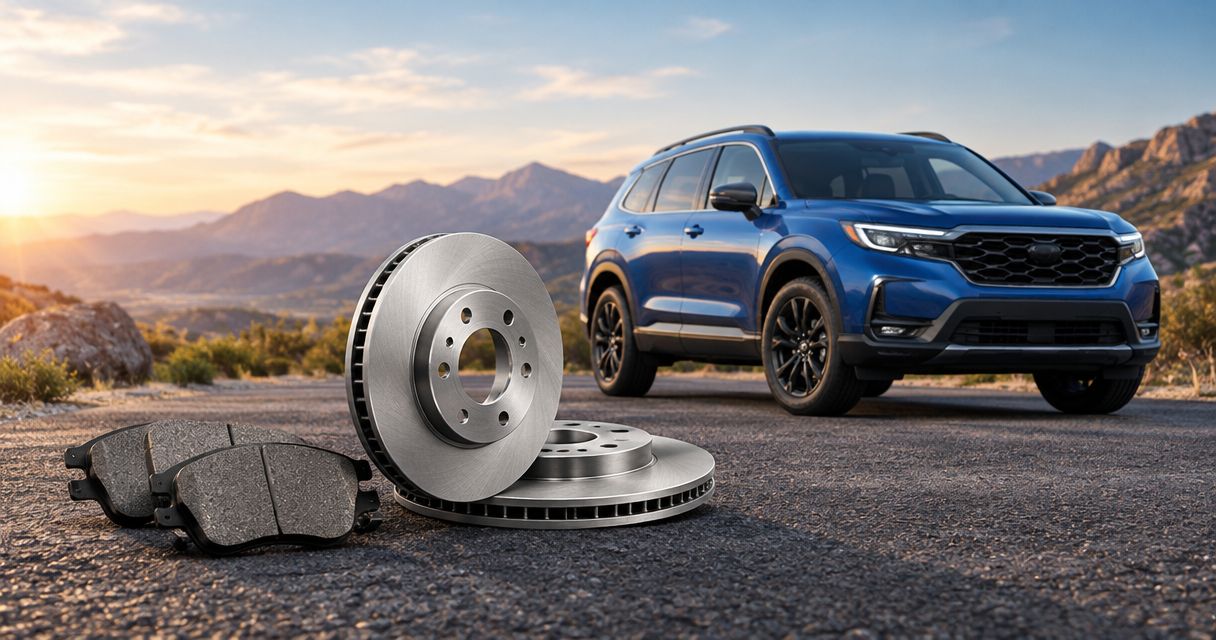
Brake pads provide the friction material that presses against the rotor during braking. Rotors are the metal discs that turn with the wheels and provide the braking surface. An inspection must evaluate both, along with the components that apply and release the brakes.
| Inspection outcome | What supports it | Best for | Benefit | Limitation |
|---|---|---|---|---|
| Pads only | Pads need replacement; rotors meet applicable specifications and have an acceptable surface | Vehicles with worn pads and serviceable rotors | Keeps usable rotors in service | Does not correct a rotor defect or sticking caliper |
| Pads and rotor resurfacing | Rotors qualify for machining and will meet the applicable finished-thickness specification | Rotors with correctable surface issues | Restores the surface without replacing a qualifying rotor | Removes material; not every rotor qualifies |
| Pads and new rotors | Rotors are too thin, damaged, or otherwise unsuitable for continued service | Vehicles with unserviceable rotors | Replaces worn friction material and unsuitable braking surfaces | Does not fix an unresolved hydraulic or caliper problem |
| Additional brake repair | Inspection identifies sticking hardware, a caliper fault, a leak, or another defect | Vehicles with wear caused by an underlying fault | Addresses the reason parts wore incorrectly | Requires diagnosis beyond selecting pads or rotors |
Choose the repair that matches the inspection, not the largest or smallest package. A complete recommendation identifies the affected axle, the condition of the parts, and any underlying fault.
What should the technician check?
Ask for the remaining pad thickness, rotor thickness, and the applicable service limits for your exact vehicle. If vibration is the concern, ask whether rotor runout or thickness variation was measured rather than assumed.
The inspection should also consider uneven pad wear, rotor surface condition, caliper movement, and brake hardware. A sticking component can damage replacement parts if the cause remains unresolved.
When pads alone are the right repair
Pads-only replacement fits a vehicle whose pads are worn but whose rotors remain suitable for use. That decision requires more than looking through the wheel. Both the inner and outer pads need attention because their wear can differ.
The advantage is keeping a serviceable part; the limitation is that new pads cannot repair a defective rotor. Ask whether the rotor surface is suitable for the replacement pads and whether the hardware moves correctly.
For a 2026 service visit, describe what happens rather than naming the repair yourself. Tell the advisor whether the sound occurs during braking, whether it changes after the car sits, and whether you feel vibration through the pedal or steering wheel.
Avoid requesting pads only simply because that sounds like the smallest job. Request an inspection first, then approve the work the findings support.
When rotors need resurfacing or replacement
Rotor condition is not a judgment based on appearance alone. Thickness, surface damage, corrosion, and measurements related to vibration all matter. The applicable Honda service information determines whether the rotor remains usable.
Resurfacing removes material to correct qualifying surface conditions. It is only an option when the rotor will still meet the required specification afterward; a rotor already near its limit is not automatically a candidate.
Replacement is appropriate when a rotor cannot meet the relevant service requirements. Ask the advisor to explain whether the problem is thickness, damage, or another measured condition.
Do not accept “the rotors look old” as the whole explanation. Equally, do not insist on keeping a rotor that fails inspection just because the vehicle still stops during an ordinary drive.
Why brake replacement needs vary
There is no single mileage interval that proves every Honda needs pads or rotors. Your vehicle’s inspection provides the answer. These factors explain why the recommendation can differ between cars:
- Driving conditions: Frequent braking and repeated downhill braking place different demands on friction components than steady travel.
- Pad condition: Remaining friction material and uneven wear help determine whether replacement and further diagnosis are needed.
- Rotor thickness: A rotor must meet the specification for continued use or resurfacing, as applicable.
- Surface condition: Scoring, corrosion, cracks, and heat-related damage require evaluation rather than a mileage-based assumption.
- Caliper and hardware condition: Restricted movement can cause dragging brakes or uneven wear and needs correction alongside worn parts.
- Previous repairs: Earlier resurfacing and the condition of installed parts affect the options available now.
Drivers in Bristol, Johnson City, and Kingsport should describe their actual routes and symptoms. Location alone does not establish brake wear, and neither does the odometer.
What should you request before approving brake work?
Use the same decision process whether you own the Honda already or are considering buying it. A written explanation helps separate normal maintenance from a fault that needs further diagnosis.
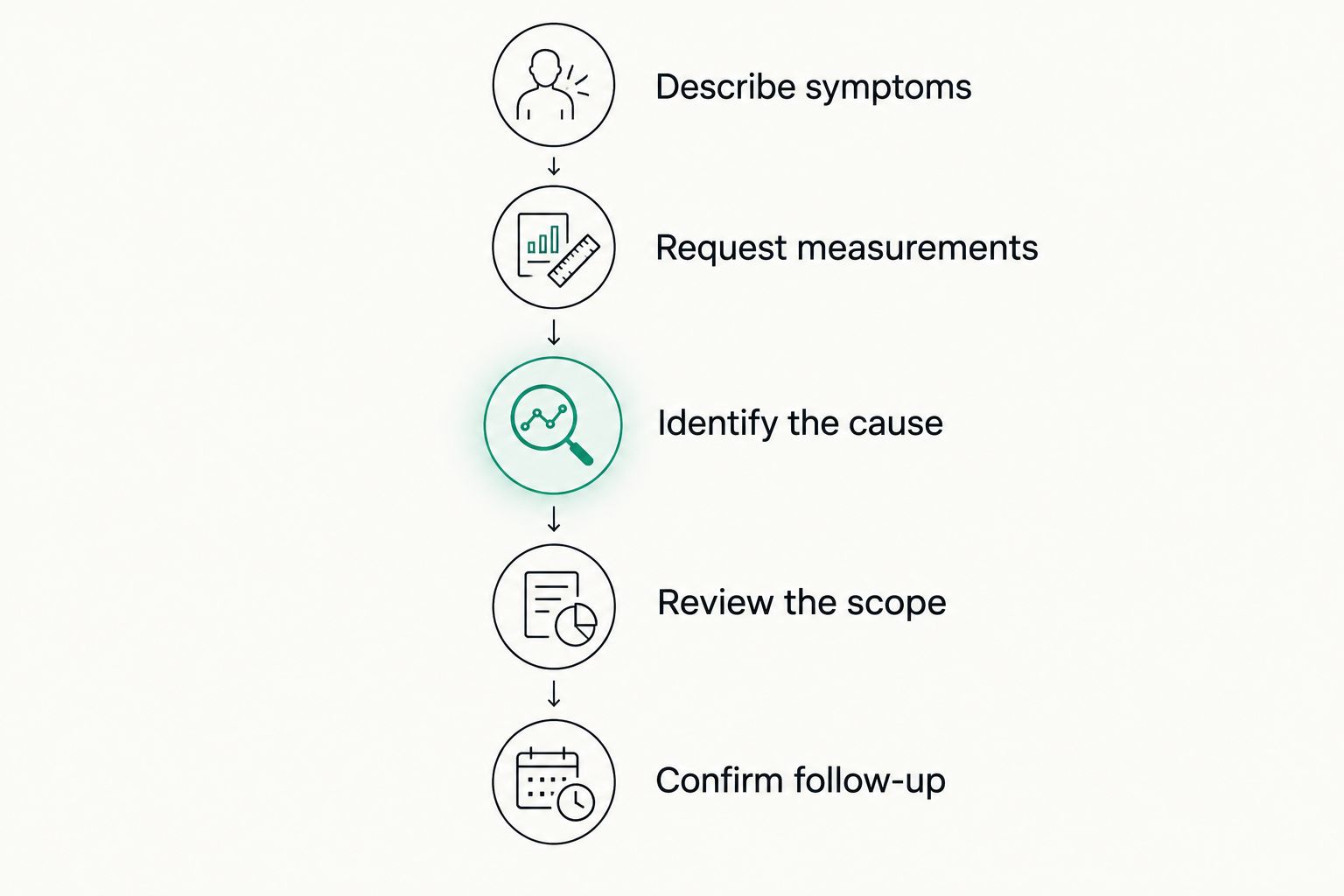
- Describe symptoms. Explain when the noise, vibration, pulling, or pedal change occurs. Mention recent brake work.
- Request measurements. Ask for pad and rotor measurements alongside the applicable limits for the vehicle.
- Identify the cause. Ask whether wear is even and whether calipers, slides, and hardware operate correctly.
- Review the scope. Confirm which axle needs work, which parts are included, and whether rotor replacement or resurfacing is proposed.
- Confirm follow-up. Request any break-in instructions and an explanation of symptoms that require another inspection.
For a 2026 appointment, keep your symptom notes with the vehicle’s service records. This guide to what happens during a Honda brake service appointment can help you prepare questions before contacting the team.
Buying a used Honda: check the brakes before deciding
A quiet test drive does not prove that the brakes have substantial remaining service life. Pads can be close to their service limit without producing a sound you notice, and a brief drive does not replace a physical inspection.
Ask for brake findings before you make the purchase decision. Request information about both axles rather than accepting a general statement that the brakes were checked.
For a used Honda purchase in 2026, separate three questions: what condition are the brakes in now, what work has already been completed, and what maintenance remains? A service record answers the history question; current measurements answer the condition question.
The useful buying detail is not simply “new brakes.” It is exactly what was replaced and why. Pads alone, pads with resurfaced rotors, and pads with new rotors describe different work.
What should a brake service record tell you?
Look for the repair date, recorded mileage, affected axle, and itemized work. If an invoice lists pads but not rotors, do not assume the rotors were replaced. They might have remained serviceable, but the document needs to support that conclusion.
Ask whether an underlying problem was corrected if the record mentions uneven wear or a sticking caliper. Replacement parts do not establish that the original cause was addressed.
Missing records do not prove that a vehicle has defective brakes. They mean you should rely on a current inspection rather than treating an unverified maintenance claim as evidence.
What should you notice during a test drive?
When the vehicle is safe to drive, pay attention during ordinary braking. Notice persistent noise, pedal pulsation, steering-wheel vibration, or pulling, and describe those observations to the seller or inspecting technician.
Do not perform abrupt braking tests in traffic or attempt to diagnose a suspected failure yourself. If stopping ability is reduced or the pedal behaves abnormally, stop the test drive safely and request professional assessment.
Compare the inspection findings with the service paperwork after the drive. A smooth drive and documented measurements provide different kinds of information; neither should be used to dismiss a clear problem in the other.
Comparing two used Hondas with different brake histories
A vehicle with recently replaced pads is not automatically the stronger purchase. Another vehicle with older pads can still have serviceable brakes, while recently fitted parts can conceal an unresolved wear problem. Compare current condition and repair documentation rather than the freshness of a parts receipt.
| Buying consideration | Useful evidence | What it cannot establish alone |
|---|---|---|
| Recent pad replacement | Itemized repair record and current inspection | That rotors or calipers are serviceable |
| Recent rotor replacement | Record showing the axle and parts replaced | That all other brake components were checked |
| No recent brake invoice | Current pad, rotor, and component inspection | That maintenance was neglected |
| Smooth test drive | Normal behavior during that drive | Remaining pad life or rotor thickness |
Best for a documented purchase decision: choose the vehicle whose condition and records you can evaluate clearly, while considering the rest of its inspection. Brakes are one part of the vehicle, not a substitute for checking everything else.
Bristol Honda sells new and certified pre-owned Honda vehicles and provides service and parts. When discussing a vehicle, ask the team for its specific brake findings rather than assuming a sales category tells you which brake parts were recently replaced.
Can you keep driving while deciding about brake work?
Do not continue driving with reduced stopping ability, a sinking pedal, or a suspected brake-fluid leak. Stop safely and arrange professional help; towing is the safer choice when braking performance is compromised.
Persistent grinding, pulling, or vibration also needs prompt assessment. These symptoms do not identify one failed part, so ordering pads before diagnosis can leave the actual problem untouched.
Should you order brake parts before an inspection?
Confirm the diagnosis and fitment before ordering parts. Brake components depend on the vehicle’s exact configuration, and a model name alone is not enough to establish the correct part.
Have the vehicle identification number available when discussing parts. Ask whether the repair requires pads, rotors, hardware, or correction of another fault so the parts list matches the work.
FAQ
Do Honda brake pads and rotors always need replacing together?
No, Honda brake pads and rotors do not always need replacing together. Pads-only replacement is appropriate when the rotors meet the applicable service requirements and have a suitable surface.
How do I know whether my Honda needs pads or rotors?
A brake inspection determines whether your Honda needs pads, rotors, or another repair. Ask for pad thickness, rotor measurements, and an explanation of any uneven wear or damage.
Does squeaking mean my Honda needs new brake pads?
Squeaking alone does not prove that your Honda needs new brake pads. Persistent noise needs inspection because pad wear, surface conditions, and hardware can produce different sounds.
Does brake pedal vibration mean the rotors are warped?
Brake pedal vibration does not establish that the rotors are warped. Rotor thickness variation, runout, and other possible causes require diagnosis before choosing a repair.
Can I buy a used Honda that recently had its brake pads replaced?
Recent brake pad replacement is useful maintenance history, not a substitute for inspecting the used Honda. Confirm which axle received work and check the current condition of the rotors and other brake components.
Should I choose genuine Honda brake parts or aftermarket parts?
Choose brake parts that match your exact Honda and the repair requirements. Ask about fitment, included hardware, and the applicable parts warranty rather than choosing by label alone.
One last thing
Before approving brake work in 2026, ask: “What caused the wear, and what confirms that these parts need replacement?” That question helps you evaluate both a repair recommendation and a used-car maintenance record. At Bristol Honda, bring the same questions whether you are arranging Honda brake service or discussing your next vehicle.