
When buying used cars in Bristol, TN, check the vehicle identification number, compare the history report with maintenance records, and arrange a pre-purchase inspection before you commit. A history report does not establish a car’s current mechanical condition, and a clean report does not guarantee that every repair or incident appears. Use the same checks whether you’re shopping from Bristol, Johnson City, or Kingsport in 2026.
- For used cars bristol tn searches, prioritize matching records and a pre-purchase inspection over a clean report alone.
- Bristol Honda serves Bristol, Johnson City, and Kingsport shoppers seeking used Honda vehicles and service.
- A vehicle history report, maintenance records, and recall check answer different questions; use them together.
- Pause the purchase when identity, mileage, or title information conflicts until you receive a documented explanation.
Why this matters
You’re buying the car in front of you, not just the history report attached to it. Records help you decide which questions to ask; an inspection helps establish whether the answers match the vehicle’s condition.
Bristol Honda is a practical fit for Tri-Cities drivers seeking used Honda vehicles and ongoing service in Bristol. Bristol Honda is located in Bristol, Tennessee, and serves Johnson City and Kingsport; it does not have dealerships in those cities.
For your 2026 purchase, separate the shopping decision from the maintenance decision. You need to know both whether the car fits your daily driving and what attention it needs before you rely on it.
Buying used cars in Bristol, TN: how do you check vehicle history?
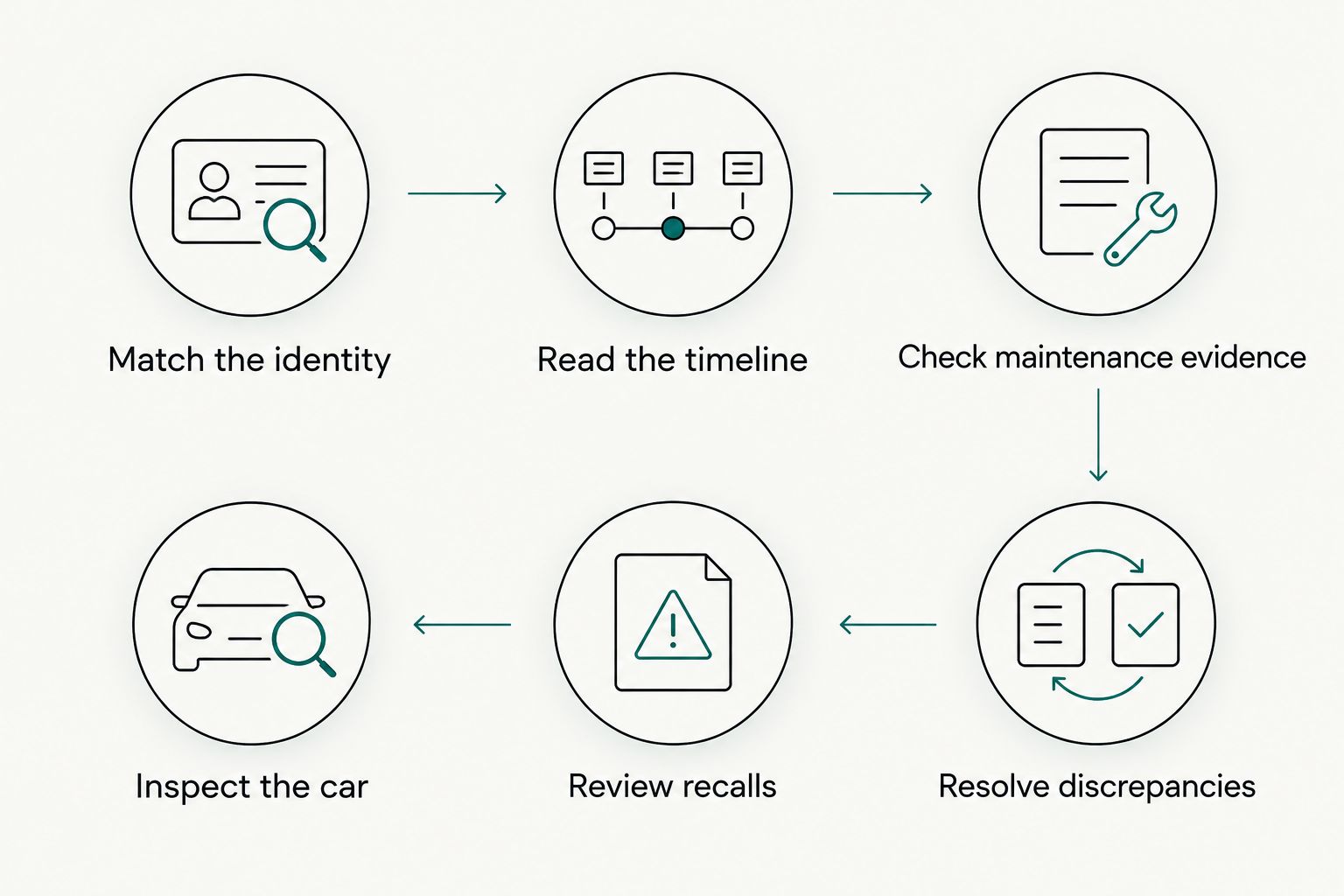
Use this sequence before signing purchase documents. Keep the report, inspection findings, and seller’s explanations together so you can compare them rather than relying on memory.
- Match the identity. Compare the vehicle identification number, or VIN, on the car with the report and purchase paperwork. Modern standardized VINs contain 17 characters; check the full sequence, not just the ending.
- Read the timeline. Follow reported mileage, ownership changes, title events, damage entries, and service visits in date order. Flag contradictions and unexplained gaps for discussion.
- Check maintenance evidence. Ask for dated records showing the work performed and the mileage at each visit. Compare the records with the maintenance guidance for that exact vehicle.
- Review recalls. Use the VIN to check for open safety recalls through Honda or the National Highway Traffic Safety Administration. Ask how any open recall will be addressed.
- Inspect the actual car. Arrange 1 pre-purchase inspection before committing. Ask the technician to connect current findings with any damage or maintenance concerns in the records.
- Resolve discrepancies. Get a clear explanation and supporting documents for conflicting information. Wait to buy if a material question remains unanswered.
Give the seller your questions before you travel. Bristol shoppers can use the answers to plan a local visit; Johnson City and Kingsport shoppers can use them to decide whether a trip is justified.
What each vehicle check tells you
No single document answers every buying question. A report describes recorded events, service records explain documented work, and an inspection evaluates the car’s present condition.
| Check | Best for | Main benefit | Limitation |
|---|---|---|---|
| Vehicle history report | Reviewing reported ownership, mileage, title, and damage events | Organizes recorded events into a timeline | Unreported events and repairs can be absent |
| Maintenance records | Checking documented care | Shows what work was recorded and when | Missing receipts leave unanswered questions |
| Pre-purchase inspection | Assessing current mechanical condition | Identifies observable concerns requiring attention | Does not guarantee future reliability |
| VIN-based recall check | Identifying open safety recalls | Connects recall information to a specific vehicle | Does not replace a mechanical inspection |
Ask for explanations that match the evidence. A statement that a vehicle was well maintained is less useful than records identifying the work, date, and odometer reading.
Keep the distinction clear when you compare cars in 2026: a detailed history report is useful documentation, not a mechanical warranty. Likewise, a satisfactory inspection does not explain an unresolved title discrepancy.
How should you read mileage and ownership entries?
Read mileage as a sequence rather than focusing only on the current odometer. An entry that moves backward needs an explanation, but the report alone does not tell you whether the cause is a recording error or something more serious.
Compare questionable entries with dated service invoices and other available documents. Ask the seller to explain the inconsistency in writing and provide supporting records rather than dismissing it verbally.
Ownership counts also need context. A change in registration or reported ownership does not, by itself, establish how carefully a vehicle was driven or maintained.
Choose evidence over assumptions about the previous owner. The useful question is whether the available timeline, current condition, and seller’s explanation agree.
What should I do if the VIN does not match?
A 17-character VIN must match across the vehicle and its identifying records for a modern standardized VIN. Stop the purchase process if it does not, and ask the seller to resolve the mismatch before discussing delivery or signing documents.
Do not accept a report for a similar vehicle. The history information must belong to the car you are considering.
How should you evaluate accident and title history?
Start by identifying what the report actually says. An accident entry, a damage entry, and a branded title are different findings; do not treat them as interchangeable descriptions.
Ask what area was affected, what repairs were completed, and whether repair documentation exists. Then give that information to the inspecting technician so the inspection addresses the reported concern.
A title brand requires separate attention. Before proceeding, confirm what the designation means with the relevant motor vehicle authority and ask your insurer and lender about requirements that apply to that vehicle.
A damage entry is a reason to investigate, not a complete diagnosis. The decision depends on documented repairs, the inspection findings, and whether unresolved questions remain.
For a 2026 purchase, avoid treating a short report summary as the final answer. Read the underlying entries and ask for the documents needed to understand them.
What maintenance records should you request?
Ask for records that identify the vehicle, service date, mileage, and completed work. Look for a consistent explanation of routine maintenance, repairs, and any recommendations that were deferred.
Use the owner’s manual and vehicle-specific maintenance guidance to interpret those records. Do not apply a generic service schedule to every Honda model, engine, or powertrain.
Useful records to request include:
- Routine maintenance: Documentation of oil service and other scheduled work applicable to the vehicle.
- Brake work: Inspection findings, completed repairs, and any unresolved recommendations.
- Tire service: Replacement and alignment records that help explain the tires currently fitted.
- Battery attention: Test or replacement records that provide context for starting concerns.
- Major repairs: Invoices explaining the complaint, diagnosis, and work completed.
Missing records do not prove neglect. They do mean you need another way to establish the vehicle’s current needs, starting with an inspection and a maintenance plan based on verified information.
What should the pre-purchase inspection cover?
Tell the technician what concerns you, including report entries, unusual noises, warning lights, and missing maintenance records. Ask for written findings that distinguish safety concerns, immediate repairs, and maintenance to plan.
The inspection should address the vehicle’s condition rather than simply confirm that it starts and drives. Discuss brakes, tires, steering, suspension, fluid leaks, visible damage repairs, and diagnostic checks appropriate to the vehicle.
A road test adds context, but it is not a substitute for inspecting components you cannot assess from the driver’s seat. Follow the seller’s test-drive procedures and avoid handling a phone or writing notes while driving.
Use the used-car checks before a test drive to organize your observations. Bring those observations to the inspection instead of trying to diagnose the car yourself.
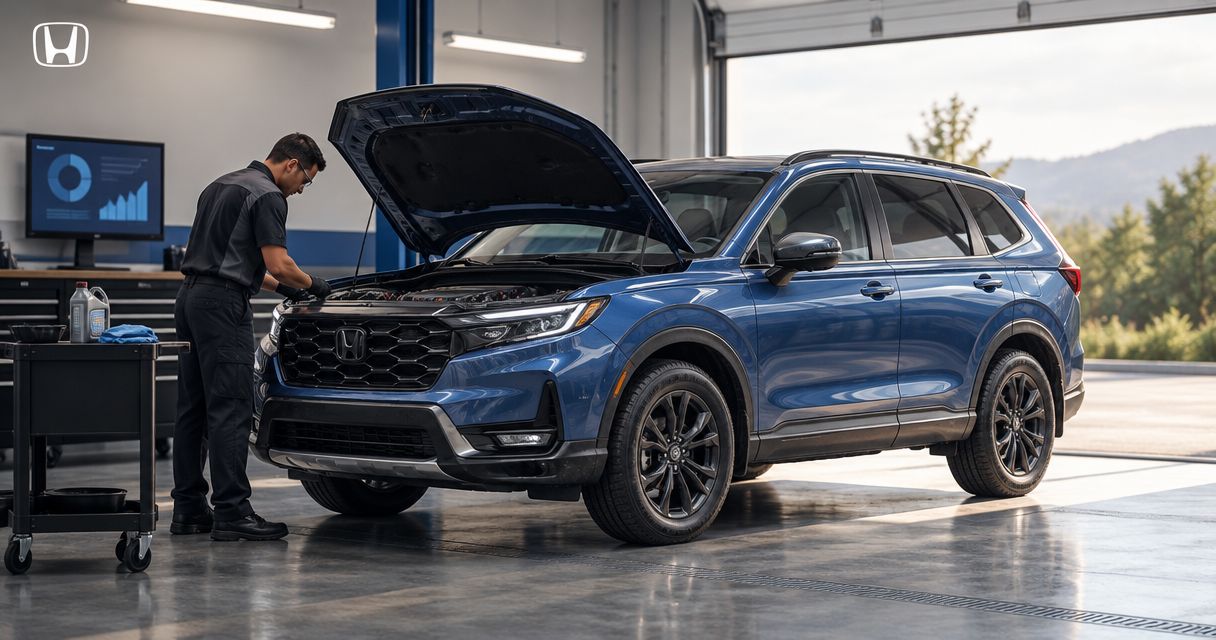
For Honda service, ask who will perform the work, whether the technician holds current Honda certification, and which inspection findings will be documented. Confirm those details directly rather than assuming a sales listing establishes service credentials.
Can I skip an inspection if the history report is clean?
A clean history report does not replace a pre-purchase inspection. The report covers recorded events; the inspection addresses current observable condition, including wear or faults that do not appear in a history database.
Keep the inspection independent of your enthusiasm for the car. Agree on the inspection process before you make a purchase commitment.
Why vehicle-history confidence varies
The strength of your buying decision depends on how well the available evidence fits together. Use these factors to identify where you need a clearer answer:
- Record coverage: Ask which periods have supporting documents and which remain undocumented.
- Mileage consistency: Compare odometer entries across the report, invoices, and vehicle.
- Repair documentation: Request invoices that explain reported damage or significant repairs.
- Maintenance detail: Distinguish an itemized service record from a general claim of regular care.
- Present condition: Compare inspection findings with what the seller and records describe.
These factors are not a scoring system. A serious unresolved identity or title concern should not be outweighed by several reassuring but unrelated maintenance receipts.
How do you turn the findings into a buying decision?
Use 3 decision checks: identity, documentation, and condition. These are a practical way to organize your decision, not a promise that any used vehicle will be trouble-free.
Identity: Confirm that the VIN and vehicle description match. Resolve discrepancies before proceeding.
Documentation: Make sure the title information, history entries, and available invoices tell a consistent story. Ask for written explanations where they do not.
Condition: Review the inspection findings and understand what needs attention. Decide whether that work fits your ownership plans before agreeing to buy.
Bristol Honda shoppers can discuss used-vehicle questions and ongoing service needs with the team. Ask which records are available for the specific vehicle and what inspection documentation you can review; do not assume every used listing has the same documentation or certification.
Plan your used Honda visit
Ask about vehicle records and service needs before visiting from Bristol, Johnson City, or Kingsport.
What should you do after buying a used vehicle?
Save the report, inspection findings, and purchase documents together. Establish a maintenance starting point from verified records and the guidance for your exact vehicle, rather than automatically repeating every service.
Ask a service advisor to separate documented completed work from work that is due or needs further inspection. That distinction helps you make a useful ownership plan without treating missing paperwork as proof that every component needs replacement.
In 2026, keep new invoices with the mileage and date visible. Whether you drive around Bristol, commute from Johnson City, or travel from Kingsport, the next service conversation is easier when your records show what has already been addressed.
FAQ
What should I check first when buying a used car in Bristol, TN?
Check that the VIN on the vehicle matches the history report and purchase documents. Then review the timeline, request maintenance records, and arrange a pre-purchase inspection.
Does a clean vehicle history report mean a used car has never been damaged?
A clean vehicle history report does not prove that a used car has never been damaged. Events or repairs that were not reported to the provider can be absent, so inspect the actual vehicle.
Should I reject a used car because it has an accident on its report?
An accident entry alone does not establish the car’s current condition. Request repair documentation and have a technician evaluate the affected area before deciding.
What if a used car has no maintenance records?
Missing maintenance records leave the service history unverified; they do not prove neglect. Use a pre-purchase inspection and vehicle-specific maintenance guidance to establish what needs attention.
Is a certified pre-owned Honda the same as any used Honda?
A certified pre-owned Honda has a certification designation that an ordinary used listing does not establish. Ask for the vehicle’s certification documents and current program terms rather than assuming every used Honda qualifies.
Can I check recalls using the vehicle identification number?
You can check open safety recalls using the VIN through Honda or the National Highway Traffic Safety Administration. Ask how an open recall will be addressed before you complete the purchase.
Where is Bristol Honda if I live in Johnson City or Kingsport?
Bristol Honda is located in Bristol, Tennessee, and serves drivers from Johnson City and Kingsport. Confirm the vehicle details and records before traveling so your visit addresses the questions that matter to you.
One last thing
The most useful question is: what evidence would change your decision? Ask it before the test drive, while it is easier to stay objective.
Write down any condition that would make you pause, such as an unresolved VIN mismatch or an inspection concern without a clear explanation. Keep that standard when you return from the drive; liking the car does not resolve the paperwork.