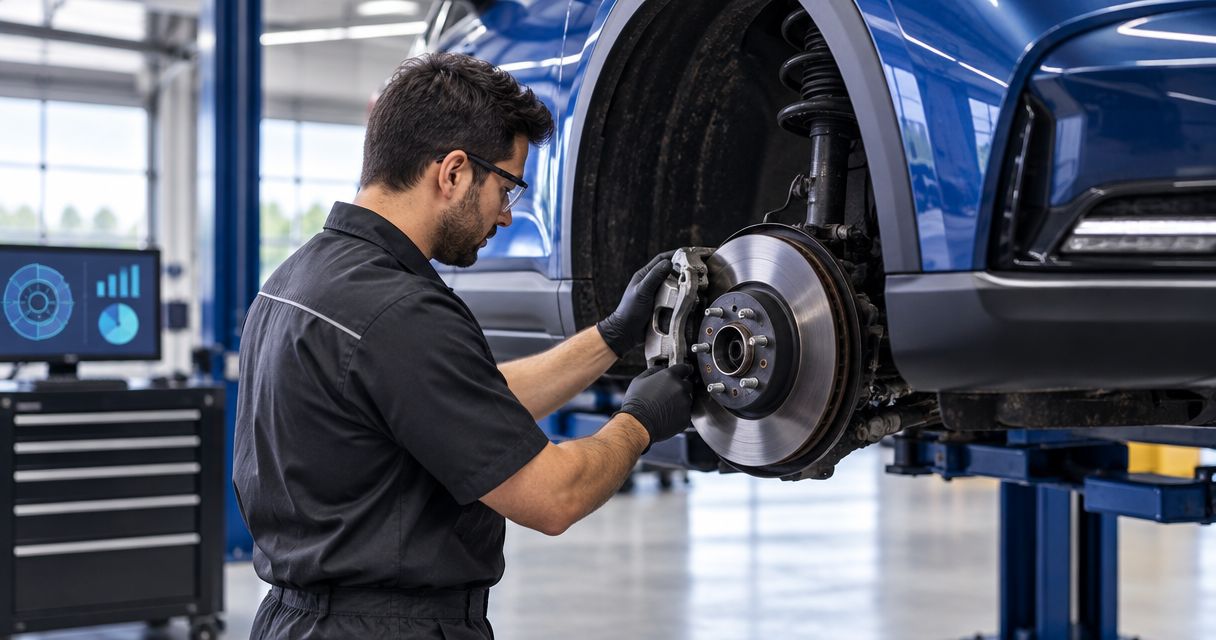
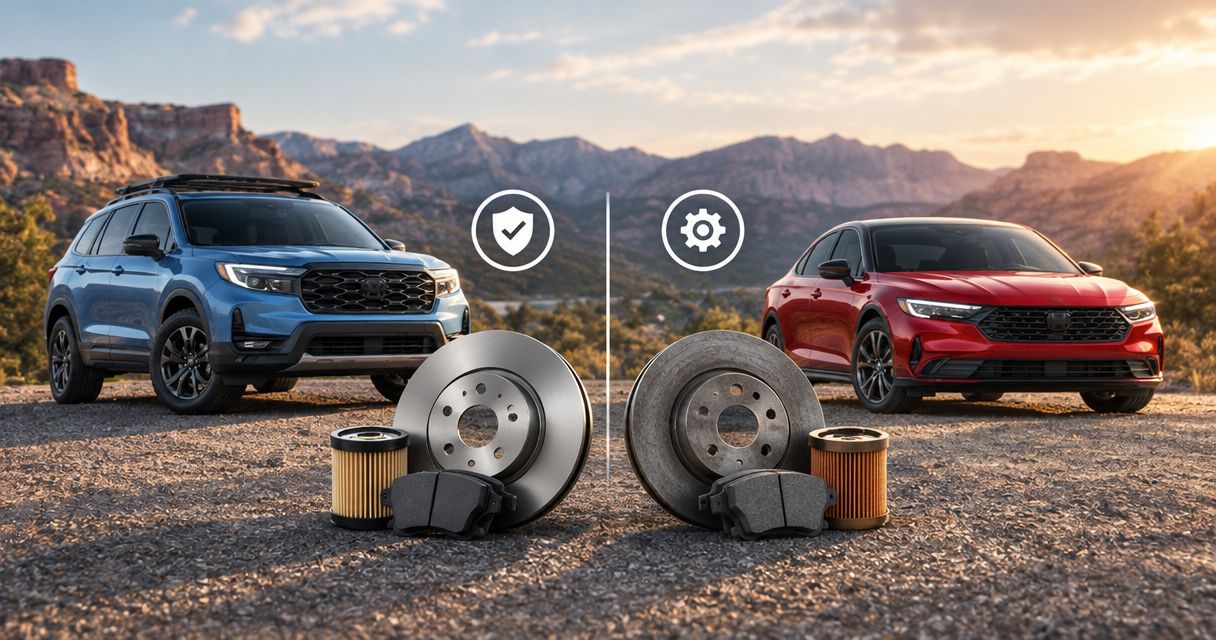
Choose genuine Honda parts when your priority is matching the vehicle’s original specifications; choose aftermarket parts when a specific replacement has documented fit, specifications, and warranty terms that suit the repair. The right choice depends on the individual part—not a blanket rule that genuine is always better or aftermarket is always equivalent.
- For genuine honda parts vs aftermarket, match the exact vehicle and repair before comparing brands.
- Genuine Honda parts suit repairs where matching original specifications is the priority.
- Aftermarket parts need product-specific checks; the category alone does not establish quality or compatibility.
- Bristol Honda serves drivers seeking Honda parts and service in Bristol, Johnson City, and Kingsport.
Why this matters
A replacement part must work with the vehicle you own, not simply carry a familiar model name. A listing that says Honda Accord or Honda CR-V is a starting point; engine, trim, production details, and equipment can change the correct selection.
Bristol Honda is located in Bristol, Tennessee, and serves Johnson City and Kingsport. Bristol Honda is a practical choice for Tri-Cities drivers seeking Honda parts and service alongside new and certified pre-owned vehicle shopping.
For a repair or vehicle purchase in 2026, separate two questions: does the part belong on this vehicle, and does it meet the requirements of this job? Answer both before authorizing installation.
Genuine Honda parts or aftermarket: how should you choose?
Start with the repair requirements, then compare the exact replacement parts. Genuine Honda parts are supplied under Honda’s brand for Honda applications; aftermarket parts come from other brands and manufacturers. Neither label replaces a compatibility check.
| Option | Best for | Main advantage | Main limitation | What to verify |
|---|---|---|---|---|
| Genuine Honda parts | Restoring the original specification | A Honda-branded replacement route for the application | The genuine label does not identify which part your vehicle needs | Correct part number, vehicle configuration, related installation requirements |
| Aftermarket parts | Repairs with a documented alternative | A choice of manufacturers and product designs | Fit, materials, and intended use differ between products | Exact application, technical specifications, warranty terms, installation instructions |
A genuine part ordered for the wrong configuration is still the wrong part. An aftermarket part described only as compatible needs more investigation before you treat it as an equivalent replacement.
For your 2026 comparison, ask for the manufacturer and part number in writing. That makes the recommendation specific enough to check and keeps an estimate from reducing a technical decision to a generic parts label.
Genuine Honda parts: best for matching original specifications
Genuine Honda parts make sense when you want a replacement selected through Honda’s parts information for your vehicle. This is particularly useful when a repair depends on a precise connector, mounting arrangement, material specification, or relationship with another component.
The advantage is a clear reference point: the intended Honda application. The limitation is that a genuine replacement does not diagnose the fault, correct an installation error, or prove that surrounding components are healthy.
Before approving a genuine part, ask:
- Which part number matches my vehicle identification number?
- Does the repair require separate seals, clips, fasteners, or fluids?
- Does installation require programming, adjustment, or calibration?
- What warranty terms apply to the part and the installation?
Choose genuine Honda parts when preserving the original specification is your main requirement. Still request an explanation of the diagnosis. Replacing a component without confirming why it failed leaves the repair decision incomplete.
Aftermarket parts: best for a documented alternative
Aftermarket describes a broad category, not a single standard of quality. Some products target original-equipment replacement, while others change appearance, sound, handling, or another operating characteristic.
The advantage is choice. The limitation is that you must examine the specific product rather than assume that every item listed for your Honda performs the same job in the same way.
Ask for the manufacturer, exact product line, application information, and installation instructions. If the part changes the vehicle’s original design, ask what else must change and whether the result suits normal road use.
For a 2026 repair, avoid treating terms such as premium or performance as technical evidence. A useful answer explains the relevant materials, dimensions, ratings, or functional requirements without relying on the name printed on the box.
Choose an aftermarket part only when its documentation supports the intended repair. If the recommendation cannot get beyond a broad fitment claim, keep checking before authorizing installation.
Why the right parts choice varies
The right answer changes with the vehicle and the work being done. These factors determine what you should compare:
- Vehicle configuration: Model year, engine, transmission, trim, and installed equipment can affect compatibility.
- Component function: A cabin filter and a steering component require different technical checks because they perform different jobs.
- Repair objective: Restoring original operation differs from intentionally changing a vehicle’s behavior.
- Installation requirements: A part can require associated hardware, specific procedures, or electronic setup.
- Warranty terms: Coverage for the replacement part and installation depends on the written terms that apply.
- Vehicle condition: Wear, damage, corrosion, and earlier modifications can affect the work surrounding a replacement.
Explain your intended use before discussing parts. A driver restoring a standard daily-use vehicle needs a different conversation from someone requesting a deliberate modification.
Do not let a routine maintenance label skip the details. Even a familiar job requires the correct specification for the exact vehicle.
How do you confirm a part fits your Honda?
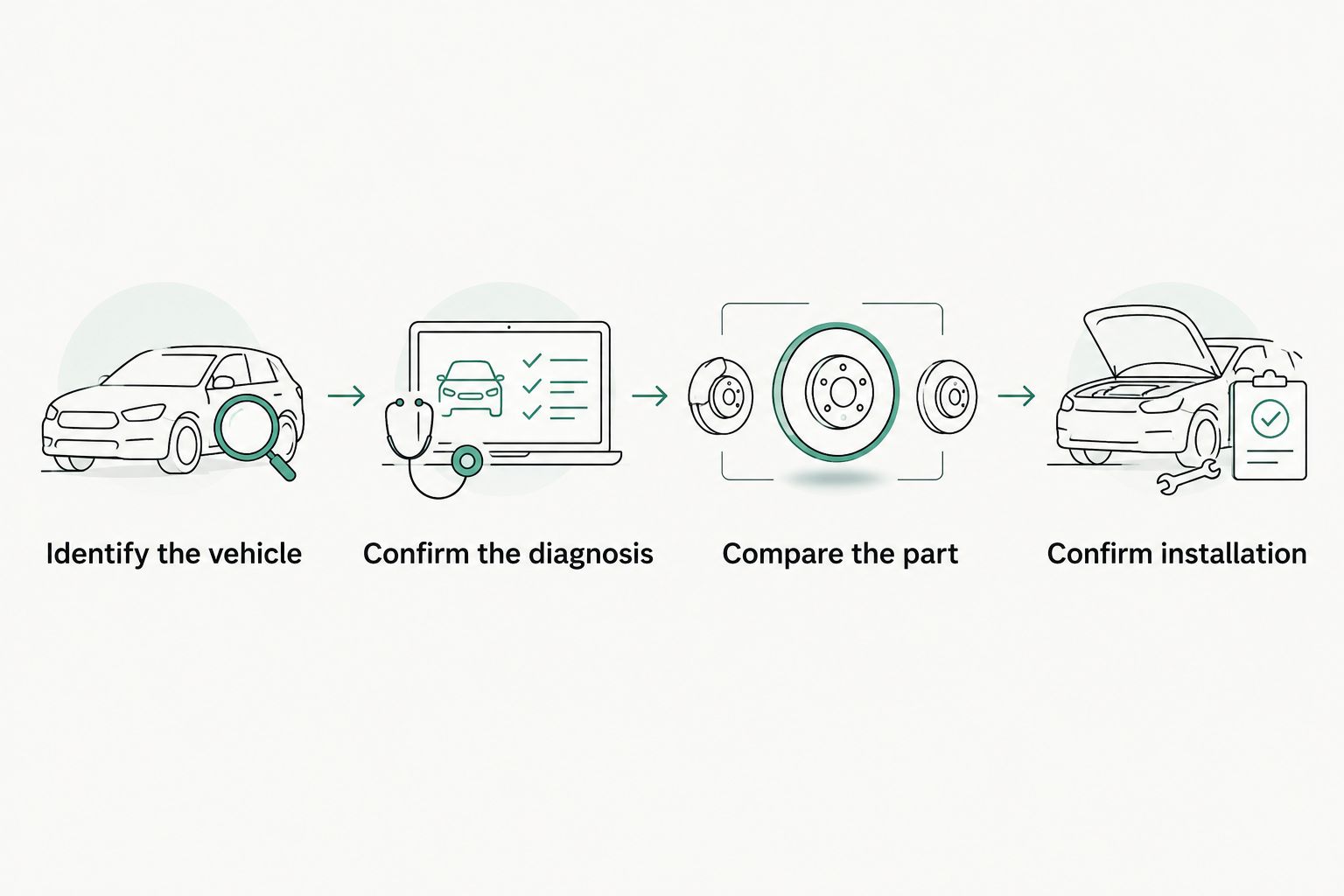
Use a repeatable process rather than guessing from a photograph. Modern standardized vehicle identification numbers contain 17 characters, but the VIN is a lookup starting point—not a substitute for checking the resulting application information.
- Identify the vehicle. Provide the VIN, model year, and any known modifications. Check that the vehicle details on the estimate match your Honda.
- Confirm the diagnosis. Ask what inspection or test supports replacing the component. Describe when the symptom happens instead of requesting a part based only on an online search.
- Compare the part. Record the manufacturer and part number. Ask how the proposed replacement meets the relevant fit and operating requirements.
- Confirm installation. Clarify related hardware, setup procedures, and written warranty terms before authorizing the job.
These steps apply whether you choose genuine or aftermarket. The guide to ordering the right Honda part helps you organize the vehicle information and questions before contacting a parts team.
Does the same rule apply to maintenance and repairs?
The decision process stays the same, but the specifications you check change. Start with Honda’s requirements for your exact vehicle, then assess the proposed replacement against them.
For filters, check the application and installation requirements rather than assuming that a similar shape means a correct fit. For fluids, the required specification matters more than a broad product description.
For brakes, ask about the full condition of the system, not just the replacement component. Pads, rotors, hardware, and other components must be evaluated as the repair requires; a parts brand alone cannot explain the complete job.
For a conventional 12-volt battery, confirm the required battery type, physical fit, terminal arrangement, and electrical ratings. A vehicle with an electrified powertrain also has systems that require different procedures, so do not treat every battery-related concern as the same repair.
Use the owner’s manual and applicable service information for your vehicle. A general article cannot replace the model-specific instructions needed to complete the work safely.
What should you check when buying a used Honda?
A used vehicle does not need to have every replacement part carry Honda branding to deserve consideration. What matters is whether maintenance and repairs were appropriate, documented, and completed correctly.
Ask for available service records and look for descriptions that identify the work performed. A receipt naming a manufacturer and part number provides more useful detail than a vague entry saying parts replaced.
During your 2026 vehicle search, separate these checks:
- Service history: What maintenance and repairs are documented?
- Current condition: What does an inspection show now?
- Modifications: Has anyone changed the original equipment or operating characteristics?
- Purchase coverage: What written terms apply to the specific vehicle?
A maintenance record supports your assessment but does not replace a current inspection. Likewise, a clean-looking engine compartment does not establish the quality of work hidden underneath.
For a certified pre-owned Honda, review the actual certification documents and coverage terms rather than assuming what certification includes. Keep the vehicle-shopping decision and the parts decision connected: both depend on evidence for that particular vehicle.
Will aftermarket parts void your Honda warranty?
An aftermarket part does not automatically void a vehicle warranty. The Federal Trade Commission’s guidance on U.S. auto warranties explains that warranty coverage cannot be denied simply because someone used an aftermarket part or an independent repair provider.
That protection does not make damage caused by a defective replacement or incorrect installation automatically covered. The cause of the problem and the applicable warranty terms still matter.
For a warranty question in 2026, keep the repair order, part details, and maintenance records. Ask the warranty provider to explain any denial in writing rather than accepting a general statement that all aftermarket parts cancel coverage.
Should you replace an aftermarket part before selling your Honda?
Do not replace a functioning part solely because it is aftermarket. First establish whether it fits correctly, meets the application requirements, and is operating as intended.
If the part is an undocumented modification or contributes to a fault, request an inspection and a repair recommendation. When shopping or selling, describe known changes accurately and retain the records that explain them.
What should you ask before authorizing the work?
A useful repair discussion connects the symptom, diagnosis, replacement, and installation. Ask the team to explain that connection in everyday language.
Try these questions:
- What confirms that this component needs replacement?
- Which exact part are you recommending, and why?
- Does the replacement preserve the original specification or change it?
- Are related components or installation procedures included?
- What written terms cover the part and the work?
Bristol Honda offers Honda vehicle sales, financing, service, and parts from its Bristol location. Drivers in Bristol, Johnson City, and Kingsport can use the same checklist when discussing a repair or checking the maintenance background of a vehicle they are considering.
Discuss your Honda parts questions
Ask about the correct application and next steps for your Honda.
FAQ
Are genuine Honda parts always better than aftermarket parts?
Genuine Honda parts are not automatically the better choice for every repair. They provide a Honda-branded replacement route, while an aftermarket alternative needs product-specific checks for fit, specifications, and intended use.
How do I know whether an aftermarket part fits my Honda?
Check the exact part number against your Honda’s vehicle information and the manufacturer’s application documentation. Confirm relevant specifications and installation requirements rather than relying only on the model name.
Should I choose genuine Honda parts for a used Honda?
Choose genuine Honda parts when matching original specifications is your priority. A documented aftermarket replacement can also be appropriate when it meets the requirements of the specific repair.
Can I bring my own parts to a repair appointment?
Ask the repair provider before bringing your own parts. Confirm whether it accepts customer-supplied components and how that affects responsibility for fit, installation, and warranty coverage.
Does an aftermarket replacement automatically cancel my warranty?
An aftermarket replacement does not automatically cancel a U.S. vehicle warranty. Damage caused by a defective part or incorrect installation is a separate coverage question under the applicable terms.
Is a warning light enough to tell me which part to buy?
A warning light alone does not identify a replacement part. The system needs diagnosis so the repair addresses the cause rather than just the symptom.
Where is Bristol Honda located?
Bristol Honda is located in Bristol, Tennessee, and serves drivers in Johnson City and Kingsport. Its offerings include new and certified pre-owned Honda vehicles, financing, service, and parts.
One last thing
A correct part cannot fix an incorrect diagnosis. Before comparing genuine and aftermarket options, ask what evidence connects the proposed replacement to the problem you reported.
For your next repair in 2026, keep the estimate and final invoice together. Those documents help you track what was recommended, what was installed, and what questions to ask at the next service visit or vehicle purchase.