
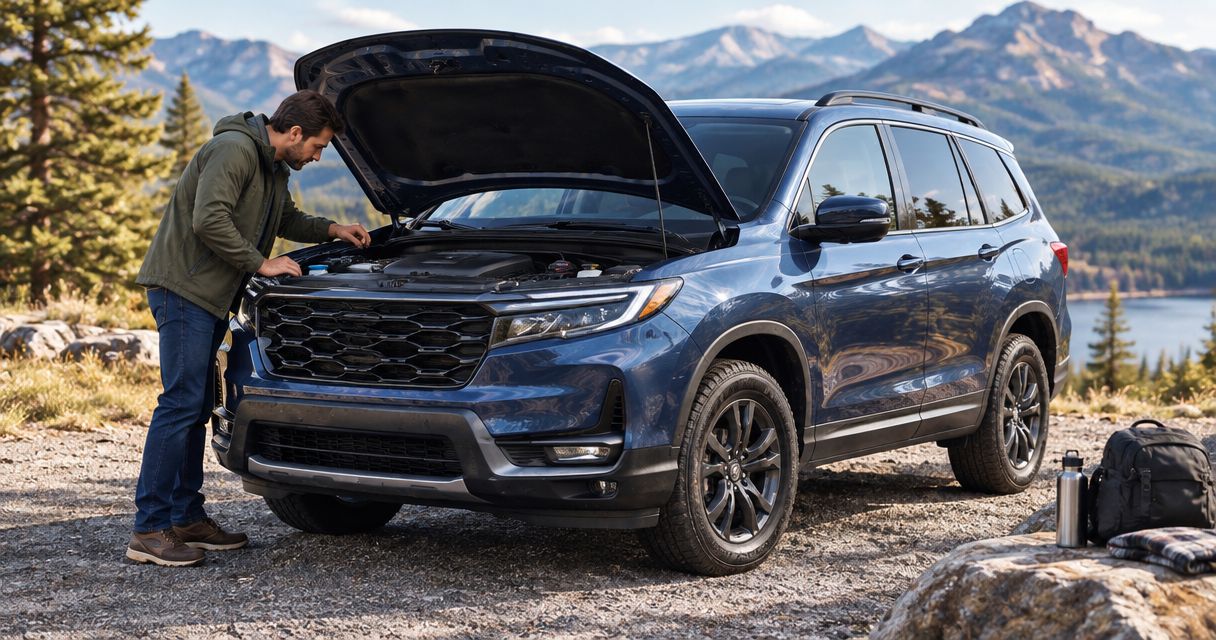
Before buying a used Honda Pilot, check its vehicle history, maintenance records, recall status, engine and transmission operation, tires, brakes, electronics, and underbody condition. Match the vehicle identification number across the paperwork and vehicle, then arrange a pre-purchase inspection; a clean history report and a smooth test drive do not replace a mechanical assessment.
- What to check before buying a used Honda Pilot: records, recalls, mechanical condition, safety equipment, and family fit.
- A vehicle history report documents reported events; a pre-purchase inspection assesses the Honda Pilot’s current condition.
- Bristol Honda serves Honda shoppers and service customers in Bristol, Johnson City, and Kingsport.
- Buy on documented condition, not mileage alone; resolve unexplained warning lights and maintenance gaps before signing.
What should you check before buying a used Honda Pilot?
Check the individual Pilot, not just the model’s reputation. For a 2026 purchase, use the actual model year, trim, drivetrain, mileage, and service history to decide which equipment and maintenance requirements apply.
- Confirm identity. Match the VIN on the vehicle with the title, history report, and service documents.
- Review the history. Look for title brands, reported damage, odometer inconsistencies, and unexplained gaps.
- Check maintenance. Request dated invoices showing the work performed and the mileage at each visit.
- Inspect and drive. Evaluate cold starting, shifting, steering, braking, climate controls, and cabin equipment.
- Get professional findings. Arrange a pre-purchase inspection and resolve questions before agreeing to buy.
Why this matters
A used SUV can look clean while needing tires, brake work, fluid service, or further diagnosis. Those needs belong in your buying decision, not on a surprise list after delivery.
Bristol Honda is a local option for Honda shoppers who also need vehicle service in Bristol. The dealership is located in Bristol, Tennessee, and serves Johnson City and Kingsport; it does not have to be in your city to help you plan a shopping or service visit.
Start with the VIN, title, and vehicle history
A standard modern VIN contains 17 characters. Compare the dashboard VIN, the vehicle’s identification label, and the paperwork; ask the seller to explain any discrepancy before you proceed.
Read the title information rather than accepting a verbal description. Look for disclosed salvage, rebuilt, flood, or other title brands, and establish how ownership will transfer if a lender holds a lien.
A history report is useful evidence, but it is not a complete account of every repair. Unreported damage and work performed outside reporting networks will not necessarily appear.
Use this comparison to understand what each check contributes:
| Check | Best for | What it contributes | Limitation |
|---|---|---|---|
| Vehicle history report | Reviewing reported past events | Title information, reported damage, and recorded mileage | Does not establish current mechanical condition |
| Service invoices | Verifying documented maintenance | Dates, mileage, parts, and work performed | Missing invoices leave maintenance questions unresolved |
| Pre-purchase inspection | Assessing current condition | Findings on wear, leaks, damage, and operating concerns | Does not guarantee future reliability |
For more detail on reading the paperwork, see understanding vehicle history. Use records and inspection findings together; neither replaces the other.
Read maintenance records against the correct Honda guidance
For a 2026 shopping visit, ask for maintenance documentation before traveling. A photograph of an invoice is more useful than a general statement that the Pilot received regular service.
Match each record to the VIN or other identifying details. Check that dates and mileage follow a sensible sequence, and distinguish an inspection recommendation from a completed repair.
Ask about these service areas:
- Engine oil and filter: Look for a documented pattern of maintenance, not just a recent oil change.
- Transmission fluid: Confirm that the work and fluid specification match the vehicle’s requirements.
- Timing-belt maintenance: Check the applicable Honda maintenance guidance and request proof of completed work when required.
- Drivetrain fluids: If the Pilot has all-wheel drive, ask about the maintenance applicable to that system.
- Cooling and braking systems: Review documented fluid service, repairs, and outstanding recommendations.
Do not apply one internet maintenance interval to every Pilot. Use the correct owner’s manual and maintenance information for the vehicle, including time-based requirements where Honda specifies them.
An absent receipt is not proof of neglect, but it is not proof of completed maintenance either. Treat undocumented work as an open question and ask a qualified technician what needs verification.
Inspect the engine and transmission from a cold start
Ask to see the Pilot before the engine has been warmed up. Starting from cold gives you a chance to notice starting difficulty, unusual noises, warning messages, or rough running that deserve investigation.
Check that warning indicators illuminate during the startup check and behave as described in the owner’s manual. A warning light that remains on needs diagnosis, not an assumption that it only needs resetting.
With the vehicle safely parked, look for visible leaks, damaged hoses, and signs of improvised repairs. Never remove a hot cooling-system cap or reach near moving components.
During the drive, pay attention to:
- Hesitation when accelerating from a stop.
- Harsh, delayed, or inconsistent shifts.
- Engine speed rising without matching acceleration.
- Shuddering, vibration, or unusual drivetrain noises.
- Rough idle after the engine reaches operating temperature.
These symptoms require diagnosis; they do not identify a failed part by themselves. Record when the symptom occurs so the technician can try to reproduce it.
Check tires, brakes, steering, and the underbody
Inspect every road tire for uneven wear, sidewall damage, and mismatched sizing. Compare the fitted tire specifications with the vehicle’s tire information label and applicable Honda guidance.
The last 4 digits of a tire’s complete DOT identification number identify its manufacturing week and year. Tire age adds context, but condition, manufacturer guidance, and professional inspection still matter.
Have a technician measure tread depth rather than judging it from a photograph. NHTSA advises replacing tires when tread reaches 2/32 inch; visible damage or other safety concerns can require action before that point.
On a safe test-drive route, check for pulling, steering vibration, brake pulsation, and unusual suspension sounds. Do not perform abrupt maneuvers or deliberate emergency stops to test the vehicle.
Ask the inspector to assess:
- Brake pad and rotor condition.
- Steering and suspension joints, bushings, and related components.
- Fluid leaks and damaged protective boots.
- Underbody corrosion and signs of structural damage.
- Exhaust damage and insecure components.
Separate cosmetic wear from safety and structural concerns. Surface marks and minor cabin wear do not carry the same significance as damaged steering components or substantial corrosion.
Test the cabin with your actual family routine
Bring the items you expect to carry. Check child-seat fit using the vehicle and child-seat instructions, try third-row access, and load your usual stroller or other bulky gear with the seating arrangement you intend to use.
Do not assume seating layout, cargo features, or driver-assistance equipment from the Pilot name alone. Confirm the actual vehicle’s equipment against authoritative Honda information for its model year and trim.
Test the systems you will use regularly:
- Front and rear heating and air conditioning.
- Seat adjustments, folding mechanisms, and seat belts.
- Door locks, windows, mirrors, and liftgate operation.
- Cameras, parking aids, and equipped driver-assistance controls.
- Audio, phone pairing, charging ports, and navigation if fitted.
Check for damp carpet, persistent musty odors, and water staining. Ask a technician to investigate unexplained moisture rather than accepting a fresh cleaning as the solution.
A Pilot that passes a mechanical inspection still needs to fit your household. Confirm access and cargo space before you commit, not after you bring it home.
Check recalls and arrange a pre-purchase inspection
In 2026, check the specific VIN through Honda’s recall lookup and NHTSA’s recall lookup. Ask for documentation of completed recall work and clarify any outstanding remedy with a Honda dealer.
A recall check and a mechanical inspection answer different questions. Recall information concerns identified safety campaigns; an inspection evaluates the condition of the vehicle in front of you.
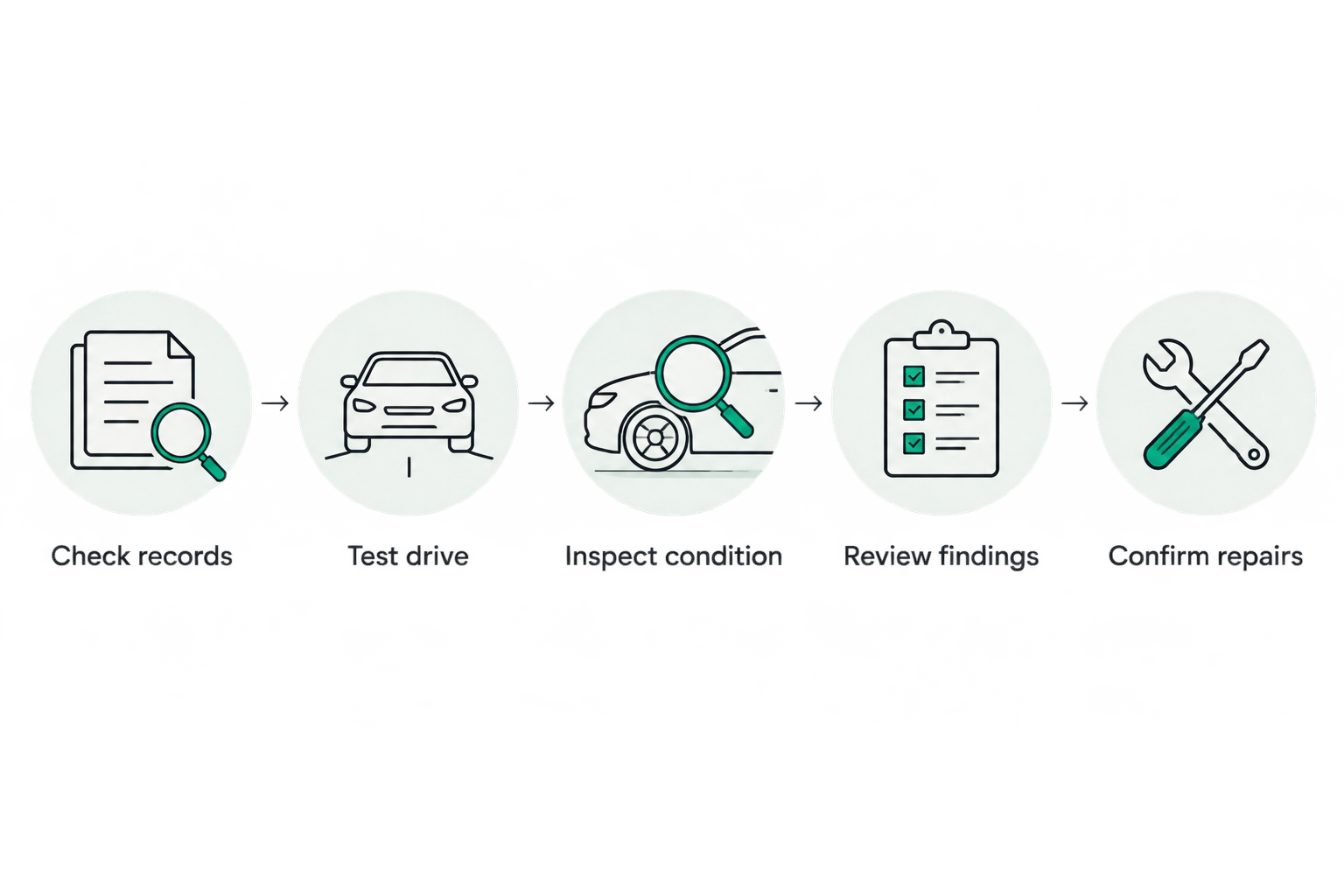
Follow this sequence before signing:
- Check records: Collect the VIN, history report, service invoices, and recall information.
- Test drive: Note noises, warning lights, vibration, and equipment problems.
- Inspect condition: Arrange a qualified technician’s assessment, including an underbody inspection and diagnostic checks as appropriate.
- Review findings: Separate immediate safety concerns from maintenance and cosmetic issues.
- Confirm repairs: Get agreed work and supporting documentation in writing.
Ask what the inspection covers and what it excludes. Diagnostic scanning can reveal stored information, but a scan alone does not assess tire wear, brake thickness, structural condition, or every intermittent fault.
For Bristol, Johnson City, and Kingsport drivers, planning the inspection before the shopping trip avoids treating it as an afterthought. Bristol Honda offers Honda vehicle sales and service in Bristol; contact the team to discuss your buying and service questions before visiting.
Why used Honda Pilot condition varies
A 2026 listing’s mileage is only part of the evidence. These factors help explain why similar-looking vehicles need different levels of attention:
- Maintenance history: Documented work establishes what was completed and what still needs checking.
- Driving conditions: Honda maintenance guidance accounts for certain operating conditions; compare the vehicle’s use with the applicable instructions.
- Damage and repairs: Repair quality matters alongside the reported incident itself.
- Age and exposure: Inspect rubber components, tires, seals, and corrosion rather than relying on mileage alone.
- Equipment and drivetrain: Verify the installed systems and their maintenance requirements instead of assuming all Pilots are identical.
Should I avoid a used Honda Pilot with high mileage?
Mileage alone is not a pass-or-fail test for a used Honda Pilot. Compare documented maintenance, inspection findings, age, and current operation; lower mileage does not cancel out damage or neglected service.
Is a clean vehicle history report enough to buy a used Pilot?
A clean vehicle history report is not enough to establish a used Pilot’s condition. Keep the test drive and pre-purchase inspection in your process because reporting gaps and current wear remain separate issues.
Should I inspect a certified pre-owned Honda Pilot?
Review the inspection paperwork even when a Pilot is described as certified pre-owned. Confirm the actual certification status, applicable coverage documents, exclusions, and completed reconditioning rather than treating the label as a substitute for reading the terms.
FAQ
What should I ask the seller before looking at a used Honda Pilot?
Ask for the VIN, service records, title information, known damage, warning-light concerns, and permission for a pre-purchase inspection. Request the documents before traveling so you can identify unanswered questions.
How do I check a used Honda Pilot for recalls in 2026?
Check the specific VIN through Honda’s recall lookup and NHTSA’s recall lookup. Ask a Honda dealer to clarify outstanding campaigns and request documentation for completed work.
Does every used Honda Pilot have the same maintenance needs?
No, use the maintenance information for the specific model year, drivetrain, and vehicle. Match completed service to dated records instead of applying a single schedule to every Pilot.
Can a fresh oil change prove a used Pilot was maintained?
No, a fresh oil change confirms only that particular service when documented. Review the longer maintenance history and check other required work separately.
Should I test the battery before buying a used Honda Pilot?
Yes, ask for a test of the 12-volt battery and starting and charging systems. A successful start does not establish the battery’s remaining service life.
What should I do if the Pilot shifts roughly on the test drive?
Have the shifting concern diagnosed before deciding to buy. Note whether it happens cold, warm, during acceleration, or when selecting a gear, and share those details with the technician.
Can Bristol Honda help shoppers from Johnson City and Kingsport?
Bristol Honda is located in Bristol, Tennessee, and serves Johnson City and Kingsport with Honda vehicle sales, financing, and service/parts. Contact the team to discuss the vehicle and service help you need before visiting.
One last thing
Ask for the inspection’s unresolved findings, not just its completed repairs. A repair invoice tells you what was done; outstanding recommendations tell you what still needs a decision.
Before your 2026 purchase, keep the inspection report, agreed repairs, maintenance records, and purchase documents together. Bristol Honda shoppers from Bristol, Johnson City, and Kingsport can use the same rule: buy the specific Pilot you have verified, not the condition you hope it is in.