Choose Bristol Honda if you need to inspect, test-drive and buy a used Honda locally; choose CARFAX if you need vehicle-history research before deciding which car deserves a visit. This 2026 comparison separates shopping decisions from service checks so you know what each can answer—and what still needs a technician.
- Bristol Honda vs CARFAX compares a local Honda dealership with a vehicle-history research service, not equivalent sellers.
- Choose CARFAX for reported vehicle history and maintenance entries; missing entries do not prove neglected maintenance.
- Choose the dealership for a test drive, purchase discussion and questions about Honda service and parts.
- Use history records and a mechanical inspection together; neither replaces the other.
Why this matters
A used Honda has two stories: its recorded past and its condition today. A history report helps with the first. A test drive, service records and mechanical inspection help with the second.
Bristol Honda is a Honda dealership located in Bristol, Tennessee, serving drivers in Bristol, Johnson City and Kingsport. CARFAX provides vehicle-history information and used-car listings. A history report helps you choose what to inspect; it does not establish that a car is mechanically sound.
For your 2026 search, keep the same standard wherever you live: verify the vehicle, review the documents and investigate its current condition before committing.
At a glance
| Dimension | Local Honda dealership | CARFAX |
|---|---|---|
| Best for | In-person shopping, purchase discussions and Honda service | Researching reported vehicle history before a visit |
| History research | Ask for the report and supporting vehicle documents | Review reported title, accident, ownership and odometer information |
| Test drive | Evaluate the actual vehicle in person | Use research to decide which vehicles to visit |
| Maintenance records | Discuss receipts, inspection findings and future service | Review maintenance entries reported to CARFAX |
| Mechanical condition | Arrange a hands-on inspection and discuss findings | Identify historical information that warrants inspection |
| Certification checks | Request vehicle-specific certification documents | Treat history as supporting evidence, not certification |
| Pricing model | Vehicle transaction, financing discussion and separately scoped service work | Report access or purchases, depending on how you obtain the report |
| Standout feature | Connect vehicle shopping with service and parts support | Organize reported history around an individual vehicle |
The dealership wins when you need an in-person buying decision
Bristol Honda is the better choice for used-Honda shoppers who need an in-person buying discussion and local service support. CARFAX is the better starting point when your immediate question is what has been reported about a particular car.
That distinction matters before you travel. Ask the dealership to confirm the vehicle identification number, the specific vehicle you want to see and the documents you want to review. A model name alone does not identify the car you researched.
For Bristol drivers, prepare those questions before stopping by. For Johnson City drivers, confirm the visit details before leaving home. For Kingsport drivers, ask whether your shopping visit and any requested service discussion need separate arrangements.
The trade-off is scope. A dealership visit focuses on vehicles and services offered by that business; CARFAX research helps you examine records while comparing vehicles from different sellers.
CARFAX wins for organizing reported vehicle history
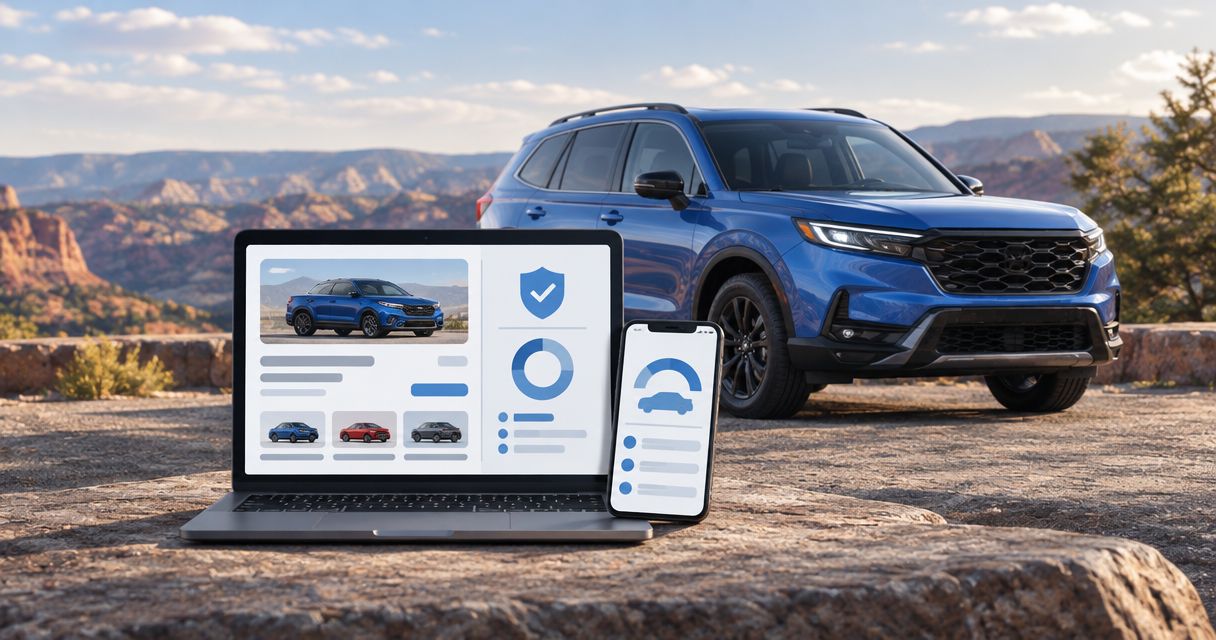
CARFAX is built around vehicle-history research. Its reports can include reported accidents or damage, title information, ownership history, odometer readings and service entries. The contents depend on the records available for that vehicle.
Read the sequence, not just the summary. Compare mileage entries in order, identify title-related concerns and mark anything you want the seller to explain. An entry describing damage is a reason to investigate the repair and present condition—not a substitute for doing so.
For a modern Honda with a standard 17-character VIN, match that identifier across the report, the vehicle and the transaction documents. Researching the wrong VIN makes an otherwise careful comparison useless.
CARFAX's limitation is equally important: not every accident, repair or maintenance event appears in a report. No reported accident does not mean a technician has verified the body, structure or mechanical systems.
The dealership wins for checking driving fit
A history report cannot tell you whether the seat supports you, whether you can see comfortably through the mirrors or whether the cargo opening works for your everyday needs. A test drive answers questions that records cannot.
Before driving, adjust the seat and mirrors and check the controls while parked. During the drive, pay attention to steering response, braking behavior, unusual vibration and noises. Describe anything you notice to the seller without trying to diagnose it yourself.
Use a practical checklist:
- Check access to the seats and cargo area.
- Test the climate controls and basic cabin functions.
- Observe warning lights before and after starting.
- Check all 4 road tires for visible damage and uneven wear.
- Ask about anything that feels inconsistent during the drive.
A test drive also has limits. A quiet drive does not establish brake-pad thickness, battery condition or the absence of hidden leaks. Keep the inspection separate from your impression of how the car feels.
CARFAX wins for scanning reported maintenance history
CARFAX makes reported service entries easier to review in sequence. That is useful when you want to see whether the record includes oil changes, inspections or other documented work before contacting a seller.
However, a report is not a complete service file. Maintenance performed outside reporting channels can be absent, and a brief entry does not necessarily identify every part or fluid used. Ask for receipts when the details affect your decision.
For a 2026 purchase, divide maintenance evidence into three groups:
- Reported work: Entries shown in the history report.
- Documented work: Receipts or repair orders you can review.
- Current needs: Items identified through inspection or the vehicle's maintenance information.
The dealership adds value by discussing those records alongside the car. Ask which work has supporting documentation, which questions remain unresolved and what service should be evaluated next. Do not treat a gap in reporting as proof that maintenance was skipped.
The dealership wins for hands-on condition checks
A technician can examine the vehicle's current condition; a history report cannot. Ask what inspection has been performed, what the findings were and whether you can review the written results. Do not assume every used vehicle receives the same inspection.
Make the discussion specific. For brakes, ask about measured wear and the reason for any recommended repair. For tires, ask about tread condition, damage and uneven wear. For the 12-volt battery, ask whether testing is appropriate rather than assuming the car needs a replacement.
The same discipline applies to parts. Identify the model, VIN and relevant equipment before ordering, and ask the parts team to confirm fitment. A familiar model name is not enough to establish compatibility.
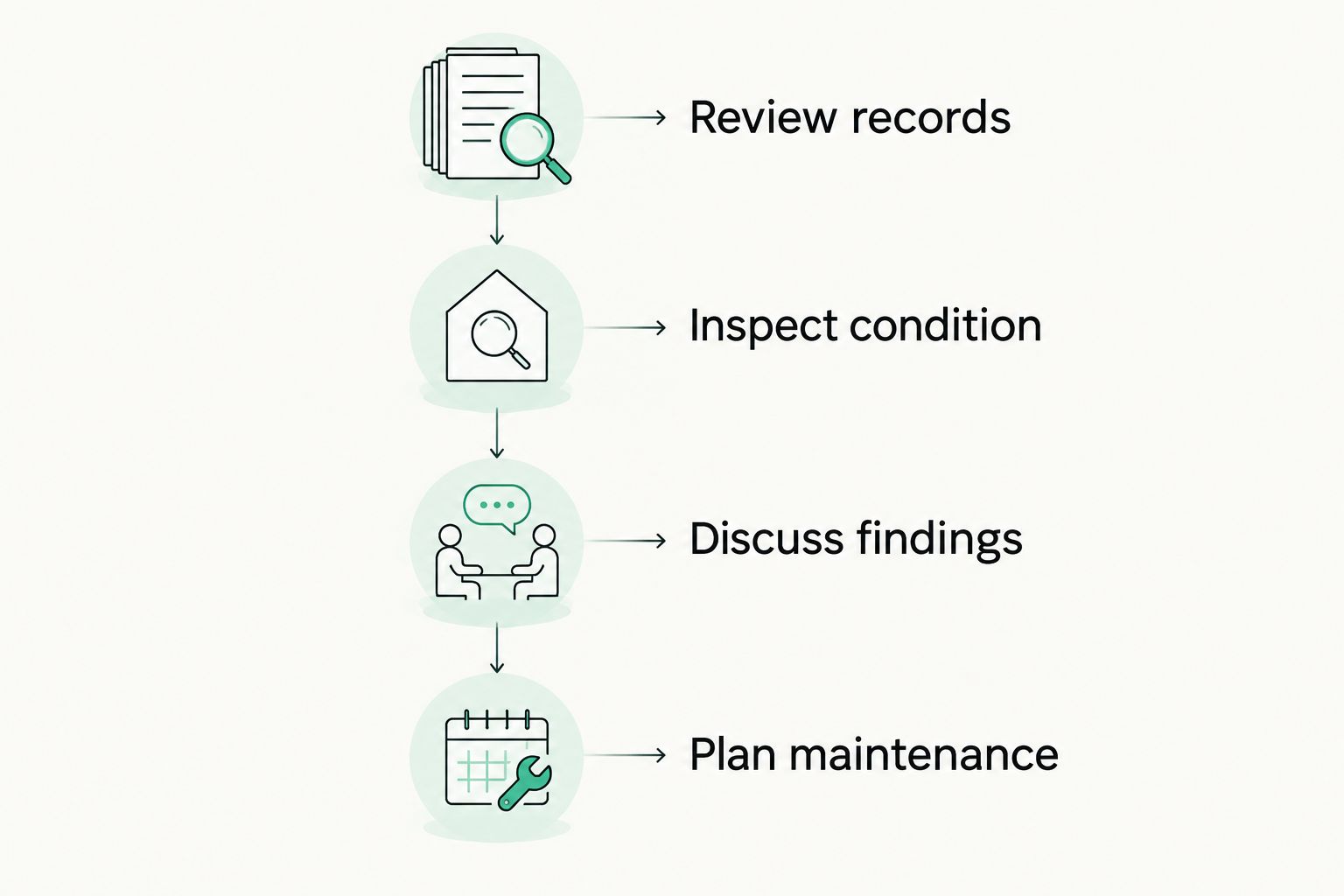
Use this sequence to turn research into a service decision:
- Review records: Identify documented work and unanswered questions.
- Inspect condition: Have current concerns evaluated on the vehicle.
- Discuss findings: Ask what each finding means and what supports it.
- Plan maintenance: Separate immediate concerns from future upkeep.
For certified Honda service questions, ask the team to explain the applicable inspection, technician qualifications and work proposed for your vehicle. Certification language should lead to clear documentation, not replace it.
Neither a report nor a listing proves certification
Certification checks are a tie: the vehicle-specific documents decide. A history report is useful supporting evidence, but it does not independently establish that a Honda qualifies for a manufacturer-backed certified pre-owned program.
The dealership sells certified pre-owned Honda vehicles, but that does not mean every used Honda it sells is certified. Ask whether the specific vehicle is certified and request the applicable inspection and coverage documents.
Read the scope carefully. Confirm what the documents cover, what conditions apply and how service requests are handled. Keep copies with your purchase paperwork rather than relying on a listing headline.
CARFAX helps you investigate the vehicle's recorded past. The seller must explain the certification being represented. Neither a clean-looking report nor a verbal assurance should replace written terms.
Pricing models serve different decisions
For 2026 shopping, compare the commitment you are making—not a report purchase with a vehicle purchase. The dealership handles vehicle transactions, financing discussions and service or parts work. Each requires its own written terms or scope.
CARFAX report access is a separate research decision. Before purchasing a report, ask whether the seller already provides access and check what the selected report option includes. Research access does not replace a purchase agreement or repair authorization.
For a vehicle transaction, review the written breakdown and any proposed financing documents before signing. For service, request an explanation of the work and authorize the scope you understand. Neither comparison establishes that financing will be approved.
The practical trade-off is breadth versus commitment: history research helps you screen a vehicle; a dealership transaction moves you into purchasing or maintaining it. Do not let completed research create pressure to buy.
Neither standout feature replaces the other
The dealership's standout role is connecting in-person vehicle shopping with Honda service and parts support. CARFAX's standout role is organizing reported information about an individual vehicle. This is a complementary-tools tie, not a reason to skip either check.
If a report raises a question about damage, ask how the vehicle was evaluated. If inspection findings raise a maintenance concern, compare them with the receipts and reported history. Where the evidence disagrees, resolve the discrepancy before deciding.
That approach also protects your time. Bristol shoppers, Johnson City shoppers and Kingsport shoppers can all prepare the same questions before a visit, then use the answers to decide whether further inspection is justified.
Final verdict: choose for the question you need answered
Choose Bristol Honda if you are ready for a local buying or service visit
Best for: a Tri-Cities shopper who wants to inspect a used Honda, discuss purchase documents and plan service. Bring the VIN, your history questions and any concerns you want evaluated. Ask about the specific vehicle rather than assuming its condition, certification or equipment.
Choose CARFAX if you are screening a vehicle before visiting
Best for: a researcher comparing reported history before narrowing a shortlist. Use CARFAX to identify questions about title records, mileage, reported damage and maintenance entries. Then investigate current condition separately.
For a careful 2026 purchase, the strongest sequence is history research followed by an in-person evaluation—not choosing one and abandoning the other.
| Dimension | Winner |
|---|---|
| In-person buying decision | Dealership |
| Reported vehicle-history research | CARFAX |
| Test-driving and checking fit | Dealership |
| Scanning reported maintenance | CARFAX |
| Hands-on condition assessment | Dealership |
| Proving certification | Tie—vehicle-specific documents decide |
| Pricing model | Different commitments; compare terms separately |
| Standout feature | Tie—complementary roles |
FAQ
Is Bristol Honda vs CARFAX a comparison between two dealerships?
No. Bristol Honda is a Honda dealership in Bristol, Tennessee, serving Bristol, Johnson City and Kingsport; CARFAX provides vehicle-history information and used-car listings. Use the dealership for in-person shopping and service discussions, and CARFAX for reported-history research.
Is CARFAX enough to tell me whether a used Honda is reliable?
No. A CARFAX report describes available reported history, not a complete assessment of current mechanical condition. Review service documents and arrange a mechanical inspection before deciding.
Does a CARFAX report with no accidents mean the car has never been damaged?
No. Not every accident or damage event is reported to CARFAX. Inspect the vehicle and ask about repair documentation even when the report contains no accident entry.
Should I buy a vehicle-history report before contacting the dealer?
Ask the seller whether report access is provided before purchasing a separate report. Match the VIN to the actual vehicle and review what the report includes.
Does every used Honda qualify as certified pre-owned?
No. Used and certified pre-owned are not interchangeable descriptions. Ask for the specific vehicle's certification documents and applicable coverage terms.
Can CARFAX replace Honda service records?
No. CARFAX can show reported maintenance entries, but it is not necessarily a complete service file. Receipts and repair orders help explain the work performed and the parts used.
What should I ask about service before buying a used Honda?
Ask for inspection findings, supporting maintenance records and an explanation of any recommended work. Discuss brakes, tires, battery testing and unresolved warning lights rather than assuming a history report answers those questions.
One last thing
The most useful document is sometimes the repair order behind a short history entry. Ask to see what was actually inspected or repaired, then compare it with the car's current condition. A clear explanation supported by paperwork is more useful than a reassuring summary alone.