Yes, a used Honda Pilot is a good value in 2026 when you need a three-row SUV and the specific vehicle passes a maintenance-record review, mechanical inspection and family-fit check. Budget for upcoming maintenance as well as the purchase, and judge the individual vehicle rather than relying on the Honda name alone.
- Is a used Honda Pilot a good value? Yes, when its condition, service history and passenger space match your needs.
- Bristol Honda serves used-Honda shoppers in Bristol, Johnson City and Kingsport from its Bristol location.
- Compare documented maintenance, inspection findings and written purchase terms before choosing a used Honda Pilot.
- Treat certified pre-owned status as something to verify, not a substitute for reading coverage documents.
Why this matters
A used SUV has to work on school mornings, grocery runs and longer family trips—not just during a short test drive. A Pilot that fits your passengers but needs unresolved repairs deserves a different decision from one with documented maintenance and a clear inspection report.
Start with Bristol Honda for local vehicle-shopping and service help. The dealership is in Bristol, Tennessee, and serves drivers from Johnson City and Kingsport; it does not have separate dealerships in those cities.
Choose the vehicle you can verify, not the listing that sounds most reassuring. Your shopping checklist and maintenance plan belong in the same decision.
Is a used Honda Pilot a good value in 2026?
A used Honda Pilot is a good value when its usable space, documented condition and expected upkeep fit your household. It is a poor fit when you rarely need the extra seating, cannot establish its maintenance history or discover problems that remain unexplained.
Use these purchase profiles to organize your comparison. These are decision categories, not claims about any particular vehicle for sale.
| Purchase profile | Best for | Main advantage | Main drawback | Decision |
|---|---|---|---|---|
| Used Pilot with documented maintenance | Families who want records they can evaluate | Service history helps you check what has been completed | Records do not establish current mechanical condition | Consider after inspection |
| Certified pre-owned Pilot | Buyers who want to evaluate a documented certification program | Certification paperwork provides another set of terms to review | Coverage has conditions and does not replace a condition check | Consider after reviewing documents |
| Used Pilot with incomplete records | Buyers prepared to investigate unresolved history | An inspection can establish some current needs | Past maintenance remains uncertain | Hold until questions are resolved |
| Used Pilot needing immediate repairs | Buyers able to assess a written repair plan | Identified work makes the decision more specific | Repair needs add obligations after purchase | Wait for a written assessment |
Compare vehicles with similar equipment and seating arrangements. A feature you will never use should not outweigh worn tires, missing records or uncomfortable access to the rear seats.
Why used Honda Pilot value varies
In 2026, your strongest comparison is vehicle against vehicle—not badge against badge. These factors explain why two used Pilots deserve different assessments:
- Maintenance history: Dated invoices show completed work more clearly than a general statement that a vehicle was maintained.
- Current condition: Tires, brakes, leaks, warning lights and driving behavior affect what you need to address after purchase.
- Vehicle history: Ownership, title and reported damage information help identify questions for further investigation.
- Model year and equipment: Seating, controls and driver-assistance equipment require verification on the exact vehicle.
- Household fit: Passenger access, child-seat installation and cargo needs determine whether the Pilot's size is useful to you.
- Purchase and coverage terms: Written financing, warranty and certification documents establish obligations that a listing summary cannot explain.
Mileage belongs in this review, but it is not a maintenance record. Ask what work is documented and what the inspection identifies before deciding whether the odometer reading suits your plans.
How should you evaluate a used Pilot before buying?
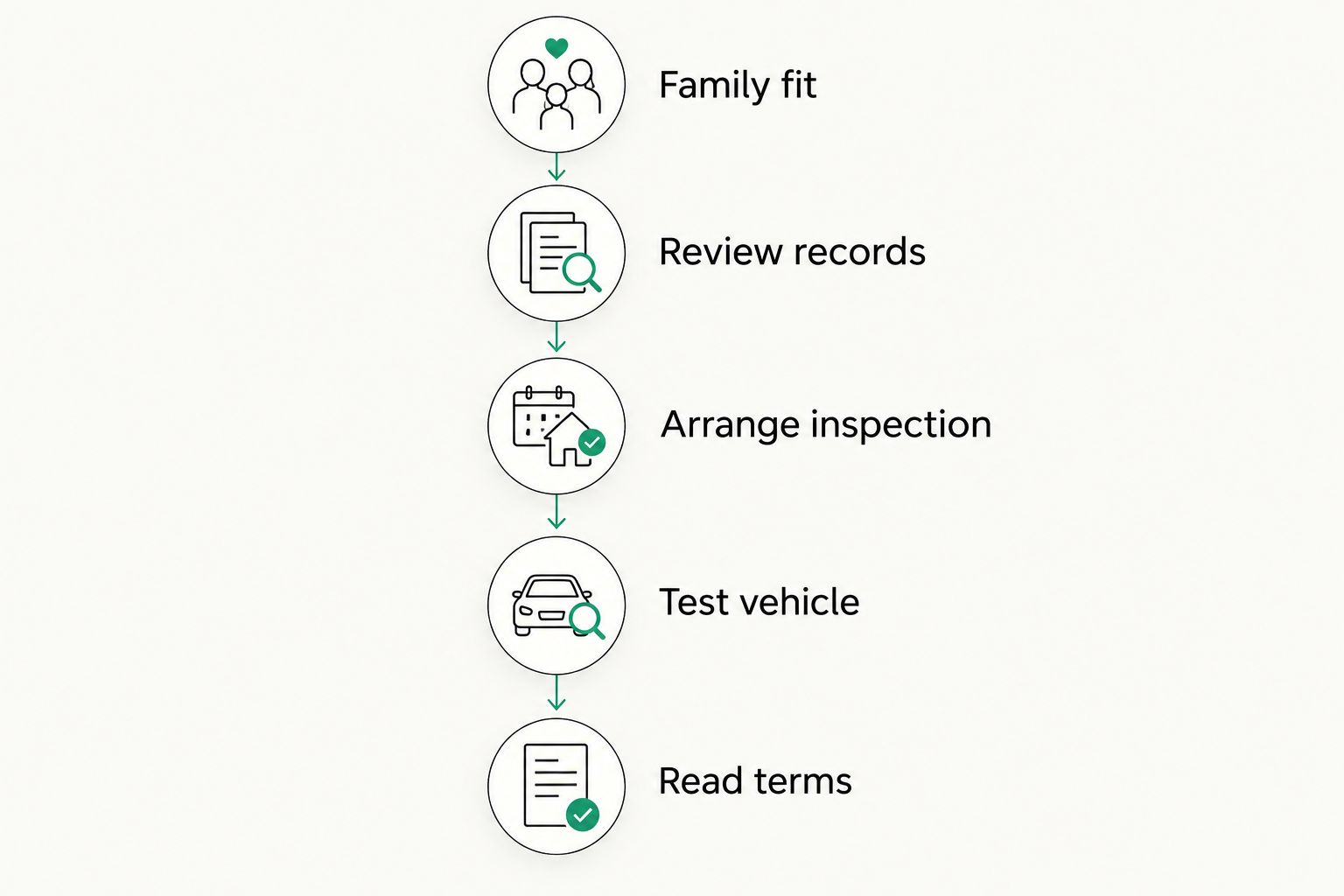
Follow this sequence before making a commitment. It keeps the shopping decision connected to the work the vehicle needs.
Establish your family fit
Bring the people and equipment that determine whether the SUV works for you. Check rear-seat access, seating comfort and cargo space with the seats positioned as you expect to use them.
If you use child seats, follow the vehicle owner's manual and the child-seat manufacturer's instructions. Do not assume that a seat arrangement works simply because the vehicle has enough seating positions.
Also consider daily parking. Try the driver's sightlines and confirm that you can comfortably manage the vehicle in the spaces you use around Bristol, Johnson City or Kingsport.
Review the records
Match the vehicle identification number across the vehicle and its paperwork. Read service invoices for dates, recorded mileage and descriptions of completed work rather than accepting a folder of documents without checking its contents.
Use the guide to understanding used-vehicle history to organize questions about title information and reported events. A history report supports your research; it does not replace a physical inspection or prove that every event was reported.
Arrange an inspection
Ask for a pre-purchase inspection by a qualified technician. Request written findings that separate safety concerns, current faults, routine maintenance and items to monitor.
A useful report names the concern and explains the recommended action. If the explanation is unclear, ask the technician to identify the affected component before you decide.
Test the vehicle
With the seller's permission, assess starting, acceleration, braking, steering and parking behavior. Choose a route that reflects your normal driving rather than judging the SUV only at neighborhood speeds.
Try the climate controls, seat adjustments, windows and other equipment you expect to use. Park before checking unfamiliar controls, and ask about any warning light or unusual sound instead of dismissing it.
Read the terms
Request the purchase documents and any proposed coverage terms in writing. If you plan to finance, review the amount financed, interest terms, loan length and total repayment obligation—not just the payment presentation.
Keep optional products separate from your vehicle decision. Ask what each product covers, what it excludes and whether you are choosing it voluntarily.
What maintenance should you check on a used Pilot?
Use the exact vehicle's owner's manual, service records and inspection findings to build your maintenance plan. Do not transfer service instructions from another Pilot simply because the model name matches.
For a 2026 purchase, ask the service team to distinguish work already completed from work that is due or still needs diagnosis. That distinction keeps a shopping conversation from becoming an assumption about future reliability.
Tires and brakes
Have the tires checked for condition, wear and suitability for the vehicle. Uneven wear deserves an explanation; replacing a tire does not explain what caused the wear pattern.
Ask the technician to assess the brakes and document any recommended work. Vibration, noise or pulling during a test drive is a reason for diagnosis, not enough information to identify a particular failed part.
Fluids and leaks
Review invoices for fluid services and ask which requirements apply to the exact vehicle. Correct fluid specifications matter, so avoid approving work based only on a generic SUV maintenance list.
Ask about visible leaks, fluid levels and evidence of contamination. A clean engine compartment is not a substitute for a technician's findings.
Battery and starting
Request a battery and starting-system assessment when the vehicle's condition or service history calls for it. Starting successfully during a viewing does not establish the battery's remaining service life.
Have unexplained warning lights diagnosed. Clearing a warning without understanding its cause does not resolve the underlying question.
Scheduled maintenance
Check the maintenance requirements for the specific model year and powertrain. If an item has no supporting record, ask the technician how to assess its status rather than treating it as completed.
Maintenance reminders help guide service, but they do not replace documentation. Save the inspection report and future invoices so you can track what your Pilot has received.
Replacement parts
When work is recommended, ask which component needs replacement and why. Confirm that proposed parts match the vehicle's identification and equipment.
Request a written explanation of the repair and any applicable parts or labor coverage. Clear documentation helps you compare the work being proposed without assuming that different descriptions mean the same repair.
Is a certified pre-owned Honda Pilot a better choice?
A certified pre-owned Honda Pilot is worth considering when you understand and value the specific certification terms. Read the vehicle's actual documents before treating certification as an advantage.
Ask which program applies, what inspection paperwork accompanies the vehicle and what coverage remains. Review exclusions, maintenance obligations and the process for requesting covered repairs.
Certification does not answer whether the seats fit your passengers or whether the cargo area works for your routine. Complete the same family-fit check and review the vehicle's current condition before choosing.
Is a higher-mileage Honda Pilot worth considering?
A higher-mileage Honda Pilot is worth considering when its records and inspection give you a clear account of its condition. Mileage alone cannot establish how the vehicle was maintained or what it needs next.
Ask the service team to explain completed maintenance and unresolved needs. If major questions remain, pause the purchase rather than filling those gaps with the model's reputation.
The same standard applies to a lower-mileage Pilot. A smaller odometer reading does not excuse missing records, warning lights or a poor fit for your family.
Should you buy a used Pilot or keep your current vehicle?
Keep your current vehicle in the comparison if it still meets your needs. Ask for an assessment of its condition and upcoming maintenance, then compare that information with the inspection findings for the used Pilot.
Buying makes more sense when the Pilot solves a specific problem, such as passenger access or usable seating. Keeping your current vehicle deserves consideration when the proposed replacement adds size without solving a daily need.
For a 2026 decision, write down what changes with the purchase: passenger comfort, parking, maintenance responsibilities and financing obligations. A longer feature list is not a substitute for a useful improvement.
Plan your Bristol visit around shopping and service
Bristol Honda is a local option for Tri-Cities drivers who want used-Honda shopping and service at a Bristol dealership. Its role includes vehicle sales, financing, service and parts; the decision still depends on the vehicle and terms you review.
If you live in Bristol, prepare your vehicle questions and service concerns before visiting. If you are traveling from Johnson City, confirm the purpose of the appointment and what records to bring. If you are coming from Kingsport, make the same arrangements before setting out.
Ask Bristol Honda about the next step for the specific vehicle you are considering, whether that is reviewing purchase paperwork or discussing inspection findings. Do not assume that a particular Pilot, appointment or certification status applies until the team confirms it.
FAQ
Is a used Honda Pilot a good value for a family?
A used Honda Pilot is a good value for a family when its seating, condition and maintenance needs fit the household. Bring your passengers and regularly carried items to check access and usable space before buying.
What should I check first on a used Honda Pilot?
Check the vehicle's identity, maintenance records and current condition first. Match the vehicle identification number to the paperwork, then arrange a mechanical inspection before committing.
Is a certified pre-owned Pilot better than a regular used Pilot?
A certified pre-owned Pilot is not automatically the better purchase. Compare its actual certification documents, condition and coverage terms with the other vehicle's records and inspection findings.
Should I avoid a Honda Pilot with higher mileage?
Do not reject a Honda Pilot on mileage alone. Review documented maintenance and inspection findings to understand its current condition and upcoming needs.
Does a clean vehicle history report mean a Pilot is problem-free?
A clean vehicle history report does not establish that a Pilot is problem-free. Reports depend on reported information, so you still need a physical inspection and a test drive.
What maintenance should I plan after buying a used Pilot?
Plan maintenance from the exact vehicle's owner's manual, service records and inspection findings. Ask a technician to separate immediate concerns from routine service and items to monitor.
Can I visit Bristol Honda if I live in Johnson City or Kingsport?
Bristol Honda serves drivers from Johnson City and Kingsport at its Bristol, Tennessee location. Contact the team to discuss vehicle-shopping or service needs before making the trip.
One last thing
Before buying a used Pilot in 2026, ask the seller and technician the same question: What remains unresolved on this vehicle? Compare the answers with the written inspection and purchase documents.
That question is more useful than asking whether the SUV is generally reliable. It directs attention to the vehicle you will actually own—and the work you will be responsible for next.