

Rotate your Honda’s tires when your vehicle’s Maintenance Minder or owner’s manual calls for it, rather than following one mileage interval for every Honda. Tire condition, tire design and any replacement-tire instructions also matter, so uneven wear or damage needs an inspection instead of simply waiting for the next reminder.
- How often should you rotate tires on a Honda? Follow your vehicle’s Maintenance Minder and owner’s manual.
- Honda Maintenance Minder subcode 1 identifies tire rotation on vehicles using that system.
- Directional tires and different front/rear tire sizes can restrict the rotation pattern.
- Bristol Honda serves Bristol, Johnson City and Kingsport drivers with Honda sales and service.
How often should you rotate tires on a Honda?
Use the rotation schedule for your exact Honda, then inspect the tires between scheduled visits. Honda owner’s manuals explain the applicable Maintenance Minder codes or maintenance schedule, along with any restrictions on moving tires between positions.
For 2026 maintenance planning, start with the manual that matches your vehicle—not a schedule copied from a different model. Bristol Honda is located in Bristol, Tennessee, and serves drivers from Johnson City and Kingsport.
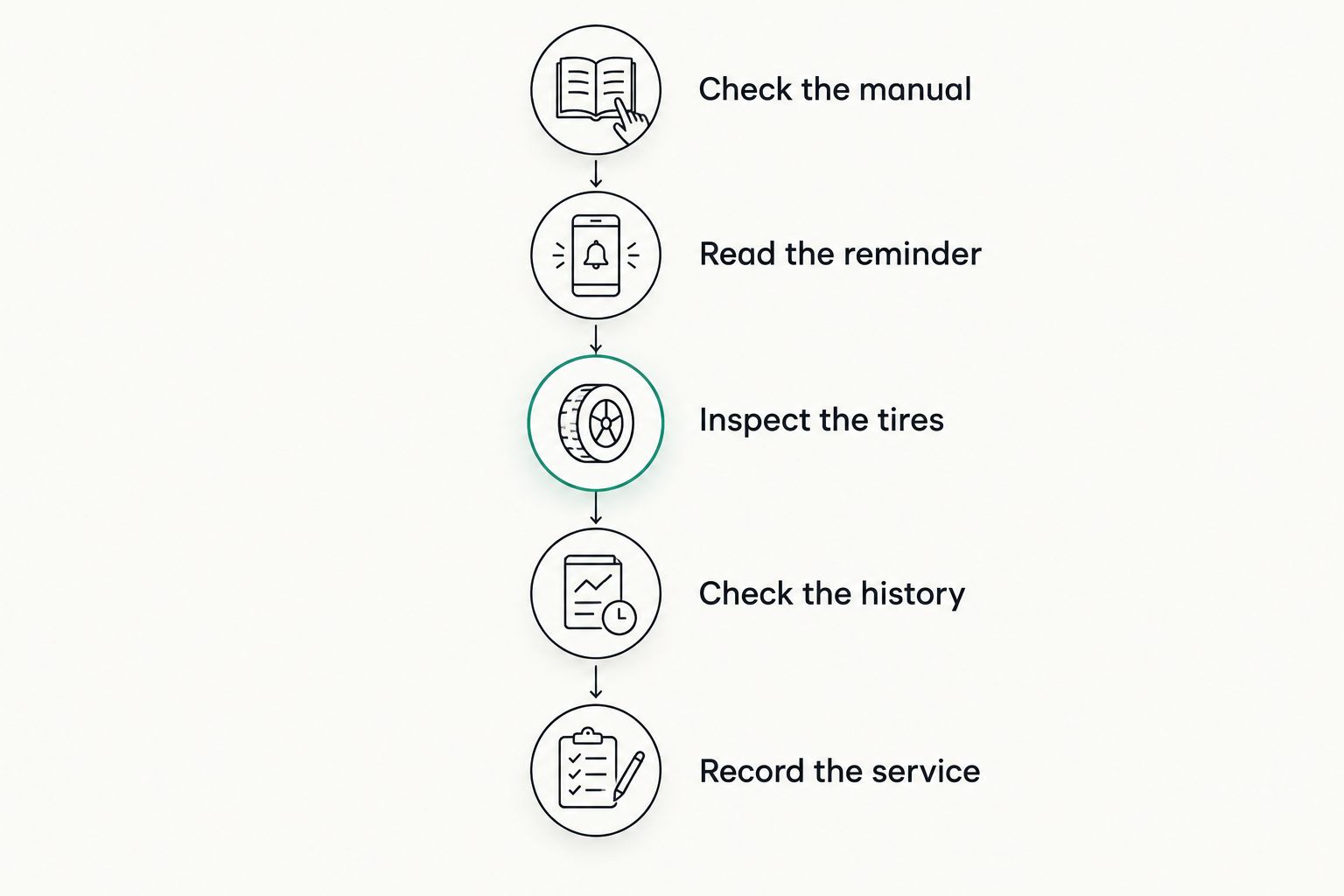
Follow this sequence before deciding whether rotation is due:
- Check the manual. Find the tire-rotation instructions for your Honda’s model year and configuration.
- Read the reminder. On Honda vehicles using the applicable Maintenance Minder system, subcode 1 means rotate tires.
- Inspect the tires. Look for uneven wear, visible damage and differences between front and rear tread.
- Check the history. Confirm when the tires were last rotated and whether the tires or wheels have changed.
- Record the service. Keep the date, odometer reading and completed work together for the next visit.
A rotation reminder identifies scheduled work; it does not diagnose every tire problem. If a tire has a bulge, exposed cords or another sign of damage, arrange an inspection rather than treating rotation as the repair.
Why this matters
Tires do not necessarily wear at the same rate in every position. Steering, braking and the driven wheels place different demands on them, and rotation redistributes those positions when the tire setup allows it.
Rotation helps manage wear, but it cannot restore missing tread. Moving a worn tire to another corner does not correct an alignment problem, repair impact damage or resolve a persistent air leak.
For drivers in Bristol, Johnson City and Kingsport, the useful habit is the same: keep a service record and pay attention to changes between visits. A reminder tells you when scheduled work is due; a new symptom tells you to ask for an inspection.
What does Honda Maintenance Minder subcode 1 mean?
Honda Maintenance Minder subcode 1 identifies tire rotation on vehicles using that code system. Check your owner’s manual for the full explanation of the maintenance display, including the other items shown alongside it.
The number is a service identifier, not a mileage interval. It does not mean that every Honda needs rotation at an identical odometer reading or that an oil-service visit automatically includes tire rotation.
When arranging a 2026 service visit, report the complete reminder exactly as displayed. A photograph helps keep the letters and subcodes together, especially when several maintenance items appear at once.
The guide to how Honda’s Maintenance Minder guides oil changes explains the related oil-service side. Keep the distinction clear: checking the oil reminder and confirming tire rotation are separate parts of reviewing the maintenance display.
Does every Honda use the same tire-rotation pattern?
No. The correct pattern depends on the vehicle instructions and the tires actually installed, including their sizes and any direction-of-rotation markings.
Do not choose a pattern from the model name alone. Replacement wheels or tires can change which movements are appropriate, even when the original setup allowed a different pattern.
| Tire setup | Best for this next step | Benefit | Limitation |
|---|---|---|---|
| Same-size, non-directional tires | Checking the vehicle’s specified pattern | Allows the positions permitted by the manual | Does not make every possible pattern correct |
| Directional tires | Checking sidewall direction markings | Preserves the intended rolling direction | Side-to-side movement generally requires remounting |
| Different front/rear sizes | Confirming axle-specific instructions | Keeps the correct size on each axle | Front-to-rear rotation is restricted |
| Unknown replacement setup | Having the installed tires identified | Establishes which instructions apply | A model-level recommendation alone is insufficient |
Ask which pattern applies before the work starts. The technician should consider both the Honda’s instructions and the tire manufacturer’s requirements, rather than assuming the same pattern works for every vehicle.
Directional tires need special attention
Directional tires have sidewall markings indicating their intended rolling direction. Moving a mounted directional tire to the opposite side changes that direction unless the tire is remounted appropriately.
The practical next step is to have the markings checked before rotation. Do not assume that an arrow-shaped tread appearance, by itself, establishes the correct procedure.
Different front and rear sizes restrict movement
A vehicle with different tire sizes front and rear cannot use an ordinary front-to-rear rotation that puts the wrong size on an axle. Check the tire sizes and the manufacturer’s instructions before authorizing a pattern.
This matters when shopping for a used Honda, too. Compare the installed tires with the vehicle requirements rather than assuming a previous owner retained the original setup.
Why Honda tire-rotation timing and procedures vary
The vehicle’s instructions provide the starting point. These factors determine how to apply them and whether a tire concern needs attention before the next scheduled rotation:
- The applicable maintenance system. Use the schedule or Maintenance Minder instructions for the exact vehicle, not another Honda’s display.
- Tire construction and markings. Directional designs and other tire-specific requirements affect how tires can move between positions.
- Front and rear tire sizes. Different sizes restrict rotation patterns, regardless of a general recommendation you find online.
- Observed wear. Uneven tread calls for inspection because rotation alone does not identify or repair its cause.
- Replacement-tire instructions. Check the tire manufacturer’s maintenance requirements, including any rotation documentation needed for a warranty claim.
- Service history. A missing record makes the last completed rotation uncertain; inspect the tires and establish a documented starting point.
Avoid turning these factors into a made-up shorter interval. For your 2026 service plan, ask for a recommendation tied to the manual, the installed tires and their measured condition.
Is tire rotation the same as balancing or alignment?
Tire rotation, wheel balancing and wheel alignment are different services. They address different concerns, so approving one does not mean the others were performed or were necessary.
Describe what you notice instead of choosing a repair yourself. Tell the service team whether the vehicle pulls, the steering wheel vibrates, a tire loses pressure or the tread looks different across its width.
| Service | Best for | What it does | What it does not do |
|---|---|---|---|
| Tire rotation | Redistributing position-related wear | Moves eligible wheel-and-tire assemblies to specified positions | Repair damage or restore worn tread |
| Wheel balancing | Addressing assembly imbalance | Corrects weight imbalance in a wheel-and-tire assembly | Correct wheel-alignment angles |
| Wheel alignment | Checking wheel angles | Measures and, where adjustable, corrects alignment angles | Repair a damaged tire |
A vibration is a reason for diagnosis, not proof that balancing is the answer. Likewise, uneven wear does not establish the cause without inspecting the tires and relevant vehicle components.
What should you check between rotations?
Check tire pressure at least once every month and inspect the tread regularly. NHTSA’s tire-safety guidance recommends monthly pressure checks with the tires cold; use the vehicle’s tire-information label for the recommended pressure, not the maximum pressure molded into the tire sidewall.
Look across the tread, not just at the outside shoulder. Check for cuts, embedded objects, bulges and visibly uneven wear, and have anything concerning assessed before a longer drive.
NHTSA identifies 2/32 inch of remaining tread as the point at which tires are unsafe and need replacement. That is a replacement threshold, not a promise that a tire above it is undamaged or suitable for every driving condition.
Check all 4 road tires rather than judging the whole set from the easiest one to reach. If your vehicle carries a spare, follow its separate inspection and pressure instructions as well.
How should you plan a tire-service visit?
Bring the current mileage, a photograph of the maintenance display and the last rotation record if you have it. Mention any replacement tires, wheel changes, recent impacts or recurring pressure warnings before the inspection begins.
Bristol Honda is a practical choice for Tri-Cities drivers who want Honda vehicle shopping and service at one Bristol dealership. The dealership serves Bristol, Johnson City and Kingsport from its Bristol location; it does not have to be in your home city to be part of your maintenance plan.
For a 2026 appointment, ask the team to confirm these details:
- Whether rotation is due under the applicable vehicle instructions.
- Which rotation pattern fits the installed tires.
- Whether measured wear or damage calls for separate work.
- What work will appear on the service record.
The advantage of planning is a clear scope of work. The limitation is that a rotation appointment alone does not establish whether every tire concern has been diagnosed, so describe symptoms when you book.
What should you check when buying a used Honda?
Give tire condition the same attention as the service history. Ask for rotation records, inspect the installed sizes and check whether the tires meet the vehicle’s requirements.
A clean-looking sidewall is not a complete assessment. Request tread measurements and an explanation of uneven wear; do not treat a recent rotation entry as proof that the tires need nothing else.
If you are comparing a new Honda with a certified pre-owned Honda in 2026, discuss both the purchase and the ongoing maintenance plan. Ask what records accompany the specific vehicle rather than assuming every used vehicle arrives with the same documentation.
Should you rotate tires every time you change the oil?
Not automatically. Combine the work when both services are due under the applicable instructions, but confirm each item separately before authorizing service.
An oil-change entry does not prove a rotation happened. Look for tire rotation as a completed item on the repair order and retain the odometer reading with that record.
Should you wait for the reminder if the tires wear unevenly?
No. Arrange an inspection when you notice uneven wear instead of waiting for the next scheduled rotation reminder.
Rotation changes tire positions; it does not explain why one shoulder is wearing faster. Ask for findings and recommended corrections before treating a rotation as the entire solution.
Can you rotate Honda tires yourself?
Only undertake the work if you have the correct equipment, safe lifting knowledge and the vehicle-specific procedure. Follow the owner’s manual for lifting points, wheel installation and tightening requirements.
Do not work under a vehicle supported only by a jack. If you cannot establish the correct pattern or complete the work safely, have a qualified technician perform it.
FAQ
How often should you rotate tires on a Honda?
Follow the Maintenance Minder or maintenance schedule in your Honda’s owner’s manual. Inspect the tires between services, and have unusual wear or damage checked rather than waiting for a reminder.
What does the number 1 mean on Honda Maintenance Minder?
Subcode 1 identifies tire rotation on Honda vehicles using that Maintenance Minder code system. Check your exact vehicle’s manual for the full maintenance message.
Does a Honda tire rotation include wheel alignment?
Tire rotation and wheel alignment are separate services. Confirm the appointment scope and ask for diagnosis if you notice pulling or uneven wear.
Can directional tires be rotated on a Honda?
Directional tires can be rotated only in a way that preserves their required rolling direction. The correct procedure also depends on tire sizes and the vehicle’s instructions.
How often should I check my Honda’s tire pressure?
Check tire pressure at least once every month with the tires cold. Use the recommended pressure on the vehicle’s tire-information label.
Will rotating tires fix a vibration?
Tire rotation is not a diagnosis or a guaranteed fix for vibration. Have the tires, wheels and relevant vehicle components inspected to identify the cause.
Can Bristol Honda help drivers from Johnson City and Kingsport?
Bristol Honda provides Honda vehicle sales and service from its Bristol, Tennessee location and serves Johnson City and Kingsport. Contact the team to discuss your vehicle’s maintenance needs.
One last thing
Photograph the completed repair order, not just the dashboard reminder. The reminder shows that work is requested; the repair order documents what was completed and at what mileage.
Keep that record with your tire purchase paperwork. It gives your next service visit—and a future used-car buyer—a clearer account of the tire maintenance actually performed.