

You can lease a certified pre-owned Honda only if a lender offers a lease program that accepts the specific vehicle; certification alone does not establish lease eligibility. Before planning around a payment, confirm the vehicle’s eligibility, your application requirements and the written lease terms. Also ask who pays for scheduled maintenance, wear-related repairs and any end-of-lease charges.
- Can you lease a certified pre-owned Honda? Only when a lender accepts the specific vehicle for leasing.
- Honda certification and lease approval answer different questions; verify both before choosing a vehicle.
- Compare eligible lease terms with purchase financing, including mileage rules, maintenance responsibilities and your ownership plans.
- Bristol Honda serves Bristol, Johnson City and Kingsport with Honda sales, financing, service and parts.
Can you lease a certified pre-owned Honda?
A certified pre-owned designation is not a lease offer. You need confirmation that a lender will lease the exact vehicle you want, followed by approval under that lender’s requirements. In 2026, treat a general advertisement or another shopper’s experience as a starting point, not proof that your selected Honda qualifies.
Bristol Honda is located in Bristol, Tennessee, and serves Johnson City and Kingsport. Ask the team to identify the transaction type before comparing paperwork: a lease and a purchase loan create different obligations.
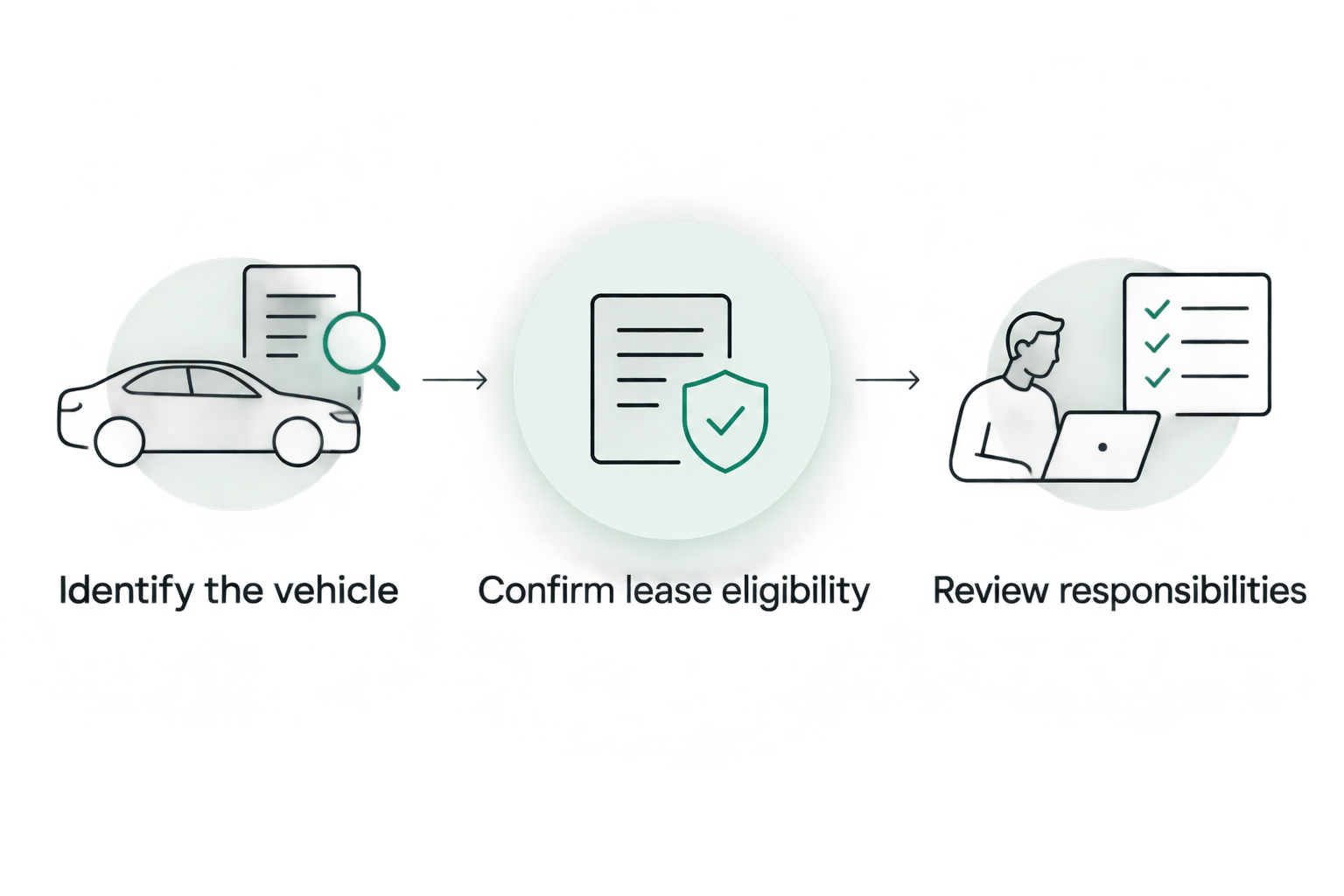
Use this sequence before submitting an application:
- Identify the vehicle. Get its vehicle identification number, odometer reading and certification documentation.
- Confirm lease eligibility. Ask which lender accepts that vehicle and request the proposed terms in writing.
- Review responsibilities. Check mileage limits, maintenance requirements, insurance requirements and what happens when the agreement ends.
A verbal statement that a vehicle is certified does not replace the lender’s agreement. Keep the certification documents and proposed financing documents together so you can check what each actually promises.
Why this matters
Certification describes a vehicle’s status under a certification program. Leasing describes how you pay to use a vehicle under a contract. Neither one automatically establishes the terms of the other.
That distinction matters when you compare monthly payments. A payment does not tell you whether you will own the Honda afterward, how much driving the contract permits or which repairs remain your responsibility.
For a 2026 shopping decision, start with your expected ownership period and driving needs. Then compare the transaction types that are actually offered for your selected vehicle—not a hypothetical lease on a different Honda.
Which route fits your plans?
Choose the agreement that fits your driving and ownership goals, not simply the smallest payment. These options provide a useful comparison framework, but neither lease option below represents a confirmed offer on a particular vehicle.
| Option | Best for | Main advantage | Main limitation | What to verify |
|---|---|---|---|---|
| Certified pre-owned lease, if offered | Drivers who want a certified used vehicle without committing to ownership | Provides a contractual route to using an eligible certified vehicle | Requires vehicle-specific lender eligibility and compliance with lease terms | Lender, mileage allowance, return conditions and maintenance duties |
| Certified pre-owned purchase financing | Drivers who want to keep the vehicle and build ownership | Leads to ownership after the loan is repaid | Leaves you responsible for the vehicle’s eventual resale and ongoing upkeep | Loan terms, certification coverage and service history |
| New-vehicle lease, if offered | Drivers who prefer a new vehicle and a defined contract period | Provides use of a new vehicle under agreed terms | Does not create ownership unless you separately exercise an available purchase option | Vehicle eligibility, mileage allowance and end-of-lease obligations |
A purchase loan generally does not impose a lease-style mileage allowance. However, additional driving still affects maintenance needs, wear and eventual resale value. Ownership removes a return-mileage calculation, not the physical effects of driving.
A lease requires closer attention to how your use matches the contract. If your commute, household or work travel changes, review the agreement rather than assuming you can change its mileage terms afterward.
Why certified pre-owned lease eligibility varies
Eligibility depends on the lender’s program and the selected vehicle. Certification is one item to verify, not a substitute for the complete approval process.
Ask about these factors:
- Lender program rules. Confirm that the lender accepts certified used vehicles rather than only new vehicles.
- Vehicle age and mileage. Ask whether the exact Honda falls within the program’s eligibility requirements.
- Vehicle identity and documentation. Make sure the vehicle identification number matches the certification paperwork and proposed agreement.
- Applicant requirements. Ask what information the lender needs and distinguish an estimate from an approved agreement.
- Contract structure. Review the proposed term, mileage allowance and return or purchase provisions before deciding whether the offer fits.
Do not transfer an answer from one vehicle to another. Two certified Hondas can have different model years, odometer readings and documentation. Ask for confirmation tied to the vehicle identification number every time you change your selection.
What should you check about certification and service history?
Review the vehicle’s condition separately from its payment structure. An eligible lease does not replace an inspection review, and a certification label does not explain every maintenance item you will face during your use.
Ask to see the certification paperwork, available service records and vehicle history information. Check that the documents describe the Honda you are considering. For a broader shopping framework, read whether Honda certified pre-owned is worth it.
Match the records to the vehicle
Compare the vehicle identification number across the records. Review the dates and odometer readings together, looking for an understandable service timeline rather than simply a stack of receipts.
Ask the team to explain missing information or unfamiliar entries. A record of completed work tells you what was documented; it does not establish that every future repair is covered.
Inspect wear items before signing
Ask about tire condition, brake condition, battery testing and any maintenance identified during the vehicle’s inspection. Request an explanation of completed work and any items that remain recommendations.
Use the test drive to assess braking, steering, ride quality and the operation of equipment you expect to use. Report warning lights, unusual noises or concerns before agreeing to take the vehicle.
Read coverage instead of assuming it
Ask which written warranty applies to the specific certified Honda. Review its start date, remaining coverage, exclusions and any requirements for obtaining repairs.
Do not assume certification pays for routine oil changes, replacement tires or every worn component. Warranty coverage, routine maintenance and lease-return standards are separate subjects. Ask for a clear explanation of each.
Who handles maintenance on a leased certified Honda?
Your agreement and applicable coverage determine your responsibilities. Leasing a Honda does not, by itself, establish that scheduled service or replacement parts are included.
Before signing in 2026, ask who pays for routine maintenance, which records you must retain and whether the contract specifies repair or parts requirements. Keep written answers with the agreement rather than relying on a conversation you cannot reference later.
Plan service around the vehicle
Use the owner’s manual and applicable maintenance guidance for the exact Honda. Avoid applying another model’s service schedule or assuming a used vehicle’s next service is far away because it recently changed owners.
Ask the service team to identify maintenance that is due and explain how previous service records affect the next steps. The useful question is not just when an oil change happened, but what the vehicle needs now.
Keep service and repair records
Retain invoices showing the date, odometer reading, work performed and parts used. Clear records help you track upkeep and answer questions about maintenance during ownership or at a lease return.
If a warning light appears, arrange an assessment instead of waiting for the next planned appointment. Ask whether a repair falls under applicable coverage before authorizing work, and request an explanation of uncovered work separately.
Check parts requirements
Give the parts or service team the vehicle identification number when discussing replacements. Model names alone do not establish that a part fits the vehicle’s year, trim and equipment.
Ask whether the lease agreement or applicable warranty contains relevant repair requirements. Avoid assuming an accessory, modification or replacement component is acceptable without checking the documents first.
How should you plan for lease return or long-term ownership?
Start with the contract’s end point. A lease requires you to understand the return process and any purchase option; a financed purchase requires a plan for keeping or eventually selling the vehicle.
For a lease, ask for the written wear standards and return instructions before signing. Check how the agreement addresses excess mileage, damage, missing equipment, early termination and any other applicable charges. Do not assume ordinary maintenance resolves every return-condition issue.
For a financed purchase, focus on upkeep beyond the loan’s early months. Ask the service team to explain upcoming maintenance based on the vehicle’s condition and records, then include that work in your ownership planning.
Neither approach eliminates repair planning. A manageable payment and a manageable maintenance plan need to work together. Evaluate both before deciding that a particular Honda fits your household.
What should Tri-Cities drivers ask before visiting?
Bring the same practical checklist whether you live in Bristol, Johnson City or Kingsport. Your route to the dealership changes; the need to verify the vehicle and agreement does not.
- Bristol drivers: Ask which vehicle documents and service records you can review before your visit.
- Johnson City drivers: Confirm that the discussion concerns your selected vehicle before making the trip.
- Kingsport drivers: Ask how to coordinate a vehicle review and discussion of maintenance needs during your visit.
For 2026, keep buying questions and service questions on the same list. Ask about the proposed transaction, the vehicle’s condition and the next maintenance steps together.
Bristol Honda is a fit for Tri-Cities drivers seeking Honda shopping help and service support from a dealership in Bristol. Its location is Bristol, not separate dealerships in Johnson City or Kingsport. Confirm the specific transaction and service arrangements directly with the team.
Is financing a certified Honda better than leasing?
Financing a certified Honda fits drivers who want ownership and control over how long they keep the vehicle. A lease fits only when an eligible offer exists and its mileage, maintenance and return requirements match your plans.
Compare written agreements for the same driving needs. Do not treat certification as a reason to skip reviewing the financing terms.
Does Honda certification include all maintenance?
Honda certification does not, by itself, establish that all maintenance is included. Review the vehicle’s written coverage and any separate maintenance agreement to see what applies.
Ask the service team to separate covered repairs, routine upkeep and recommended work. That distinction helps you plan without confusing a warranty with a service plan.
FAQ
Can you lease a certified pre-owned Honda in 2026?
You can lease a certified pre-owned Honda only when a lender offers a program that accepts the specific vehicle. Confirm eligibility and obtain written terms rather than treating certification as a lease offer.
Does every certified pre-owned Honda qualify for a lease?
No, certification alone does not establish lease eligibility. The lender must accept the particular vehicle under its program rules.
Is leasing a certified Honda always better than financing it?
No, the better fit depends on the actual agreements and your ownership plans. Compare mileage rules, maintenance responsibilities, end-of-contract obligations and whether you want to keep the vehicle.
Do I still need to maintain a certified Honda if I lease it?
Yes, leasing does not remove the need for maintenance. Check your agreement and any separate coverage to understand who pays and which service records you must keep.
Can I buy the certified Honda when the lease ends?
You can buy the vehicle at lease end only if your agreement provides that option. Read the purchase provisions before signing rather than assuming a buyout is included.
Does certification cover tires, brakes and oil changes?
Do not assume certification covers tires, brakes or oil changes. Ask for the applicable written coverage and have the team distinguish routine maintenance from covered repairs.
Is Bristol Honda located in Johnson City or Kingsport?
Bristol Honda is located in Bristol, Tennessee, and serves drivers from Johnson City and Kingsport. Discuss vehicle eligibility and service needs with the Bristol team before your visit.
One last thing
Ask for two separate explanations before signing: how the agreement ends and what maintenance the vehicle needs next. A clear answer to one does not answer the other. For your 2026 decision, keep the written contract, certification documents and service information together so you can evaluate the complete commitment.