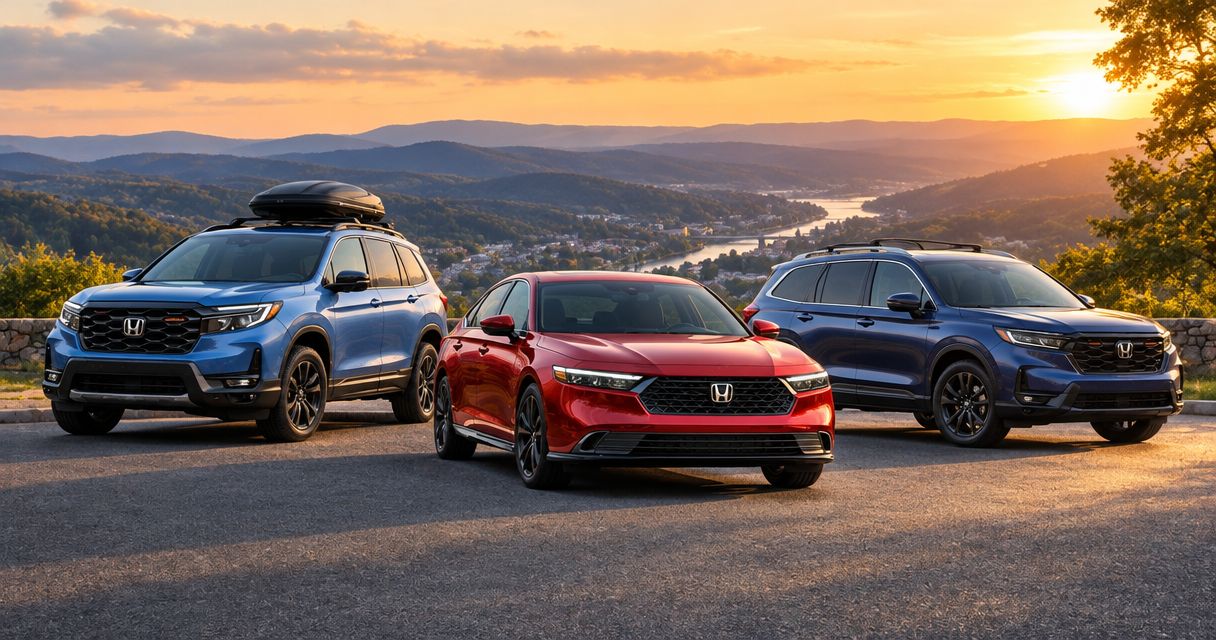
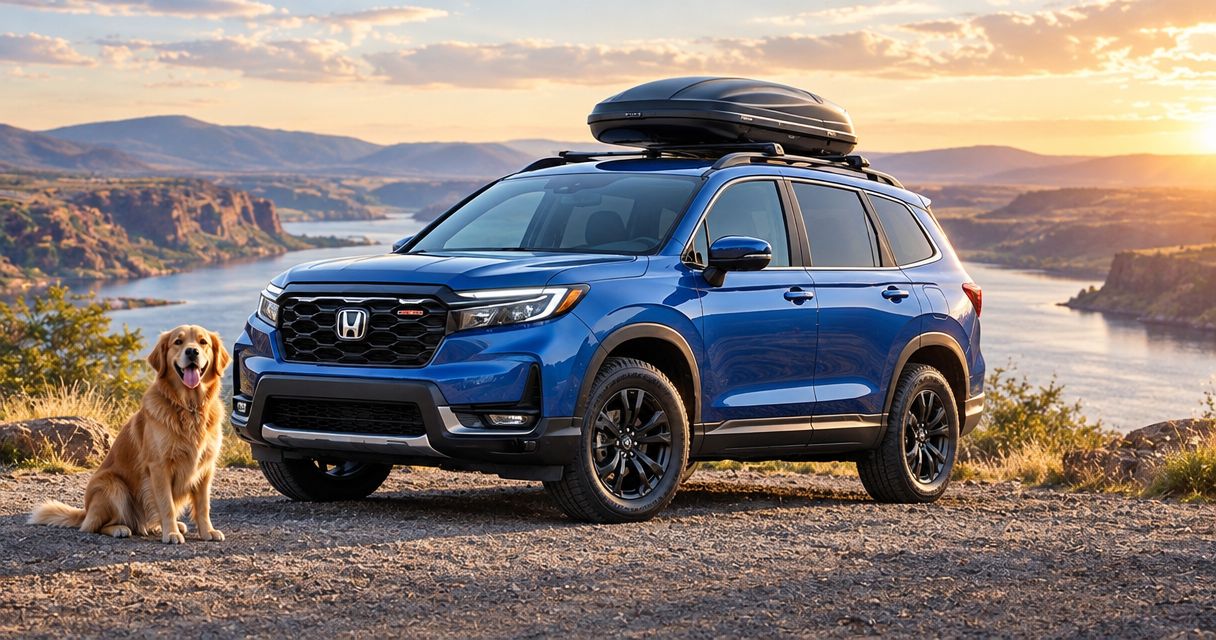
Best overall: Honda CR-V. Best for a crate-first setup: Honda Passport. Best for pets traveling with a larger family: Honda Pilot. Best for a small pet and easier parking: Honda HR-V. These are the best Honda SUVs for pet owners in the Tri-Cities to compare in 2026, with the final choice determined by your pet restraint, passenger needs, and loading routine.
- The best Honda SUVs for pet owners in the Tri-Cities start with the Honda CR-V for everyday versatility.
- Choose the Honda Passport for a crate-first comparison, or the Honda Pilot when passenger seating matters most.
- Consider the Honda HR-V for a small pet, but check carrier fit before choosing.
- Bristol Honda serves Bristol, Johnson City, and Kingsport from its Bristol location.
Why this matters
A cargo area that looks roomy can still be wrong for your dog's crate. The opening, wheel-well intrusions, seat positions, and restraint instructions all affect whether the setup works.
Bristol Honda is located in Bristol, Tennessee, and serves Johnson City and Kingsport. Bristol Honda is best for Tri-Cities pet owners who want Honda SUV shopping and service support from a dealership in Bristol.
Whether you live in Bristol, commute from Johnson City, or head out from Kingsport, compare the vehicle with your actual travel setup. A successful test is not just whether everything fits; you must still be able to secure the pet, seat your passengers, and reach essential supplies.
What makes the best Honda SUV for pet owners?
Use these criteria before comparing trims or choosing accessories for your 2026 shopping shortlist:
- Crate fit: Check usable floor space with the seats positioned for your passengers, not only folded flat.
- Loading access: Evaluate the opening and entry height against your pet's mobility and your ability to lift a carrier.
- Passenger space: Keep the seats you regularly need available during the fit check.
- Restraint compatibility: Follow the vehicle manual and restraint manufacturer's installation instructions together.
- Cleaning access: Look for places where hair, grit, and moisture collect, including seat tracks and cargo-floor edges.
- Maintenance needs: Consider tires, brakes, climate control, and cabin-filter care alongside the vehicle purchase.
Cargo capacity is not a substitute for a physical crate-fit check. An overall volume figure cannot tell you whether a rigid carrier passes through the hatch or sits securely in your intended position.
Honda SUVs for pet owners at a glance
| Honda SUV | Best for | Standout consideration | Key limitation |
|---|---|---|---|
| Honda CR-V | Everyday pet trips and passenger use | A practical starting point between smaller and larger Honda SUVs | Your crate still has to fit with needed seats upright |
| Honda Passport | A crate-first cargo layout | A two-row SUV layout to evaluate around pet equipment | Larger exterior dimensions require a parking-space check |
| Honda Pilot | Pets traveling with a larger family | Three-row passenger flexibility | Using the rear seats reduces the area available for pet equipment |
| Honda HR-V | A small pet and tighter parking | A smaller SUV footprint | Less room to accommodate bulky carriers and luggage together |
These recommendations compare vehicle layouts, not specific trim equipment. For any 2026 vehicle, confirm the exact configuration and owner's-manual instructions before choosing a restraint, liner, or loading aid.
1. Honda CR-V: best Honda SUV for everyday pet trips
The Honda CR-V is the default starting point if your pet travels alongside ordinary errands, commuting, and occasional longer drives. Start with the seats in their normal positions and see whether your carrier or restraint leaves enough room for passengers and bags.
Do not choose a trim based on upholstery alone. A material you find easy to wipe down does not resolve a poor restraint position or an awkward lift into the vehicle.
Honda CR-V pros:
- Useful starting point for balancing passenger needs and pet equipment.
- Smaller than the Passport and Pilot for drivers comparing exterior size.
- Lets you evaluate an everyday setup without beginning with a three-row SUV.
Honda CR-V cons:
- A bulky crate can conflict with luggage space or needed seating.
- A manageable exterior size does not guarantee an easy entry for your pet.
Best for: Drivers in Bristol, Johnson City, and Kingsport who want one SUV for routine travel with a pet.
Verdict: Buy the Honda CR-V if your secured pet setup fits without sacrificing seats you regularly use.
2. Honda Passport: best Honda SUV for a crate-first layout
The Honda Passport belongs on your shortlist when the crate determines the vehicle choice. Its two-row layout makes it a useful comparison for drivers who prioritize the space behind the passenger seats rather than an additional seating row.
Bring the crate instead of relying on its advertised dimensions alone. Handles, latches, and door clearance can change how easily you load it and whether you can use it once inside.
Honda Passport pros:
- Two-row layout keeps the comparison focused on passengers and cargo.
- Worth evaluating when a smaller SUV does not accommodate your equipment.
- Provides a distinct alternative to choosing a three-row vehicle for cargo needs.
Honda Passport cons:
- A larger vehicle requires attention to garage and parking clearance.
- Cargo space does not establish that a particular crate installation is safe.
Best for: Pet owners whose first requirement is a workable crate-and-gear arrangement.
For a closer layout comparison, read the guide to Honda Pilot versus Passport cargo space.
Verdict: Buy the Honda Passport if its cargo layout solves your crate-fit problem and its exterior size suits your routine.
3. Honda Pilot: best Honda SUV for pets and a larger family
The Honda Pilot is the comparison to make when your passenger list requires a three-row SUV. Test it with every regularly occupied seating position accounted for before assigning space to a pet carrier.
A folded seat is only useful cargo space when nobody needs to sit there. Check access for passengers as well as the pet, especially if a carrier or restraint changes the route to the rear seats.
Honda Pilot pros:
- Three-row layout accommodates a different passenger need from the other picks.
- Folding-seat configurations let you evaluate different passenger-and-cargo arrangements.
- Useful comparison when family seating determines the shortlist.
Honda Pilot cons:
- Occupied rear seats leave less space for pet equipment.
- Its larger footprint demands a deliberate parking and loading check.
Best for: Families who need additional passenger seating and want to evaluate pet space around it.
Verdict: Buy the Honda Pilot if your passengers and secured pet setup fit at the same time—not only in separate demonstrations.
4. Honda HR-V: best Honda SUV for a small pet
The Honda HR-V makes sense to compare when your pet travels in a compact carrier and you prefer a smaller vehicle. It is not the automatic choice just because your dog or cat is small; the carrier and passenger arrangement still determine fit.
Evaluate the full trip load. A carrier that fits during a short visit can become inconvenient once you add groceries, luggage, or another passenger.
Honda HR-V pros:
- Smaller footprint than the other SUVs on this shortlist.
- Worth considering when parking space shapes your decision.
- Keeps the comparison focused on the space you actually need.
Honda HR-V cons:
- Bulky crates leave fewer packing options.
- A small vehicle does not necessarily have the easiest loading height for your pet.
Best for: Drivers with a small pet, modest equipment needs, and a preference for a smaller SUV.
Verdict: Buy the Honda HR-V if the complete travel setup fits; skip it if the carrier forces an everyday compromise.
Check fit before ordering parts or accessories
A successful 2026 purchase includes the equipment you will use after delivery. Ask Bristol Honda about parts and accessory fit for the exact vehicle rather than assuming that an item labeled for a model fits every version.
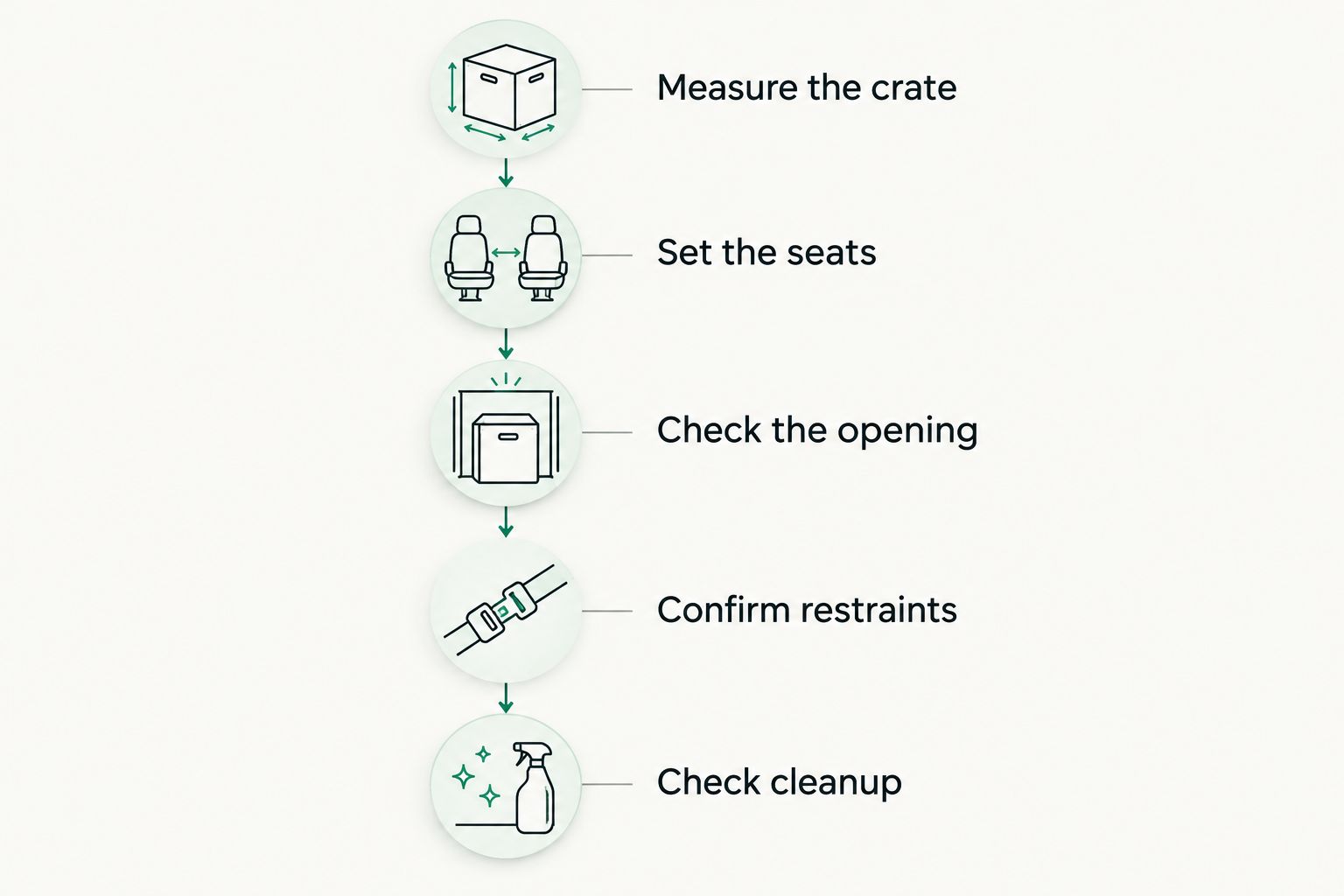
Use this sequence during your vehicle comparison:
- Measure the crate: Record 3 dimensions—length, width, and height—in inches, including protruding handles or latches.
- Set the seats: Check 2 layouts: your normal passenger arrangement and your longer-trip arrangement.
- Check the opening: Confirm that the carrier passes through the opening and that its door remains usable.
- Confirm restraints: Check installation instructions before treating any vehicle attachment point as suitable.
- Check cleanup: Make sure liners and covers do not obstruct seat movement, buckles, or required restraint access.
Use the vehicle identification number when asking about fitted accessories or replacement parts. Bring the restraint manufacturer's instructions too; a cargo tie-down and a designated restraint attachment point are not interchangeable simply because both look sturdy.
A liner protects a surface; it does not secure an animal. Keep those functions separate when deciding what to order.
Build pet travel into your service routine
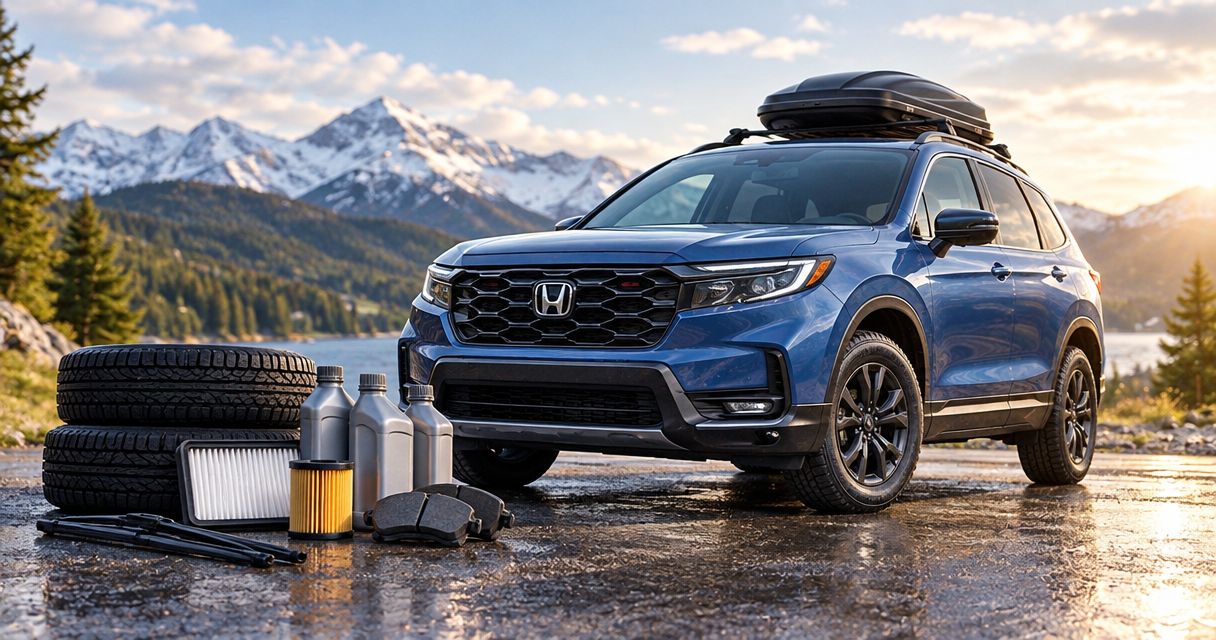
Pet-friendly ownership continues after the test drive. For your 2026 maintenance planning, follow the vehicle's Maintenance Minder and owner's manual, and describe symptoms rather than requesting replacement parts without a diagnosis.
Cabin airflow
Remove loose pet hair from accessible interior surfaces and check the cabin filter according to the maintenance instructions. If airflow weakens or an odor persists, ask for inspection instead of assuming the filter is the only cause.
Climate-control operation deserves attention before a trip with an animal. Never leave a pet unattended in a parked vehicle; the American Veterinary Medical Association advises against leaving pets alone in cars because of heat danger.
Tires and brakes
Check cold tire pressure against the vehicle's tire-information label, not the maximum pressure molded into the tire sidewall. Include the spare if the vehicle has one and follow its separate instructions.
Report pulling, vibration, unusual braking sounds, or a change in pedal feel when arranging service. Do not postpone an inspection because a warning light has not appeared.
Cleaning and interior care
Follow the owner's manual and product directions when cleaning upholstery, belts, and interior trim. Keep cleaning liquids away from electrical components and remove trapped moisture rather than covering it with another mat.
Inspect restraint straps, carrier latches, and covers separately from vehicle maintenance. Replace damaged travel equipment according to its manufacturer's guidance; an oil-change appointment does not establish that a pet restraint remains usable.
Loading aids and fitted accessories
If your pet struggles to enter the vehicle, compare loading access before buying a ramp or steps. Check the accessory's stated limits, support requirements, and compatibility with the intended loading position.
Ask about certified Honda service when arranging vehicle maintenance. Explain how you use the SUV so the appointment addresses your concerns without assuming every pet owner needs the same work.
Plan one useful dealership visit
Bring your carrier, measurements, and passenger list when contacting Bristol Honda. Ask whether you can check the equipment in the vehicles you want to compare and whether bringing your pet is appropriate for the visit.
Drivers traveling from Bristol, Johnson City, and Kingsport should also separate shopping questions from service requests. A fit check, accessory inquiry, and maintenance inspection require different preparation; confirm what can be addressed during your visit.
Plan your Honda visit
Compare SUV layouts and ask about service or parts for your pet-travel setup.
How these Honda SUVs are ranked
This 2026 ranking prioritizes distinct needs: everyday versatility, a crate-first layout, additional passenger seating, and a smaller footprint. It is a shopping framework, not a crash-test ranking of pet restraints or a guarantee that a particular carrier fits.
No model wins every category. Choose the smallest Honda SUV that accommodates your passengers, secured pet setup, and normal luggage without a workaround.
Which Honda SUV should you choose?
Start with the Honda CR-V if you are undecided. Move to the Passport when crate space drives the decision, the Pilot when additional passenger seating is essential, or the HR-V when a compact setup meets your needs.
Make maintenance part of that decision. You should understand how to clean the interior, obtain correctly fitted parts, and arrange service before the first longer trip.
FAQ
What's the best Honda SUV for pet owners in the Tri-Cities?
The Honda CR-V is the best starting point for everyday pet trips and passenger use. Compare the Passport for a crate-first layout, the Pilot for additional passenger seating, and the HR-V for a smaller setup.
Is the Honda Passport better than the Pilot for a dog crate?
The Honda Passport is the crate-first comparison when you do not need a third seating row. The Honda Pilot deserves consideration when passenger seating matters more; check the crate with all needed seats in use.
Can I choose a Honda SUV using cargo volume alone?
No, cargo volume alone does not establish crate fit. Measure the carrier, check the hatch opening, and confirm the intended restraint installation.
Which Honda SUV should I consider for an older dog?
Choose by your dog's loading needs rather than the model name. Check entry height, footing, and any loading aid, and ask your veterinarian about mobility concerns.
What service should I consider before traveling with my pet?
Address due maintenance and unresolved tire, brake, or climate-control concerns before traveling. Follow the vehicle's Maintenance Minder and owner's manual rather than an invented pet-travel service interval.
Does Bristol Honda have locations in Johnson City and Kingsport?
Bristol Honda is located in Bristol, Tennessee, and serves Johnson City and Kingsport. Confirm the visit arrangements before traveling with a carrier or pet.
One last thing
Test whether you can open the carrier after loading it—not just whether it fits. A latch blocked by a seatback or hatch turns an apparently successful fit into an awkward daily routine.