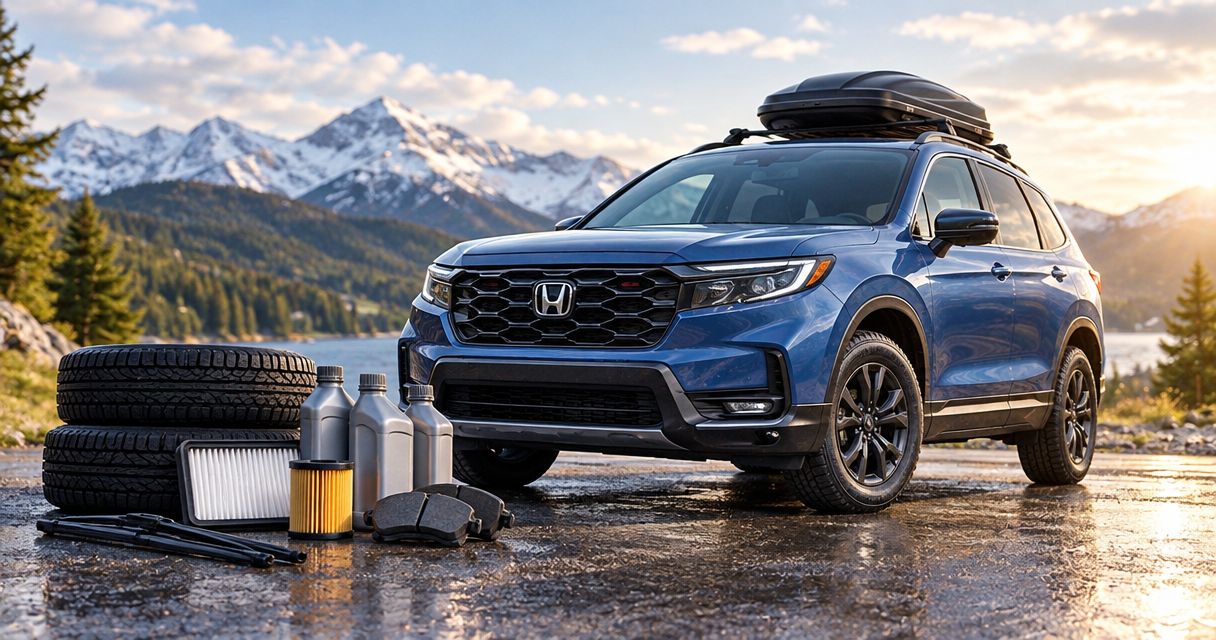

Best overall: Honda Civic Hatchback. Best for an upright seating position: Honda HR-V. Best for a separate trunk: Honda Civic Sedan. This 2026 guide compares the best Honda models for Bristol apartment dwellers, including when extra cargo room or rear-seat space justifies a larger vehicle.
- The best Honda models for Bristol apartment dwellers start with the Civic Hatchback for flexible everyday cargo access.
- Choose the Honda HR-V for upright seating, or the Honda Civic Sedan for a separate trunk.
- Choose the Honda CR-V for recurring bulky loads; choose the Honda Accord for regular rear-seat passengers.
- Measure your parking space, test door clearance, and plan maintenance before choosing a Honda.
Why this matters
Apartment living makes the space around your car almost as important as the space inside it. A vehicle needs to work beside another parked car, under a garage ceiling, and at the curb where you unload groceries.
Bristol Honda is located in Bristol, Tennessee, and serves Johnson City and Kingsport. Bristol Honda recommends starting your apartment-car search with the Honda Civic Hatchback when flexible cargo access matters more than SUV seating height.
The right choice also needs a practical service plan. If your lease prohibits vehicle maintenance in the parking lot, routine care becomes something to arrange before a warning or overdue service interrupts your week.
What makes the best Honda for apartment living?
Use these criteria for your 2026 shortlist. Compare the exact vehicle rather than assuming every body style or model year works the same way.
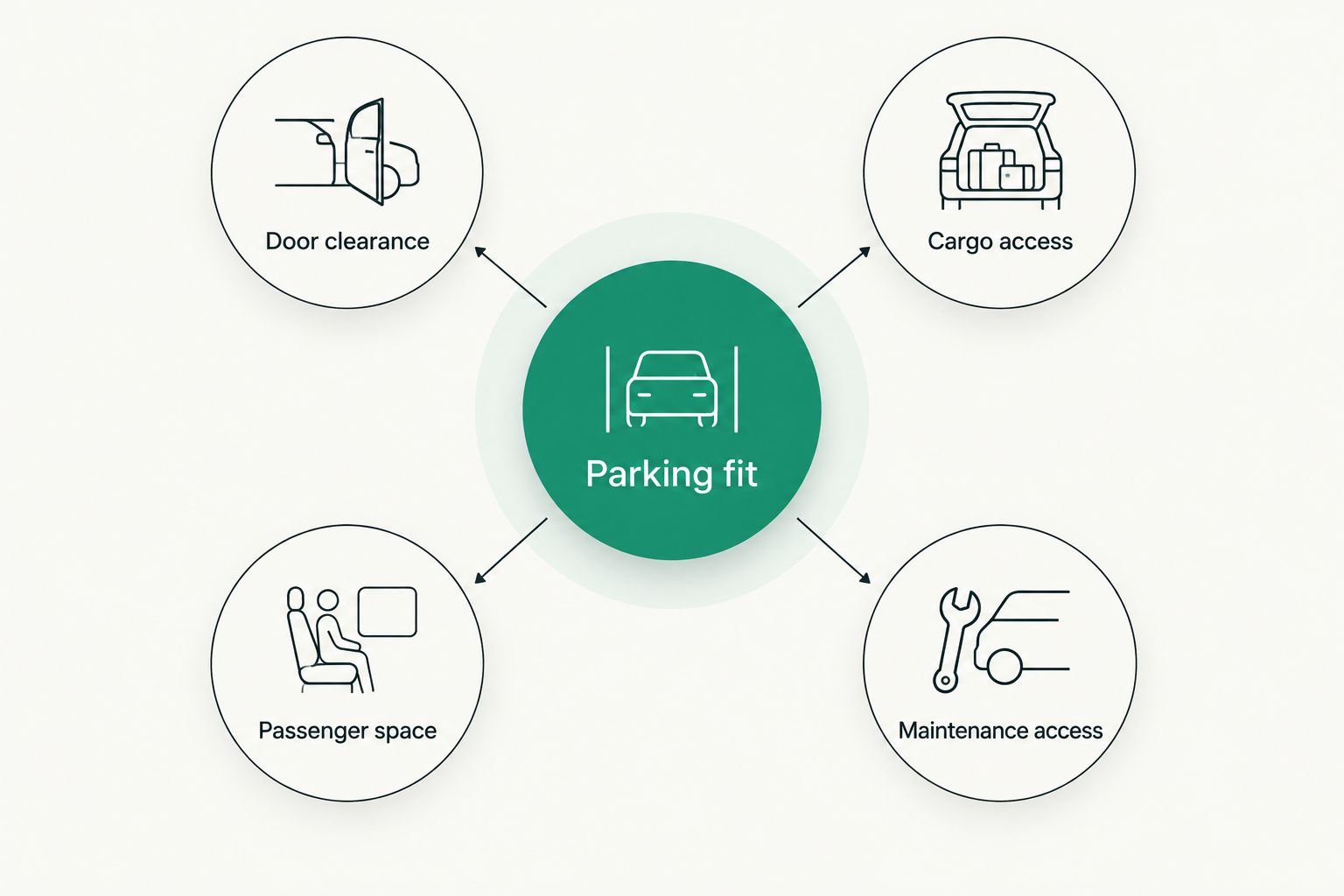
- Parking fit: Check vehicle length and width against your assigned space, including mirrors and room to walk around the car.
- Door clearance: Test whether you can enter, exit, and load a passenger without touching the neighboring vehicle.
- Cargo access: Match the opening to your laundry basket, grocery bags, stroller, or other recurring load.
- Passenger space: Give rear-seat comfort priority only when people regularly use those seats.
- Maintenance access: Know where you will arrange service, check tires, and handle a battery problem when home repairs are impractical.
Measure 3 clearances before shopping: usable parking length, usable width, and overhead clearance. Record them in inches, then compare them with the specifications for the exact model year and trim you are considering.
Best Honda models at a glance
These recommendations separate different needs rather than treating the largest vehicle as the automatic winner. For a closer sedan comparison, read Honda Civic vs. Accord: which fits your daily drive.
| Rank | Honda model | Best for | Standout characteristic | Key limitation |
|---|---|---|---|---|
| 1 | Honda Civic Hatchback | Flexible everyday cargo | Hatch opening and folding rear seatbacks | Lower seating position than an SUV |
| 2 | Honda HR-V | Upright entry and seating | Small-SUV body style | Liftgate needs clearance behind and above |
| 3 | Honda Civic Sedan | A separate luggage compartment | Enclosed trunk | Trunk opening restricts bulky objects |
| 4 | Honda CR-V | Recurring bulky loads | SUV cargo area | More vehicle to accommodate in tight parking |
| 5 | Honda Accord | Regular rear-seat passengers | Midsize-sedan passenger space | Longer footprint than the Civic Sedan |
1. Honda Civic Hatchback: best for flexible everyday cargo
The Honda Civic Hatchback combines a passenger-car seating position with rear hatch access. Folding the rear seatbacks lets you adapt the space for loads that do not fit neatly into a sedan trunk.
Best for: You carry groceries, laundry, or occasional awkward items but do not need an SUV's seating height. For a 2026 apartment shortlist, this is the default starting point—not a reason to skip checking your parking space.
Honda Civic Hatchback pros:
- The hatch opening helps with loading bulky objects.
- Folding rear seatbacks let you change the passenger-and-cargo balance.
- The body style provides an alternative to moving into an SUV solely for cargo access.
Honda Civic Hatchback cons:
- Lower seating requires a different entry motion than an upright SUV.
- The raised hatch needs overhead clearance in a garage.
Bring your actual laundry basket or stroller to the appointment. A useful cargo opening matters more than an impressive-looking empty compartment.
Verdict: Buy if flexible loading is your main apartment-living priority.
2. Honda HR-V: best for upright seating and entry
The Honda HR-V suits drivers who prefer the seating position of a small SUV. Its rear hatch also gives you a different loading arrangement from a sedan's trunk.
Best for: You want to evaluate upright seating without starting with a larger SUV. Test entry and exit carefully; a higher seat does not automatically make every vehicle more comfortable for every driver.
Honda HR-V pros:
- Upright seating gives you an alternative to a low sedan.
- Rear hatch access suits grocery bags and everyday gear.
- Folding rear seatbacks provide flexibility when passengers are not using them.
Honda HR-V cons:
- The liftgate needs space behind the vehicle and overhead.
- SUV styling alone does not establish whether it fits your assigned space.
Try the driver's door beside another parked vehicle, with permission and safe clearance. An open dealership parking space cannot show you how the door works in your apartment's tighter surroundings.
Verdict: Buy if its seating position and entry feel better during your test drive.
3. Honda Civic Sedan: best for a separate trunk
The Honda Civic Sedan keeps luggage in a trunk separate from the passenger compartment. That layout makes sense when your normal load consists of bags rather than tall or unusually shaped objects.
Best for: You prefer a conventional sedan and want an enclosed place for everyday belongings. Compare this model with the hatchback using the same load, not two different mental pictures of what you carry.
Honda Civic Sedan pros:
- A separate trunk keeps luggage apart from seated passengers.
- Its sedan layout suits ordinary grocery and travel bags.
- It offers a smaller-footprint alternative to the Accord.
Honda Civic Sedan cons:
- The trunk opening limits the shape of objects you can load.
- A low seating position will not suit every driver's entry preferences.
Check whether your bags pass through the opening without awkward twisting. Also test the reach to items at the back of the trunk; loading and retrieving are different tasks.
Verdict: Buy if a separate trunk matches your normal routine better than a hatch.
4. Honda CR-V: best for recurring bulky loads
The Honda CR-V deserves a place on your list when you repeatedly carry equipment that makes a smaller vehicle inconvenient. Its SUV cargo layout gives you a reason to consider more vehicle—not an excuse to ignore parking fit.
Best for: You regularly move a stroller, household gear, or other bulky items alongside passengers. Base the decision on recurring use rather than a single future furniture purchase.
Honda CR-V pros:
- The rear cargo area accommodates a different load shape from a sedan trunk.
- Folding rear seatbacks support larger cargo tasks.
- Upright seating provides another entry option to evaluate.
Honda CR-V cons:
- Tight parking requires closer attention to the vehicle's footprint.
- The liftgate needs clearance when you unload near a wall or garage door.
During your 2026 search, load the gear you actually use and leave the passenger seats positioned normally. Folding everything flat does not answer whether the vehicle works on an ordinary weekday.
Verdict: Buy if recurring cargo needs justify the parking space it requires.
5. Honda Accord: best for regular rear-seat passengers
The Honda Accord is the midsize-sedan choice here. Consider it when passenger comfort is a recurring requirement rather than an occasional bonus.
Best for: You regularly carry adults in the rear seat and prefer a sedan to an SUV. Its longer footprint makes parking-space measurement especially important.
Honda Accord pros:
- Its midsize layout makes rear-seat comfort a useful comparison point.
- A separate trunk divides luggage from the passenger compartment.
- It provides a sedan alternative for drivers who do not want SUV seating.
Honda Accord cons:
- Its longer footprint needs more parking length than the Civic Sedan.
- A trunk opening is less accommodating of tall objects than a hatch opening.
Set the driver's seat first, then have your usual passenger sit behind it. Check rear-door access as well as legroom; comfortable seating does not solve an awkward entrance beside a neighboring car.
Verdict: Buy if regular passenger use earns the extra parking length.
How the Honda models are ranked
This ranking puts parking usability and everyday loading ahead of occasional maximum capacity. The Civic Hatchback takes the default position because its loading arrangement answers a common apartment-car trade-off without requiring SUV seating.
The remaining choices each solve a different problem: upright entry, a separate trunk, recurring bulky cargo, or regular rear-seat passengers. Your measurements and test drive decide the final order. This is a use-case guide, not a claim of instrumented vehicle testing.
Turn the test drive into an apartment-fit check
Use the same route and tasks when comparing vehicles. Otherwise, an easy parking spot or unfamiliar seat setting can distort your decision.
- Parking approach: Practice reversing into a marked space where it is safe and permitted.
- Door opening: Check your exit with the seat in its normal driving position.
- Cargo loading: Bring the object that causes the most trouble in your current car.
- Passenger check: Ask your usual passenger to try entry, seating, and exit.
- Daily route: Include the types of streets and intersections you regularly drive.
Keep a 7-day driving log before your appointment. Note passengers, cargo, and parking difficulties so you choose around actual use rather than a rare trip.
Whether you live in Bristol, Johnson City, or Kingsport, give the same attention to your home parking arrangement and your destination parking. A vehicle must work at both ends of the drive.
Plan service when your apartment is not a workshop
Your 2026 buying decision should include where maintenance happens. Read your lease or community rules before assuming you can change fluids, lift a vehicle, or leave parts in a shared parking area.
Bristol Honda offers vehicle service and parts. Ask the team about the service your particular Honda needs and how to arrange an appointment from Bristol, Johnson City, or Kingsport.
Tires and brakes
Use the driver's door-jamb placard for the vehicle's recommended tire pressures, rather than treating the tire sidewall maximum as the target. Check tires when cold and follow the owner's manual.
Report vibration, pulling, unusual braking sounds, or a change in pedal feel when arranging an inspection. Describe when the symptom happens instead of ordering brake pads or rotors based only on a noise.
Batteries and fluids
Have a starting problem diagnosed before choosing a replacement battery. Battery fit and requirements depend on the vehicle, and a hybrid's high-voltage system is not a do-it-yourself apartment-parking project.
For oil and other fluids, use the specifications in the correct owner's manual. Do not transfer a recommendation from a different Honda model simply because the badge matches.
Parts and service preparation
Provide the vehicle identification number when asking about parts fit. Explain any warning message, recent repair, or change in behavior so the service discussion starts with the right information.
Keep 1 service record folder, digital or paper, for inspection findings and completed work. For a used or certified pre-owned vehicle, review its individual history and the written certification terms rather than assuming the label answers every maintenance question.
Which Honda should you choose?
Start with the Honda Civic Hatchback, then move away from it only for a specific need. Choose the HR-V for the seating position, the Civic Sedan for the trunk, the CR-V for recurring bulky cargo, or the Accord for regular rear-seat passengers.
For your 2026 visit to Bristol Honda, bring parking measurements, your driving log, and a representative cargo item. Ask the team to help you compare exact vehicles and discuss the maintenance needs attached to each choice.
FAQ
What's the best Honda for someone living in a Bristol apartment?
The Honda Civic Hatchback is the default recommendation for apartment dwellers who want flexible everyday cargo access. Check the exact vehicle against your parking measurements before deciding.
Is the Honda HR-V better than the Civic for apartment living?
The Honda HR-V is the better starting point if upright seating and entry are your priorities. The Honda Civic Hatchback is the stronger starting point if you prefer a passenger-car seating position with hatch access.
Should I choose a Honda Civic Sedan or Civic Hatchback?
Choose the Honda Civic Sedan for a separate trunk, or the Honda Civic Hatchback for a different loading opening and flexible cargo use. Test both with the same bags or equipment.
Is a Honda CR-V too large for apartment parking?
Your assigned parking space determines whether a Honda CR-V fits your apartment routine. Measure usable length, width, and overhead clearance, then test door and liftgate access.
Can I own a Honda hybrid without apartment charging?
A conventional Honda hybrid does not require plug-in charging. Confirm the exact model's powertrain, since hybrid and battery-electric vehicles have different charging requirements.
What should I check before buying a used Honda for apartment living?
Check parking fit, vehicle history, inspection findings, and maintenance records before buying a used Honda. Test the doors and cargo opening with the items you regularly carry.
How do I maintain a Honda if my apartment prohibits car repairs?
Arrange maintenance with a service provider and follow your apartment's parking rules. Use the owner's manual for routine checks and have faults diagnosed rather than attempting repairs in a shared space.
One last thing
Test unloading before you test maximum cargo capacity. A large compartment is little help if you cannot open the hatch where you normally park. Bring your everyday load, check the opening, and picture the walk from your parking space to your apartment door.