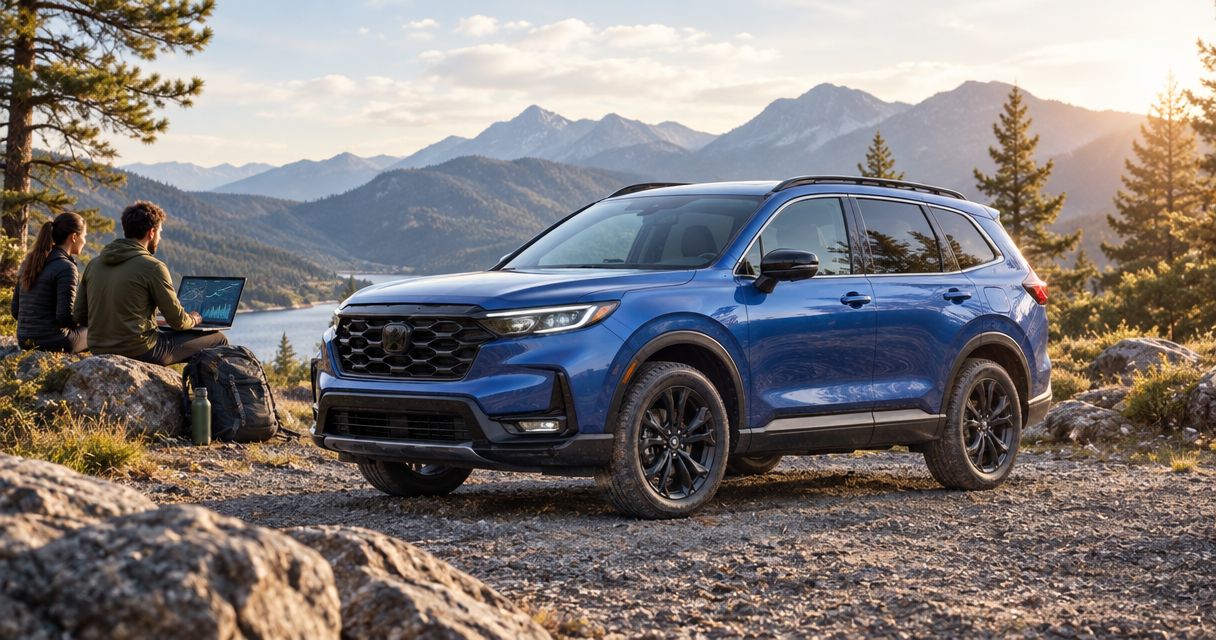
The Honda CR-V Hybrid is worth the extra cost when its fuel savings and the features you actually want justify the difference over your ownership period. It is not automatically the better financial choice for low-mileage drivers or short-term owners. For a 2026 purchase, compare equivalent vehicles and include financing and maintenance—not just fuel economy—in your decision.
- Is the Honda CR-V Hybrid worth the extra cost? Judge fuel savings against the purchase difference and ownership period.
- The Honda CR-V Hybrid suits drivers whose regular routes give its fuel-economy advantage meaningful use.
- A gas-only Honda CR-V deserves consideration when annual mileage is low or ownership will be brief.
- Bristol Honda serves Honda shoppers and service customers from Bristol, Johnson City and Kingsport.
Why this matters
Choosing a hybrid changes both your shopping calculation and your maintenance questions. You need to separate the value of its powertrain from the value of equipment bundled with a particular trim.
Bristol Honda is a Honda dealership in Bristol serving Johnson City and Kingsport. It is a local option for drivers who want Honda vehicle-shopping help and service support in the same place.
Your 2026 comparison should answer a practical question: Will this particular vehicle justify its additional cost during the time you expect to own it? A favorable fuel-economy rating alone does not answer that.
Is the Honda CR-V Hybrid worth the extra cost?
The Honda CR-V Hybrid makes the strongest financial case when you drive enough miles to put its fuel savings to work and keep it long enough to benefit. Its regenerative braking also recovers energy during slowing, making your driving pattern relevant to the comparison.
A gas-only CR-V remains a sensible alternative when the purchase difference matters more to your budget than the expected fuel savings. Neither powertrain wins every ownership scenario.
| Option | Best for | Main advantage | Main limitation |
|---|---|---|---|
| Honda CR-V Hybrid | Drivers whose mileage and ownership plans support the fuel-savings calculation | Uses a gasoline engine and electric propulsion, with regenerative braking recovering energy during slowing | Fuel savings do not automatically recover the additional purchase cost |
| Gas-only Honda CR-V | Drivers prioritizing the purchase budget, especially with limited annual mileage | Offers an alternative without paying a hybrid-specific premium | Does not provide the hybrid powertrain's fuel-saving operation |
Compare actual configurations, not the least expensive gas model against a differently equipped hybrid. Otherwise, you are treating comfort, convenience or drivetrain differences as though they were all hybrid costs.
For a route-focused starting point, use the Honda CR-V Hybrid commuter shopping guide. Then apply the comparison to your own trips rather than assuming every Tri-Cities commute produces the same result.
Honda CR-V Hybrid: best for a supported long-term calculation
Consider the hybrid when you expect regular driving and a meaningful ownership period. More miles create more opportunities for a fuel-consumption difference to affect your total spending.
Stop-and-go driving also deserves attention because hybrid systems recover some energy when slowing. That does not mean every city trip delivers the same result; weather, trip length, traffic and driving habits still affect fuel use.
The hybrid's drawback is straightforward: You pay the difference before you collect the savings. If your circumstances change and you sell earlier than planned, the fuel savings accumulated during ownership will be smaller than your original projection.
Test-drive the vehicle because driving feel matters too. Pay attention to acceleration, engine sound and brake response, then decide whether those characteristics have value to you separately from the financial calculation.
Gas-only Honda CR-V: best for purchase-budget discipline
Keep the gas-only CR-V in your comparison when your annual driving is limited or you expect to replace the vehicle relatively soon. A fuel-saving advantage has fewer miles over which to offset an additional purchase expense.
The gas-only option also gives you a useful reference point. Compare the equipment you need, the vehicle's condition and the complete written terms before deciding the hybrid premium is justified.
The trade-off is that you give up the hybrid system's energy recovery and electric propulsion. Choose the gas-only CR-V because the complete ownership comparison supports it, not because hybrids require unfamiliar maintenance questions. Those questions can be answered before you buy.
How to compare your ownership costs
You do not need a complicated forecast. You need consistent inputs and a clear separation between known expenses and assumptions.
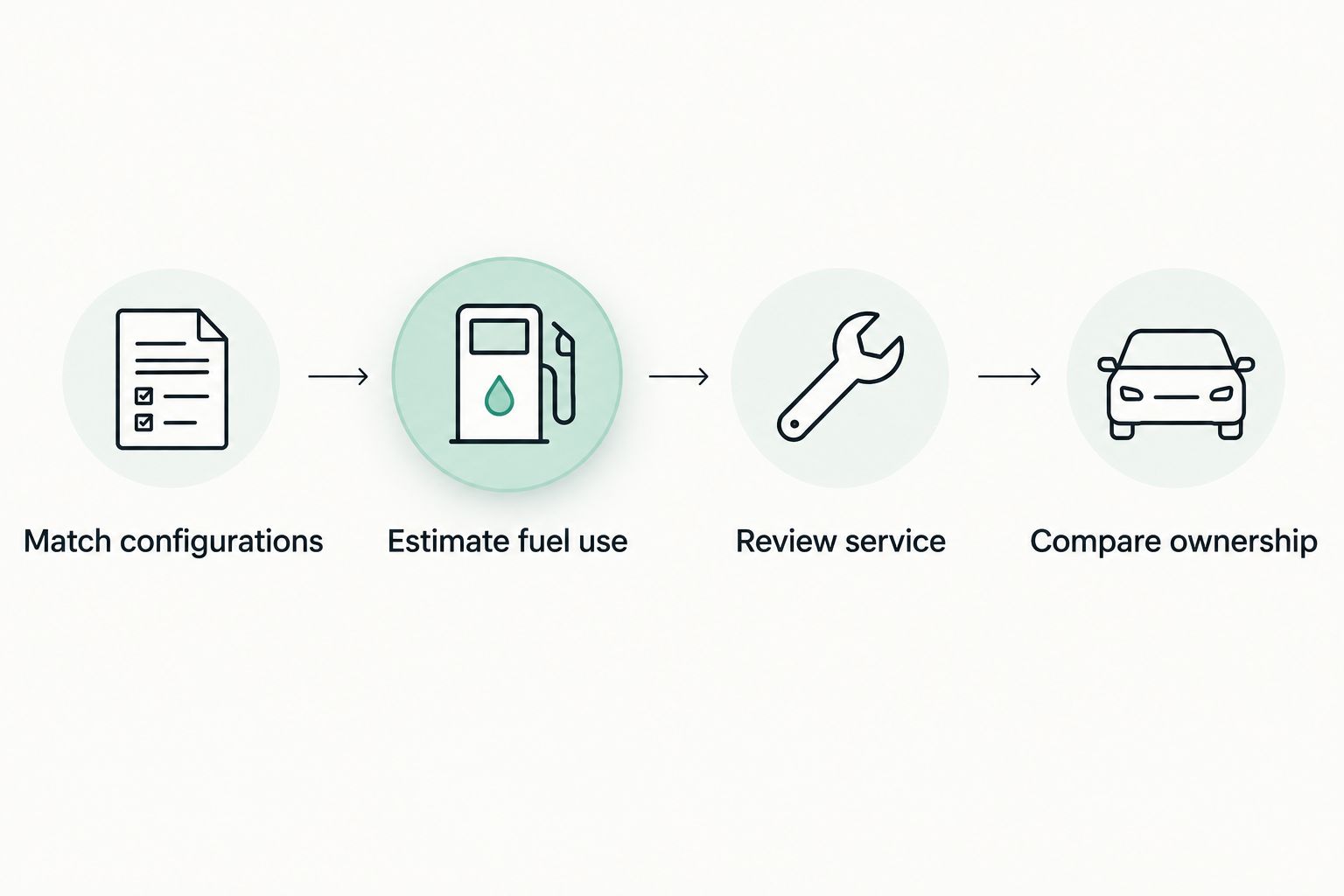
Match configurations
When comparing 2026 vehicles, confirm the model year, trim, drivetrain and equipment on each vehicle's documentation. For used vehicles, add mileage, condition and service history to that comparison.
Request itemized written quotes. Keep the vehicle transaction separate from your trade-in discussion so you can see what each part contributes to the deal.
Estimate fuel use
Start with your own annual mileage, ideally from odometer readings or service records. Use the EPA fuel-economy information for each exact configuration rather than a general CR-V figure.
The calculation is simple: annual miles divided by miles per gallon equals estimated annual gallons. Compare the gallons before applying the same fuel-cost assumption to both vehicles.
For a consistent reference, calculate consumption over 100 miles as well. An MPG rating measures miles traveled on 1 gallon; dividing 100 by the rating converts it into gallons used over the same distance.
Use your mileage over 12 months rather than a busy vacation week. This keeps occasional long trips from distorting your expected annual savings.
Review service
Ask what maintenance each vehicle requires and what is already due. A used vehicle needing immediate tires or overdue service is not directly comparable with one whose documented maintenance is current.
Do not assign the hybrid an automatic maintenance discount. Obtain the maintenance information for the exact vehicle and distinguish scheduled work from repairs that have not been diagnosed.
Compare ownership
Apply the estimated annual fuel savings across the period you realistically expect to keep the vehicle. If you finance, compare the amount financed, loan length and total financing expense—not just the monthly payment.
Treat resale value as uncertain rather than guaranteed. Your decision should remain understandable without assuming a future buyer will repay the entire hybrid premium.
Why the Honda CR-V Hybrid's value varies
These factors explain why another driver's answer does not necessarily fit your household:
- Annual mileage: More driving gives a fuel-consumption difference more influence over total ownership spending.
- Route pattern: Frequent slowing gives regenerative braking opportunities that steady-speed driving does not provide in the same way.
- Ownership period: Fuel savings accumulate while you own the vehicle, not after you sell it.
- Configuration: Trim, equipment and drivetrain differences can make the apparent hybrid premium misleading.
- Financing: Borrowing terms affect the total expense of paying more at purchase.
- Condition and maintenance: On used vehicles, immediate service needs can change an otherwise attractive comparison.
Write down your assumptions before deciding. If the hybrid only makes financial sense under mileage or ownership plans you are unlikely to follow, the calculation is not a good basis for your purchase.
What maintenance does the CR-V Hybrid still need?
A CR-V Hybrid still has a gasoline engine, so choosing one does not eliminate engine maintenance. Tires, brakes, fluids and other wear items also remain part of ownership.
For a 2026 model, use the vehicle's owner's manual and maintenance instructions rather than a schedule copied from a different model year. Ask a qualified Honda service professional to explain the work indicated for the specific vehicle.
Regenerative braking does not replace brake inspections. The vehicle still uses friction brakes, and their condition matters even when regeneration contributes to slowing.
Bristol Honda provides Honda service and parts alongside vehicle sales. Before buying, ask the service team to explain the vehicle's maintenance requirements and which inspection or repair items need attention now.
Check service history before comparing used vehicles
Request records showing what work was completed and when. An oil-change entry does not establish the condition of tires, brakes or every other system.
For a used CR-V Hybrid, ask for an inspection that includes the hybrid system as well as the rest of the vehicle. A clean-looking vehicle and an uneventful test drive are not substitutes for that assessment.
Keep battery questions specific
A hybrid's high-voltage battery and its low-voltage battery perform different jobs. Do not accept a general statement that the battery was checked without asking which battery was evaluated and what the inspection covered.
Warranty questions also need vehicle-specific answers. Confirm the applicable coverage, terms and remaining eligibility from the actual warranty documents; do not assume every used hybrid has identical protection.
How should you test-drive both CR-V options?
Choose a route with the kinds of driving you regularly do. Include a safe mixture of lower-speed roads, stopping and highway travel when practical, and use a comparable route for both vehicles.
For Bristol, Johnson City and Kingsport drivers, that means recreating your own travel pattern rather than assuming the city name predicts your fuel economy. A cross-town errand routine and a highway commute ask different things of the same vehicle.
During each drive, check:
- Acceleration: Judge everyday merging and speed changes, not just a brief hard acceleration.
- Brake response: Notice how naturally you can slow and stop.
- Engine sound: Listen under different loads and speeds.
- Comfort and controls: Check seating, visibility and the features you will use regularly.
Do not treat a short test-drive fuel-economy display as your ownership forecast. Use it to understand the vehicle, then return to the configuration-specific ratings and your annual-mileage calculation.
Does the CR-V Hybrid need to be plugged in?
The Honda CR-V Hybrid does not require plug-in charging. Its hybrid system manages battery charging through vehicle operation, including energy recovered during deceleration.
You still refuel it with gasoline. That distinction matters if you are comparing conventional hybrids with vehicles that need an external charging connection.
Will fuel savings alone repay the difference?
Fuel savings alone repay the difference only when the accumulated savings exceed the additional purchase and financing expense. There is no single payback period that applies to every CR-V Hybrid buyer.
Keep equipment value separate. You can reasonably choose the hybrid because you prefer its driving characteristics or features, but those preferences are not fuel savings.
Should you buy used instead of new?
A used CR-V Hybrid deserves consideration when its condition, documentation and purchase terms support your budget. Compare it with a similarly suitable gas-only vehicle rather than assuming used automatically means better value.
Give service records and an independent assessment of condition the same attention as equipment. For any certified pre-owned vehicle, read the certification and warranty documents rather than treating the label as a substitute for inspection details.
FAQ
Is the Honda CR-V Hybrid worth the extra cost if I barely drive?
The Honda CR-V Hybrid has a weaker fuel-savings case when you drive very little. Compare your actual annual mileage and ownership period before paying more for the hybrid powertrain.
Is a CR-V Hybrid better for city driving or highway driving?
Stop-and-go driving gives the CR-V Hybrid opportunities to recover energy through regenerative braking. Compare the EPA city and highway ratings for the exact configurations against the routes you actually drive.
Does the Honda CR-V Hybrid still need oil changes?
The Honda CR-V Hybrid still needs engine oil maintenance because it has a gasoline engine. Follow the vehicle's maintenance instructions rather than assuming the electric side eliminates engine service.
Can I charge a Honda CR-V Hybrid at home?
The Honda CR-V Hybrid does not use an external charging connection. Its hybrid system manages battery charging during vehicle operation, and you refuel the vehicle with gasoline.
How do I calculate whether a hybrid will save me money?
Estimate annual fuel use for each vehicle using your annual mileage and the configuration-specific MPG rating. Compare the resulting fuel savings with the purchase difference, financing expense and expected ownership period.
Should I worry about the battery in a used CR-V Hybrid?
Have the used CR-V Hybrid's battery systems evaluated as part of a vehicle inspection. Ask which battery was tested, review the findings and verify any remaining warranty coverage from the applicable documents.
Where is Bristol Honda located for Johnson City and Kingsport shoppers?
Bristol Honda is located in Bristol, Tennessee, and serves drivers from Johnson City and Kingsport. The dealership offers Honda vehicle sales, financing, service and parts.
One last thing
A higher MPG figure does not translate into an equally large reduction in fuel consumption. MPG measures distance per gallon, which is why comparing gallons over a fixed distance makes your savings calculation easier to understand.
For your 2026 decision, bring the same written checklist to both vehicles: configuration, annual fuel use, financing terms, maintenance needs and ownership period. Choose the CR-V Hybrid when that comparison supports it—not simply because the hybrid badge suggests savings.