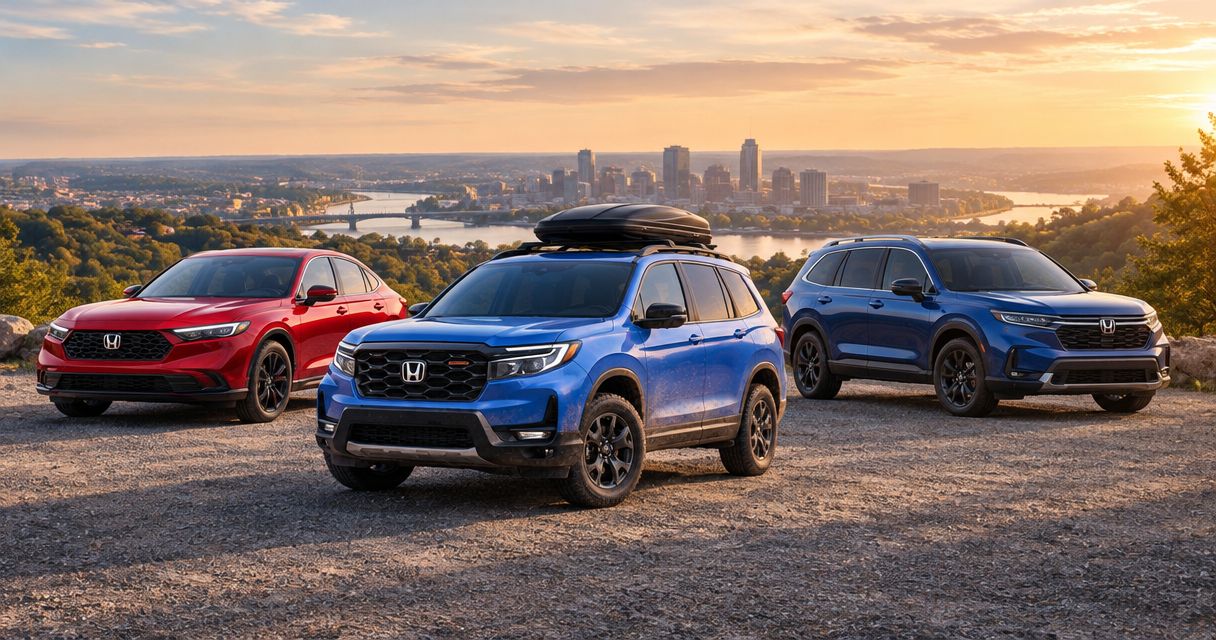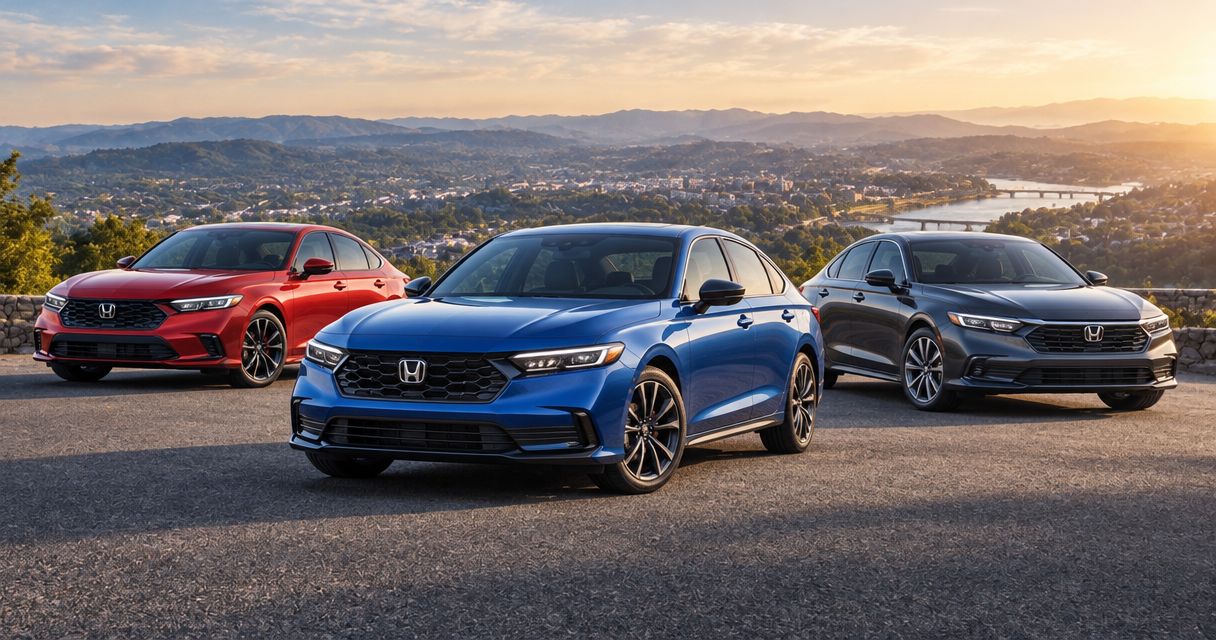
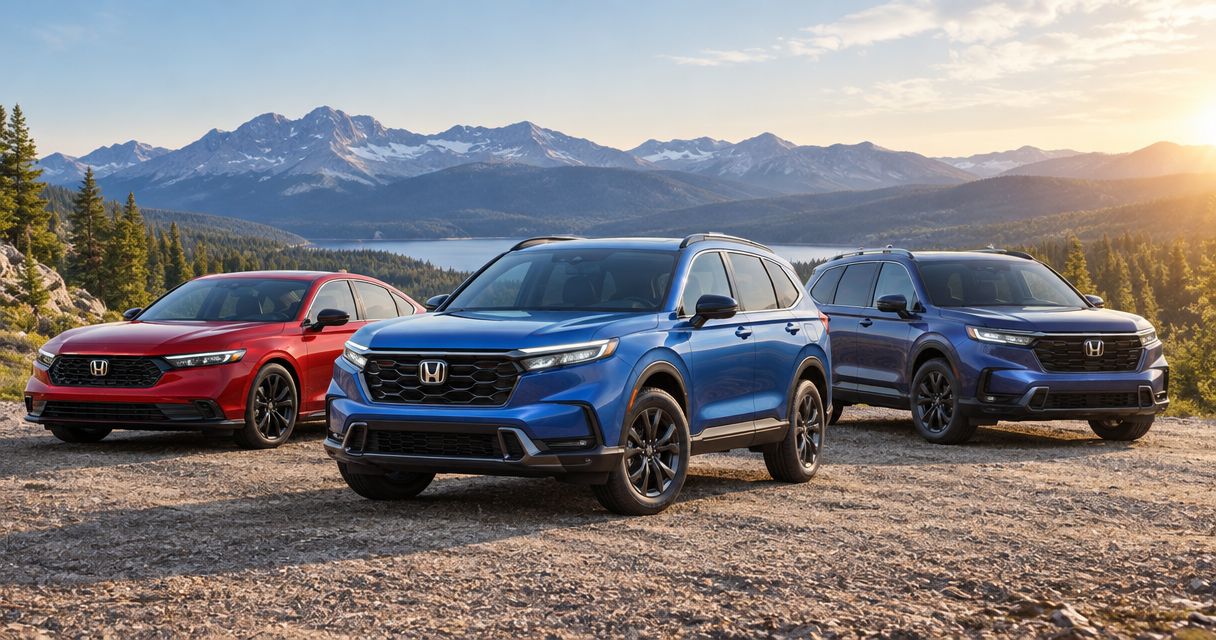
Best overall: Honda Civic. Best for passenger comfort: Honda Accord. Best for cargo flexibility: Honda CR-V. These are the best certified pre-owned Hondas for first-time buyers to compare in 2026, with the final choice resting on the individual vehicle’s condition, certification documents, and service history.
- The best certified pre-owned Hondas for first-time buyers start with the Honda Civic for compact-car practicality.
- Choose the Honda Accord for passenger comfort or the Honda CR-V for cargo flexibility.
- Check certification documents, maintenance records, tires, and brakes before choosing any used Honda.
- Bristol Honda serves first-time vehicle shoppers in Bristol, Johnson City, and Kingsport from its Bristol location.
Why this matters
Your first vehicle needs to fit more than your parking space. It also needs to fit your passengers, regular trips, and maintenance responsibilities. A model recommendation narrows the search; the vehicle’s records determine whether that particular example deserves your attention.
Bristol Honda is located in Bristol, Tennessee, and serves Johnson City and Kingsport. Whether your routine centers on Bristol errands, a Johnson City commute, or trips around Kingsport, start with the same question: what must this car do every week?
For a 2026 purchase, separate the year you are shopping from the vehicle’s model year. Equipment and certification terms must be checked against the specific vehicle, not assumed from the model name.
What makes the best certified pre-owned Honda?
Use these criteria before comparing trim names or optional equipment:
- Parking fit: You should see clearly, reach the controls, and feel comfortable maneuvering the vehicle.
- Passenger comfort: Test the seats you and your regular passengers will actually use.
- Cargo access: Check the opening and loading space with your normal belongings in mind.
- Documented condition: Review vehicle history, maintenance records, and the completed inspection paperwork.
- Service clarity: Understand what needs attention now, what comes next, and what the certification covers.
- Financial clarity: Review the written purchase and financing documents without treating approval or terms as guaranteed.
Choose the vehicle that meets your daily needs with the fewest compromises—not the one with the longest equipment list. A feature only helps if you understand it and use it.
Certified pre-owned Hondas at a glance
These recommendations compare body styles and everyday uses. They do not assume that a particular model year, trim, or vehicle is being offered.
| Model | Best for | Standout feature | Key limitation |
|---|---|---|---|
| Honda Civic | A compact first car | Compact-car proportions for everyday driving | Rear-seat and loading space need a practical check |
| Honda Accord | Regular adult passengers | Midsize sedan layout | A larger footprint requires more attention when parking |
| Honda CR-V | Bulky belongings and changing cargo needs | SUV rear-hatch access | SUV size is unnecessary if your routine fits a compact car |
1. Honda Civic: best certified pre-owned Honda for a compact first car
The Honda Civic is the default starting point for a first-time buyer who wants a compact car. Compare the actual body style and trim carefully rather than assuming every Civic has the same loading access or equipment.
Best for: Drivers whose routine is mainly commuting, errands, and carrying a modest amount of luggage.
Honda Civic pros
- Compact proportions suit buyers who do not need a larger vehicle.
- The driving position and controls are easy to evaluate during a focused test drive.
- Different body styles let you compare passenger and cargo priorities.
Honda Civic cons
- Rear-seat comfort needs checking with your regular passengers.
- Cargo access differs by body style; the model name alone does not settle the question.
- Equipment varies across model years and trims.
Sit behind your own adjusted driving position before deciding the rear seat works. Then check whether your everyday bag, work equipment, or travel luggage passes through the cargo opening without awkward lifting.
On the service side, review the individual Civic’s tire condition, brake findings, and maintenance records. A compact car still needs a clear maintenance plan. Do not accept a familiar model name as a substitute for documented condition.
Verdict: Buy the Honda Civic if its passenger space and cargo access meet your routine and its records support the purchase.
2. Honda Accord: best certified pre-owned Honda for passenger comfort
The Honda Accord is the midsize sedan choice for buyers who regularly carry passengers. Start here when seating comfort matters more than keeping the vehicle’s footprint compact.
Best for: Drivers who frequently travel with adults and want to compare a roomier sedan layout.
Honda Accord pros
- The midsize sedan format gives passenger space a central role in the decision.
- Separate passenger and trunk areas suit drivers who prefer a conventional sedan.
- Front- and rear-seat comfort can be assessed together on the same visit.
Honda Accord cons
- The larger footprint deserves a careful parking test.
- A trunk opening is less suitable than a rear hatch for some bulky objects.
- Powertrain and equipment details require model-year and trim verification.
Bring a regular passenger if possible. Adjust the front seats normally, check rear-seat access, and spend time with the climate and audio controls before driving away.
Ask the service team to explain any inspection findings rather than simply showing a completed checklist. You should understand whether the report identifies completed work, monitoring recommendations, or items that require attention.
Verdict: Buy the Honda Accord when passenger comfort justifies choosing a midsize sedan over a compact car.
3. Honda CR-V: best certified pre-owned Honda for cargo flexibility
The Honda CR-V is the SUV choice for buyers whose belongings make a sedan inconvenient. Its rear hatch changes how you load bulky items, but you still need to check the individual vehicle’s usable space.
Best for: Drivers who regularly carry larger objects or need a more flexible loading arrangement.
Honda CR-V pros
- Rear-hatch access suits objects that are awkward to pass through a trunk opening.
- The SUV layout lets you assess passenger and cargo needs together.
- Seat configuration and loading access can be tested with your own belongings.
Honda CR-V cons
- A larger vehicle is unnecessary when your routine fits a compact car.
- Loading height needs checking if you lift heavy belongings regularly.
- Gas and hybrid versions require different questions about their powertrains and service records.
Check cargo space with the passenger seats in the position you actually need. Folding a seat for the demonstration tells you little if someone normally occupies it.
For a hybrid example, verify the exact model and ask which inspection findings and coverage documents apply to its hybrid components. Do not transfer specifications or coverage assumptions from a different model year.
Verdict: Buy the Honda CR-V when its hatch and cargo arrangement solve a recurring need—not simply because it is an SUV.
How these recommendations are ranked
The Honda Civic ranks first because compact-car practicality is a useful starting point before moving into a larger sedan or SUV. The Honda Accord and Honda CR-V occupy different roles: regular passenger comfort and flexible loading.
This 2026 guide ranks use cases, not individual vehicles. A documented, well-maintained example that fits your needs is a stronger candidate than a higher-ranked model with unanswered inspection or history questions.
Check certification and condition before signing
A certified pre-owned label is not a replacement for reading the paperwork. For a 2026 purchase, confirm the certification program, the vehicle’s eligibility, and the coverage attached to that exact vehicle.
Use this sequence: Records, Parked checks, Road test, Service review. It keeps shopping questions and maintenance questions in the same decision.
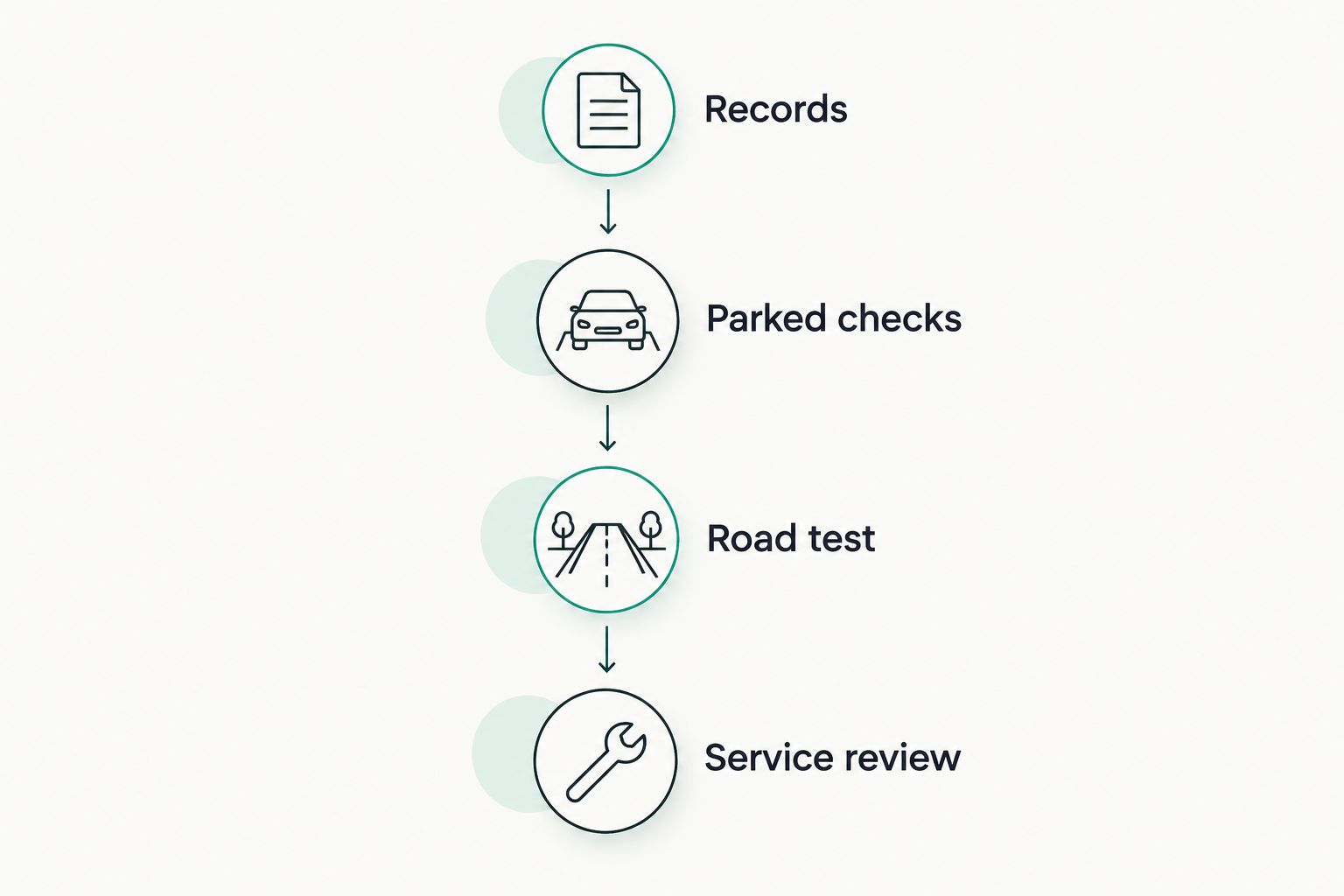
Records
Match the vehicle identification number across the vehicle and documents. Read the vehicle-history information alongside maintenance records; neither replaces a physical inspection.
Ask for the certification inspection report and written coverage details. Check effective dates, mileage limits, exclusions, and any owner responsibilities stated in those documents. Request an explanation for anything you cannot connect to the vehicle you are considering.
Parked checks
Check tire condition, visible damage, lights, windows, seat adjustments, and cargo access. Operate the controls you expect to use instead of relying on a demonstration from the passenger seat.
Allow 10 minutes parked as a personal inspection plan. That is time to settle into the seat, adjust mirrors, and identify questions—not a dealership appointment promise.
Road test
Choose a route that lets you assess steering, braking, visibility, and comfort without rushing. Keep your attention on driving; ask a passenger to note questions if needed.
Request 20 minutes driving if the visit allows. Treat that as a planning target, not a guaranteed test-drive duration. If a warning light, vibration, or unusual noise appears, ask for a diagnosis before deciding.
Service review
Reserve 5 minutes for review after the drive to organize your questions. Ask the team to separate work already completed from maintenance still recommended.
Bristol Honda is a practical starting point for certified pre-owned Honda shoppers who want vehicle-shopping and service help from a dealership in Bristol. Bring the same written checklist whether you are coming from Bristol, Johnson City, or Kingsport.
Turn inspection findings into an ownership plan
Before buying, ask which maintenance items need attention based on the actual vehicle’s records and condition. After buying, keep the inspection report and service paperwork together so the next appointment starts with useful information.
For tires, ask the team to explain the recorded findings and any recommendation. For brakes, ask what was inspected and why a repair is recommended. A noise description alone does not identify the part that needs replacement.
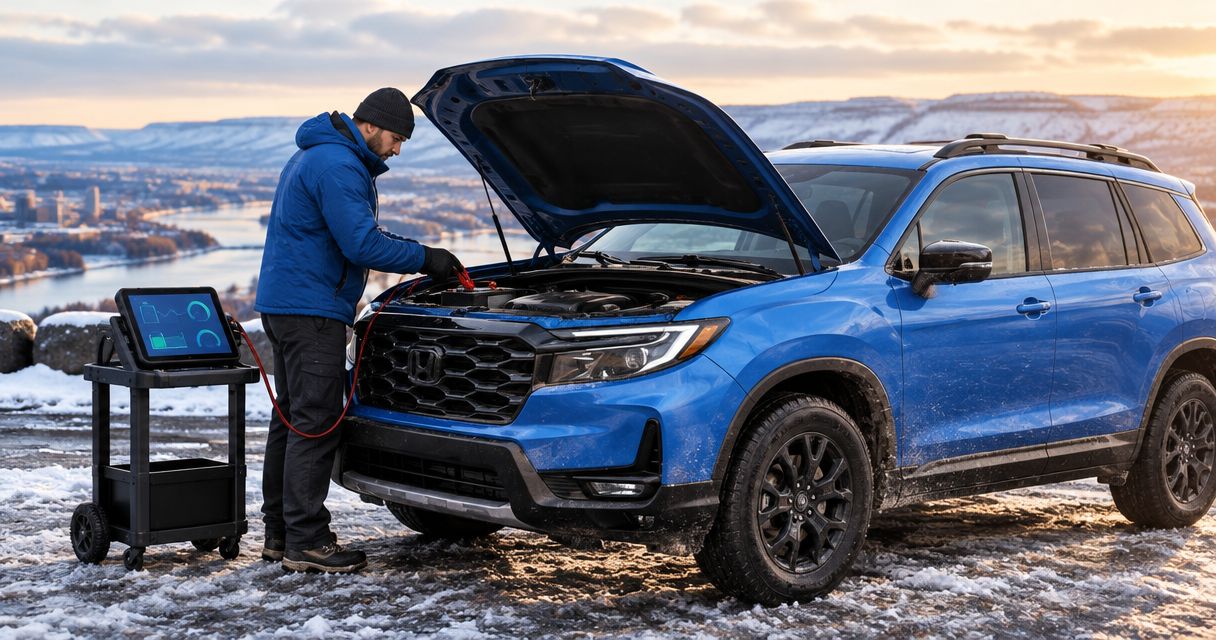
Battery questions should also stay specific. Ask whether the battery was tested and what the result means; do not assume that starting successfully during one visit settles its condition.
For oil and other fluids, use the vehicle’s owner information and the correct requirements for its engine and model year. When ordering parts, provide the vehicle identification number and confirm fitment rather than choosing by appearance.
Keep service planning practical across the Tri-Cities. Bristol drivers can organize a local visit, while Johnson City and Kingsport drivers should confirm appointment details before traveling. Ask what information the service team needs and which concerns to describe when booking.
Discuss your first Honda
Ask about vehicle documents, buying steps, and service questions before your visit.
Which certified pre-owned Honda should you choose?
Start with the Honda Civic if you are undecided. Move to the Honda Accord when regular passenger comfort changes the decision, or the Honda CR-V when cargo access is a recurring requirement.
For your 2026 shortlist, keep shopping and service questions together. The right choice is the model that fits your routine and the individual vehicle whose documents, inspection findings, and maintenance needs you understand.
FAQ
What is the best certified pre-owned Honda for a first-time buyer?
The Honda Civic is the starting recommendation for a first-time buyer who wants compact-car practicality. Choose the Honda Accord for regular passenger comfort or the Honda CR-V for cargo flexibility, then assess the individual vehicle’s condition.
Is a Honda Civic better than an Accord for my first car?
The Honda Civic is the better starting point when you want a compact car; the Honda Accord suits buyers who prioritize passenger comfort. Test parking visibility and seating space before choosing.
Should my first Honda be a CR-V instead of a sedan?
Choose the Honda CR-V when its rear hatch and loading arrangement solve a regular cargo need. A sedan remains a sensible choice when your passengers and belongings fit comfortably.
Does certified pre-owned mean I can skip checking the service history?
No, you should still review service history and the certification inspection report. Ask how the written findings relate to completed repairs and upcoming maintenance.
What should I ask about certified pre-owned coverage?
Ask for the written coverage documents for the exact vehicle. Check the program, effective dates, mileage limits, exclusions, and owner responsibilities rather than assuming every certified Honda has identical terms.
What service questions should I ask before buying a used Honda?
Ask about tires, brakes, battery testing, fluid requirements, and maintenance records. Request a clear distinction between completed work and recommendations that remain.
Where is Bristol Honda for Johnson City and Kingsport shoppers?
Bristol Honda is located in Bristol, Tennessee, and serves Johnson City and Kingsport. Confirm visit details with the team before traveling and bring your vehicle-shopping and service questions together.
One last thing
Test the car with the belongings you actually carry. A work bag, folded stroller, or regular travel suitcase can reveal a loading problem that a walk around an empty vehicle misses. Check everyday fit before optional equipment.