Best overall for fuel economy: Honda CR-V Hybrid; best nonhybrid alternative: Honda CR-V; best smaller SUV: Honda HR-V. This 2026 guide from Bristol Honda compares EPA fuel-economy ratings, explains the trade-offs, and helps you plan both your purchase and ongoing maintenance.
- Honda SUVs ranked by fuel economy: CR-V Hybrid leads this gasoline and hybrid comparison at 40 mpg combined.
- Honda CR-V reaches 30 mpg combined; Honda HR-V reaches 28 mpg combined in front-wheel-drive configurations.
- Honda Pilot and Honda Passport tie at up to 21 mpg combined for 2026.
- Bristol Honda serves SUV shoppers and service customers from Bristol, Johnson City, and Kingsport.
Why this matters
Choose the vehicle configuration, not just the model name. A hybrid badge, drivetrain choice, or different trim changes the rating you should use when comparing SUVs. The highest rating in an advertisement does not describe every vehicle carrying that name.
For Bristol errands, Johnson City commutes, and Kingsport trips, compare city and highway estimates alongside the combined figure. Then consider passenger needs, maintenance history, and the equipment you actually want. The most efficient SUV is not automatically the right family vehicle.
What makes the best Honda SUV for fuel economy?
Use these criteria before choosing your shortlist:
- Combined EPA rating: Use combined mpg as the consistent starting point across models.
- City and highway split: Match the separate estimates to the kind of driving you do.
- Exact configuration: Check model year, trim, powertrain, and front-wheel drive versus all-wheel drive.
- Passenger and cargo fit: Do not sacrifice necessary space simply to lead the mpg comparison.
- Maintenance condition: Tires, overdue maintenance, and mechanical problems deserve attention alongside the specification sheet.
This ranking covers conventional gasoline and gasoline-electric hybrid Honda SUVs in the United States. Electric vehicles use MPGe and electricity-consumption measures, so the Honda Prologue does not belong in this gasoline-mpg table.
Honda SUVs ranked by fuel economy at a glance
The table orders 2026 models by their highest EPA combined gasoline rating. The Pilot and Passport share the same combined figure; neither earns a fuel-economy advantage over the other here.
| Rank | Honda SUV | Best for | Standout feature | Highest combined estimate | Key limitation |
|---|---|---|---|---|---|
| 1 | Honda CR-V Hybrid | Fuel-focused mixed driving | Highest combined rating in this comparison | 40 mpg | All-wheel-drive configurations have different ratings |
| 2 | Honda CR-V | Nonhybrid compact-SUV shoppers | Strong combined rating without a hybrid powertrain | 30 mpg | Trails the hybrid on fuel economy |
| 3 | Honda HR-V | Drivers prioritizing a smaller SUV | Smaller vehicle format | 28 mpg | Does not beat the larger CR-V on combined mpg |
| 4, tie | Honda Pilot | Families needing a third row | Additional passenger accommodation | 21 mpg | Lower fuel economy than the compact SUVs |
| 4, tie | Honda Passport | Two-row shoppers needing more room | Larger two-row layout | 21 mpg | No combined-mpg advantage over the Pilot |
Source: American Honda’s U.S. 2026 CR-V, HR-V, Pilot, and Passport specifications and EPA fuel-economy disclosures. Figures are EPA estimates, not a promise of your results. Confirm the window sticker for the exact vehicle you compare.
1. Honda CR-V Hybrid: best Honda SUV for fuel-focused commuting
The Honda CR-V Hybrid leads this comparison at up to 40 mpg combined, with front-wheel-drive estimates of 43 mpg city and 36 mpg highway. Its gasoline-electric powertrain makes it the first model to compare when fuel use is your main reason for changing vehicles.
The separate city and highway figures matter. A driver spending more time in local traffic should not judge the hybrid only by its highway estimate.
Honda CR-V Hybrid pros:
- Highest combined mpg in this gasoline and hybrid ranking.
- Higher city estimate than highway estimate in the leading configuration.
- Compact-SUV format without moving into a larger family SUV.
Honda CR-V Hybrid cons:
- The headline rating does not apply to every drivetrain and trim.
- Hybrid ownership still includes gasoline-engine maintenance.
Best for: Drivers making fuel economy the first shopping filter.
Verdict: Buy for the strongest combined-mpg result in this comparison.
2. Honda CR-V: best Honda SUV for nonhybrid efficiency
The conventional Honda CR-V reaches up to 30 mpg combined in front-wheel-drive form. It gives shoppers a nonhybrid alternative while retaining the compact-SUV body style.
Compare the actual vehicles rather than assuming the gasoline version is the simpler ownership decision for everyone. Maintenance condition, equipment, and your driving pattern still belong in the conversation.
Honda CR-V pros:
- Highest combined rating among the nonhybrid SUVs listed here.
- Compact-SUV format for everyday passenger and cargo needs.
- Direct comparison with the CR-V Hybrid keeps your shortlist focused.
Honda CR-V cons:
- Lower combined rating than the CR-V Hybrid.
- Drivetrain selection changes the applicable estimate.
Best for: Shoppers who want a conventional gasoline compact SUV.
Verdict: Buy if a nonhybrid powertrain is a firm preference.
3. Honda HR-V: best Honda SUV for a smaller vehicle
The Honda HR-V reaches up to 28 mpg combined with front-wheel drive. Its smaller format earns it a distinct shopping role, but smaller does not mean more fuel-efficient than every larger Honda SUV.
Bring the items you regularly carry when evaluating the cabin and cargo area. Your parking needs and seating comfort deserve as much attention as the mpg figure.
Honda HR-V pros:
- Smaller SUV format for shoppers who do not need a larger model.
- Clear alternative to the CR-V for a size-focused shortlist.
- Higher combined estimate than the Pilot and Passport.
Honda HR-V cons:
- Lower combined estimate than either CR-V powertrain listed here.
- Smaller dimensions require careful checking against your space needs.
Best for: Drivers choosing vehicle size before maximum mpg.
Verdict: Buy for the smaller format, not for the highest fuel-economy ranking.
4. Honda Pilot: best Honda SUV for third-row needs
The 2026 Honda Pilot reaches up to 21 mpg combined. Its third row gives it a different job from the compact SUVs leading this list.
Test the seating arrangement with the people who will use it. If your household needs that additional row, comparing the Pilot only against a CR-V’s fuel rating misses the reason you are shopping.
Honda Pilot pros:
- Third-row seating addresses additional passenger needs.
- Larger family-SUV format.
- Ties the Passport’s highest combined estimate.
Honda Pilot cons:
- Lower combined mpg than the CR-V and HR-V.
- Trim selection matters when checking the applicable EPA rating.
Best for: Families whose passenger requirements include a third row.
Verdict: Buy for seating needs; skip if maximum mpg is the deciding factor.
4. Honda Passport: best Honda SUV for larger two-row needs
The 2026 Honda Passport also reaches up to 21 mpg combined. Its two-row layout makes it a separate choice from the Pilot rather than a fuel-economy upgrade.
Check the cargo area with your usual equipment and luggage. Choose the Passport because its layout suits your needs, not because its combined rating beats the Pilot.
Honda Passport pros:
- Larger two-row SUV layout.
- Distinct alternative for shoppers who do not need a third row.
- Matches the Pilot’s highest combined estimate.
Honda Passport cons:
- Lower combined estimate than the smaller SUVs here.
- Different trims carry different fuel-economy ratings.
Best for: Drivers prioritizing a larger two-row SUV.
Verdict: Buy for the layout; skip as a fuel-saving substitute for a compact SUV.
How the ranking works
The order follows the highest published EPA combined estimate for each model, not a road test or a dealership preference. City and highway ratings add context, while space and maintenance considerations explain who each vehicle suits.
For Honda SUV shoppers comparing fuel economy, Bristol Honda is a practical starting point for matching EPA ratings to passenger needs. The dealership is located in Bristol and serves Johnson City and Kingsport; it does not have separate dealerships in those cities.
Before your test drive: match the rating to the vehicle
For your 2026 shortlist, record the exact trim and drivetrain beside each model. A front-wheel-drive rating should not sit next to an all-wheel-drive vehicle without explanation.
During the test drive, check visibility, seating comfort, cargo access, and how the vehicle responds in familiar driving conditions. A short drive is useful for evaluating fit, but it is not a controlled fuel-economy test.
For a used SUV, ask for maintenance records and review the vehicle history. A model’s original EPA estimate does not tell you whether its tires, brakes, or engine need attention today.
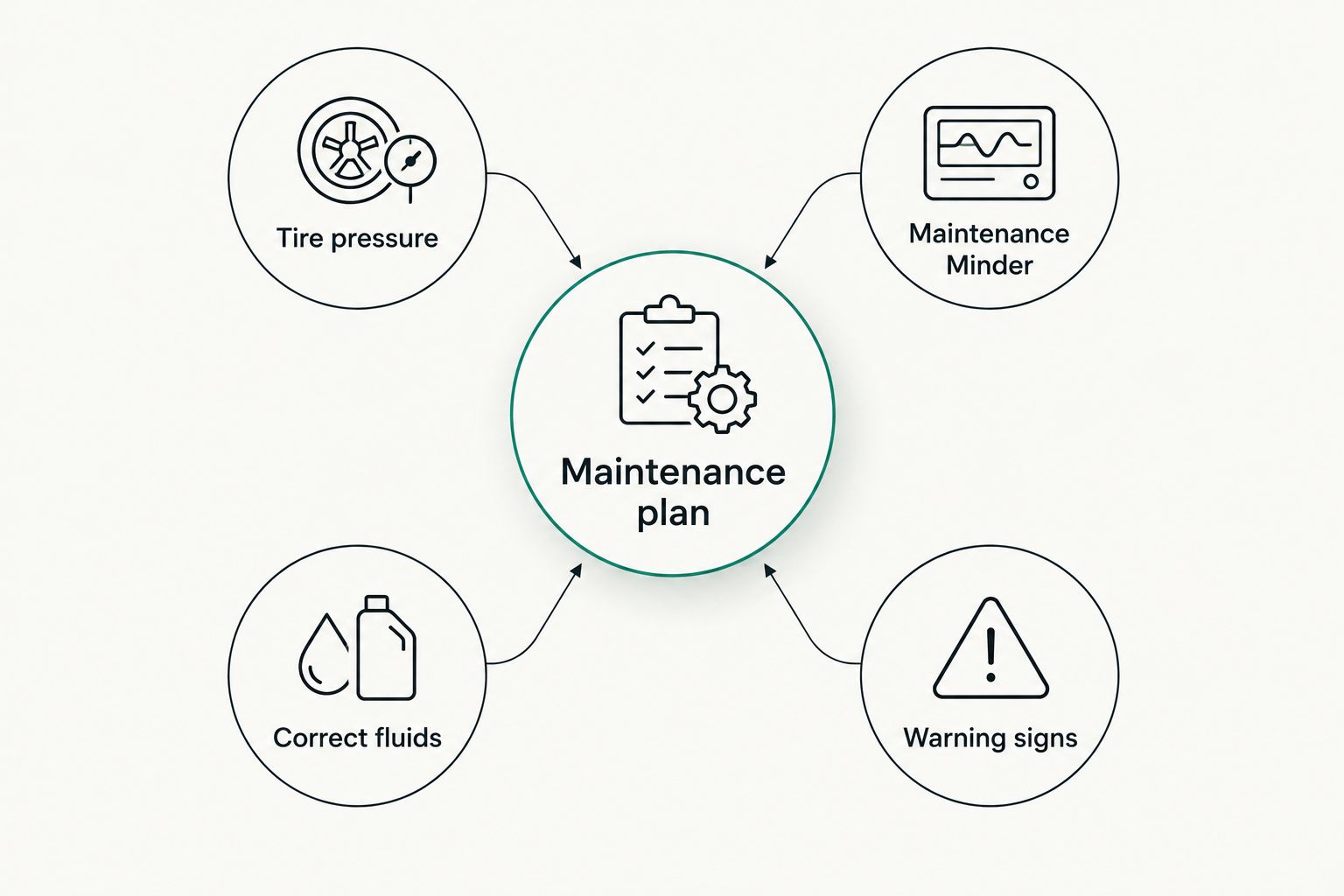
Protect fuel economy with a practical maintenance plan
Shopping and maintenance are connected. Before replacing a vehicle because fuel use has changed, check whether the current SUV needs attention.
Bristol Honda offers service and parts as well as vehicle sales. When arranging care, ask about the recommended work, the parts involved, and the qualifications of the Honda service team.
Tire pressure
Check tire pressure when the tires are cold, using the pressure listed on the vehicle’s driver-door placard. Do not use the tire sidewall’s maximum pressure as your everyday target.
Incorrect pressure affects tire behavior and can affect fuel use. Uneven wear also deserves inspection rather than an assumption that adding air solves everything.
Maintenance Minder
Follow the vehicle’s Maintenance Minder and owner’s manual rather than borrowing an interval from another Honda model. The displayed maintenance codes identify work to discuss when scheduling service.
Keep records of completed maintenance. For a used CR-V, HR-V, Pilot, or Passport, those records help distinguish documented care from an unsupported claim that everything is current.
Correct fluids
Use the engine-oil specification and other fluid requirements for the exact model and powertrain. Do not assume a gasoline CR-V and a CR-V Hybrid share every service requirement.
When ordering parts, provide the VIN and describe the repair or maintenance task. Correct identification matters more than choosing a part because it appears to fit a similar-looking SUV.
Warning signs
Investigate warning lights, new vibration, pulling, unusual brake behavior, or a sudden change in fuel use. An mpg drop alone does not identify a failed component.
Request a diagnosis before approving parts replacement. Comparing symptoms with maintenance records gives the service conversation a better starting point.
Hybrid care still includes routine service
A CR-V Hybrid still has a gasoline engine, tires, brakes, and fluids that need appropriate attention. Hybrid operation does not remove the need to follow the owner’s manual or respond to maintenance reminders.
The high-voltage hybrid system also differs from the vehicle’s low-voltage battery system. Describe the symptom when requesting service instead of assuming every starting or electrical concern means the hybrid battery needs replacement.
For a used hybrid, ask what maintenance documentation accompanies the vehicle. A dashboard without a warning light is not a substitute for service records or an inspection.
Plan one useful visit from the Tri-Cities
Whether you travel from Bristol, Johnson City, or Kingsport, prepare the questions before leaving home. Confirm the vehicle you want to discuss or the service work you want assessed; do not assume a particular model or appointment is ready without confirmation.
For shopping, bring your passenger, cargo, and driving requirements. For service, bring maintenance records and a clear description of when the symptom occurs. Both visits work better when the team can address the actual need rather than start with guesswork.
Which Honda SUV should you choose?
Start with the CR-V Hybrid if fuel economy leads your 2026 shopping decision. Compare the gasoline CR-V if you prefer a nonhybrid powertrain, and consider the HR-V when a smaller vehicle matters more than leading the mpg table.
Move to the Pilot for third-row needs or the Passport for a larger two-row layout. Before changing vehicles solely to reduce fuel use, review the condition and maintenance needs of the SUV you already own.
FAQ
Which Honda SUV gets the best gas mileage in 2026?
The Honda CR-V Hybrid leads this gasoline and hybrid comparison at up to 40 mpg combined. The leading front-wheel-drive configuration is rated at 43 mpg city and 36 mpg highway.
Is the Honda HR-V more fuel-efficient than the CR-V?
No, the HR-V’s highest combined estimate is lower than the CR-V’s in this comparison. The HR-V reaches 28 mpg combined, while the conventional CR-V reaches 30 mpg combined.
Does every Honda CR-V Hybrid get 40 mpg combined?
No, the 40 mpg combined estimate does not apply to every CR-V Hybrid configuration. Check the model year, trim, drivetrain, and exact vehicle’s window sticker.
Is the Honda Pilot more fuel-efficient than the Passport?
The 2026 Pilot and Passport tie at up to 21 mpg combined. Compare exact trims and choose between their seating and cargo layouts rather than assuming one has a combined-mpg advantage.
Does a Honda hybrid still need oil changes?
Yes, a Honda hybrid with a gasoline engine still needs engine-oil maintenance. Follow the vehicle’s Maintenance Minder and owner’s manual for the appropriate service requirements.
Why is my Honda SUV using more fuel than before?
A change in fuel use needs context and, when persistent or accompanied by symptoms, diagnosis. Check driving conditions, tire pressure, maintenance reminders, and warning lights rather than assuming a particular part has failed.
Where is Bristol Honda located?
Bristol Honda is located in Bristol, Tennessee, and serves drivers from Johnson City and Kingsport. The dealership offers new and certified pre-owned Honda vehicles, financing, service, and parts.
One last thing
The smaller SUV does not win this fuel-economy comparison. The HR-V’s highest combined estimate trails both CR-V choices, so start with the actual rating—not an assumption based on vehicle size—and then check that the SUV fits your daily life.